Ad Blocker Detected
Our website is made possible by displaying online advertisements to our visitors. Please consider supporting us by disabling your ad blocker.
While robotic mowers promise autonomous precision and minimal effort, riding mowers offer raw power and speed, making their performance highly dependent on terrain and lawn size. This contrast raises critical questions about long-term efficiency, cost, and suitability for different landscapes. Understanding these differences is essential to making an informed choice—yet, determining which option truly aligns with your specific needs can be complex without examining the nuanced capabilities and limitations of each.
Key Takeaways
- Robotic mowers operate autonomously with precise, grid-like patterns, while riding mowers require manual operation and are better for larger areas.
- Robotic mowers are ideal for uneven, complex terrains, whereas riding mowers excel on larger, flat, or sloped lawns.
- Robotic mowers feature digital sensors and GPS, offering automation; riding mowers rely on mechanical controls and manual steering.
- Robotic mowers demand less maintenance and have lower long-term costs; riding mowers require more frequent servicing and are more durable.
- Robotic mowers suit small to medium lawns with complex landscapes; riding mowers are better for extensive, uneven terrains and larger properties.
How Do Robotic and Riding Mowers Differ in Performance?
While both robotic and riding mowers are designed to cut grass efficiently, their performance characteristics differ considerably due to their underlying mechanisms and operational capabilities. Robotic mowers operate autonomously with precise, grid-like patterns, promoting consistent cutting and enhanced garden aesthetics. They typically feature sensors and adjustable blades, allowing for tailored trimming that preserves the visual appeal of your landscape. Noise levels are minimal, making them suitable for maintaining a peaceful environment. Conversely, riding mowers are manually operated, offering higher cutting capacity and speed for larger properties, but often produce louder noise. Their performance is less precise for detailed lawn aesthetics, especially on uneven terrain. Overall, robotic mowers excel in finesse and noise reduction, while riding mowers prioritize power and coverage.
Which Mower Is More Cost-Effective Over Time?
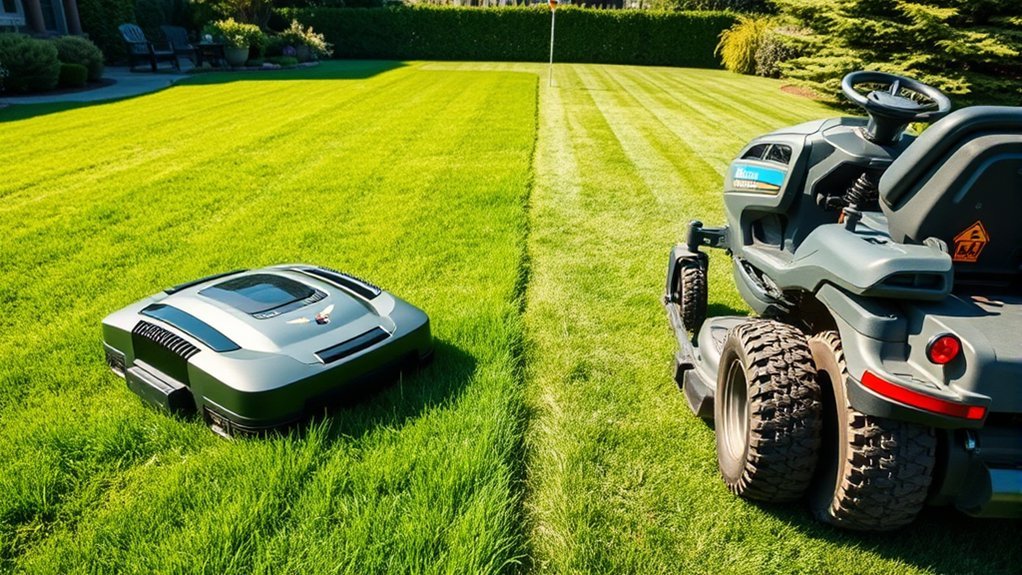
When evaluating long-term cost-effectiveness, we compare maintenance expenses, energy consumption, and component durability between robotic and riding mowers. Robotic models typically have lower maintenance and energy costs but may have shorter lifespans, whereas riding mowers often require more upkeep but tend to last longer. Analyzing these factors helps determine which mower provides greater value over its operational life.
Maintenance Costs Comparison
Evaluating the long-term maintenance costs of robotic and riding mowers reveals significant differences rooted in their design and operational requirements. Robotic mowers generally incur lower ongoing costs due to reduced labor and simplified mechanical parts, but they require periodic battery replacement and software updates. Conversely, riding mowers involve higher maintenance for engines, transmission systems, and blades, often necessitating professional servicing. Automated scheduling features in robotic mowers minimize manual oversight, reducing operational downtime and associated costs. The table below summarizes key maintenance aspects:
| Aspect | Robotic Mower | Riding Mower |
|---|---|---|
| Maintenance Frequency | Biannual (software updates, battery) | Quarterly (engine, blades) |
| Cost per Service | Lower, DIY-friendly | Higher, professional required |
| Battery Replacement | Yes, every 2-3 years | No |
| Engine & Mechanical | Minimal, mostly software-driven | Extensive, mechanical parts need upkeep |
| Automated Scheduling | Yes, reduces manual oversight | No, manual operation required |
Energy Efficiency Benefits
Which mower delivers greater energy efficiency and long-term cost savings? Robotic mowers excel here due to advanced battery technology, which optimizes charge cycles and energy use, reducing electricity costs over time. Their compact, electric motors operate with higher efficiency compared to traditional gas-powered riding mowers, which consume more fuel and produce emissions. Additionally, robotic mowers typically have lower noise levels, decreasing energy required for noise suppression and allowing for longer, more continuous operation without disturbance. Riding mowers rely on internal combustion engines that are less efficient and generate higher operational costs. Over time, the combined benefits of battery technology and reduced noise levels make robotic mowers a more cost-effective, energy-efficient choice, particularly for regular, automated lawn maintenance.
Longevity and Durability
Robotic mowers generally demonstrate superior longevity and durability due to their design and maintenance requirements. Advances in battery technology, such as lithium-ion cells, provide longer operational life and faster charging cycles, reducing downtime and replacement costs. Their sealed motors and corrosion-resistant components enhance durability against weather exposure. Additionally, robotic mowers operate at markedly lower noise levels, decreasing wear on internal parts caused by vibration and heat.
- Lithium-ion batteries extend lifespan, lowering replacement frequency.
- Sealed, weatherproof construction minimizes environmental damage.
- Reduced noise levels indicate less internal stress, promoting longevity.
In contrast, riding mowers often face quicker wear from larger engines, frequent maintenance, and exposure to harsh conditions, making robotic models more cost-effective over time.
How Easy Are Robotic and Riding Mowers to Use and Maintain?
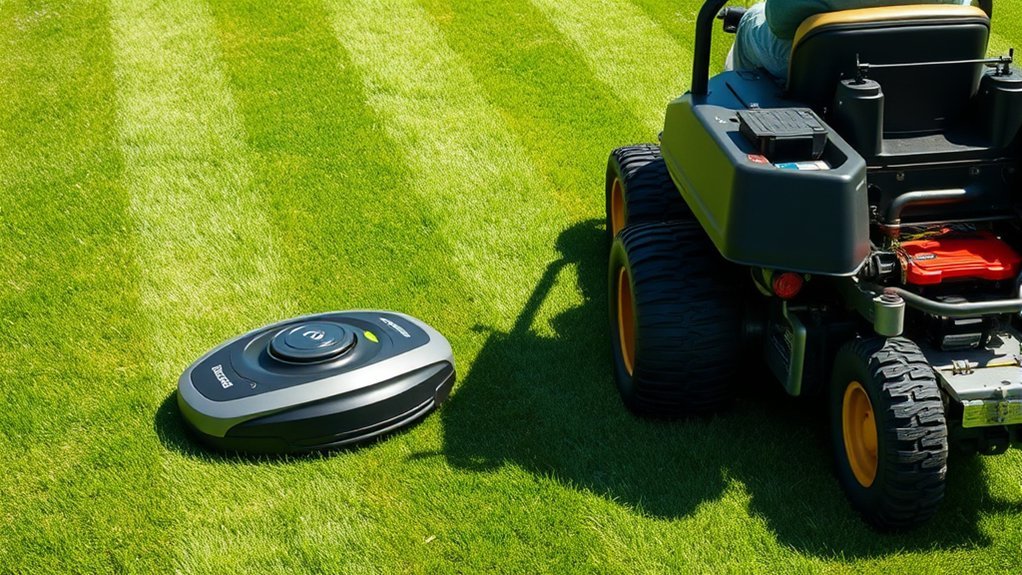
While both robotic and riding mowers aim to simplify lawn maintenance, their ease of use and maintenance vary markedly due to technology and operational demands. Robotic mowers require minimal input—initial setup, periodic software updates, and blade replacements—focusing on user safety with low noise levels, making them suitable for noise-sensitive environments. Riding mowers demand more physical input, such as steering, deck adjustments, and engine maintenance, which can be more complex and time-consuming.
| Aspect | Robotic Mower | Riding Mower |
|---|---|---|
| User Safety | Automated operation, low risk with sensors | Higher risk, manual controls needed |
| Noise Levels | Quiet operation, minimal disturbance | Louder, potentially disruptive |
| Maintenance | Simple, routine blade swaps and software updates | Complex, engine and mechanical upkeep |
| Ease of Use | Intuitive, minimal effort required | Requires skill and physical effort |
What Factors Should You Consider for Lawn Size and Terrain?
When evaluating lawn size, we must consider whether a robotic mower’s coverage capacity aligns with the area or if a riding mower’s larger engine is necessary. Terrain complexity, such as uneven surfaces or slopes, impacts maneuverability and stability for both mower types. Additionally, obstacle navigation, including trees and garden features, requires precise control and may influence the suitability of each mower for your landscape.
Lawn Size Compatibility
How do you determine whether a robotic mower or riding mower is suitable for your lawn size and terrain? First, evaluate the total area: robotic mowers are suitable for lawns under ½ acre, while riding mowers handle larger expanses efficiently. Second, consider terrain features: flat, even surfaces maximize robotic mower performance, preserving garden aesthetics and minimizing environmental impact, whereas uneven terrain may require a riding mower for consistent coverage. Third, assess mowing frequency needs: robotic mowers offer regular, automated trimming that maintains a neat appearance with less manual effort, ideal for smaller or well-maintained lawns. Properly matching mower type to lawn size and terrain ensures excellent performance, preserves garden aesthetics, and reduces environmental footprint, making your landscape both functional and environmentally conscious.
Terrain Complexity Challenges
Evaluating terrain complexity requires careful consideration of several key factors that directly influence mower performance and suitability. Topography, including slopes and uneven ground, impacts the ability of robotic and riding mowers to operate efficiently without risking tipping or inadequate coverage. Soil composition and drainage affect traction and mowing precision, especially on challenging gradients. For maintaining garden aesthetics, consistent cutting on varied terrain demands models with adaptive features. Additionally, terrain intricacies influence the feasibility of eco-friendly options; robotic mowers with electric power are often better suited for delicate, uneven lawns due to lower emissions and noise. Ultimately, understanding these terrain factors helps determine whether a robotic mower’s compact, precise operation suits your landscape or if a riding mower with greater power and stability is needed for more complex terrain.
Obstacle Navigation Needs
Considering lawn size and terrain complexity is essential for selecting a mower capable of effectively maneuvering obstacles. Key factors include sensor accuracy, obstacle detection capabilities, and navigation algorithms.
- Sensor Precision: Exact sensors ensure reliable obstacle detection, especially in varied terrain or cluttered areas. Lower accuracy can lead to missed obstacles or false detections.
- Obstacle Detection: Advanced obstacle detection systems, using lidar or ultrasonic sensors, allow the mower to identify objects promptly, preventing collisions.
- Navigation Algorithms: Sophisticated algorithms optimize obstacle avoidance, especially on irregular terrain, ensuring thorough coverage without getting stuck or causing damage.
Choosing a mower with high sensor precision and robust obstacle detection enhances functionality, particularly in complex environments.
How Do Features and Technology Vary Between the Two Options?
Robotic mowers and riding mowers differ considerably in their features and technological capabilities, reflecting their distinct design intents and operational complexities. Robotic mowers prioritize compact, sleek design aesthetics, often featuring minimalistic exteriors that blend into the landscape, while riding mowers emphasize durability and functionality with more robust frames. The user interface on robotic mowers is typically digital, featuring touchscreen controls and smartphone app integration for easy programming and monitoring. In contrast, riding mowers often rely on traditional mechanical controls and manual adjustments. Technologically, robotic mowers incorporate sensors for boundary detection and obstacle avoidance, whereas riding mowers depend on physical levers and steering mechanisms. These differences highlight the contrasting approaches to automation, control, and user interaction between the two mower types.
Which Mower Offers Better Lawn Care and Precision?
Robotic mowers are equipped with advanced sensors, GPS mapping, and programmable algorithms that enable highly precise, automated cutting patterns. This technology guarantees consistent grass height, contributing to superior garden aesthetics and a uniform appearance. Unlike riding mowers, robotic units carefully navigate complex terrains, avoiding obstacles and minimizing damage to flower beds. Key advantages include:
Robotic mowers ensure precise, uniform cutting while navigating complex terrains and protecting flower beds.
- Precision Cutting: Robotic mowers maintain consistent height, creating a neat, well-manicured look.
- Noise Levels: These mowers operate quietly, reducing disruption and preserving the tranquility of your outdoor space.
- Adaptive Patterning: Programmable algorithms optimize coverage, reducing missed spots and ensuring even lawn care.
Is a Robotic or Riding Mower the Better Investment for Your Lawn?
When evaluating the investment value of a mower, it’s essential to weigh long-term costs, maintenance, and overall performance relative to your lawn’s size and complexity. Robotic mowers excel in maintaining garden aesthetics through consistent, precise trimming, especially on irregular terrains, while riding mowers handle larger areas efficiently. Brand reputation influences durability and support, impacting overall value. The table below highlights key differences:
| Feature | Robotic Mower | Riding Mower |
|---|---|---|
| Maintenance | Minimal, routine blade checks | More extensive, engine service |
| Garden aesthetics | Superior, even cut | Good, but less precise |
| Performance on terrain | Adaptable to slopes | Suitable for flat, large lawns |
| Long-term costs | Lower operational costs | Higher fuel and repair expenses |
| Investment longevity | High, especially with reputable brands | Variable, depends on usage |
Choosing depends on lawn size, terrain, and desired aesthetics.
Frequently Asked Questions
How Long Do Robotic and Riding Mowers Typically Last?
Robotic mowers typically last 3-5 years, with battery life and maintenance needs directly impacting longevity, while riding mowers often last 8-10 years, provided they receive regular oil changes, blade sharpening, and proper storage.
Are Robotic Mowers Suitable for All Types of Grass?
Robotic mowers excel on most grass types, ensuring pristine lawn aesthetics and low noise levels. However, dense or uneven grass may challenge them, so assess your terrain’s specifics before relying solely on automation for perfect results.
Can Robotic Mowers Handle Complex Lawn Landscapes?
Robotic mowers can handle complex landscapes by expertly steering around obstacles and adapting to landscaping challenges with advanced sensors and algorithms, ensuring efficient mowing around trees, flower beds, and uneven terrain without human intervention.
What Safety Features Are Included in Each Mower Type?
We’re confident both mowers prioritize safety, with robotic models featuring obstacle detection, safety protocols, and emergency stop features, while riding mowers include rollover protection and integrated safety switches—each designed to protect users in critical moments.
How Do Weather Conditions Affect Mower Performance?
Weather impact markedly influences mower efficiency; rain can cause slipping or clogging, while extreme heat stresses components. We recommend monitoring conditions closely, adjusting schedules, and ensuring proper maintenance to optimize performance across varying weather scenarios.
Conclusion
In the end, choosing between a robotic and riding mower hinges on specific lawn needs and long-term goals. While robotic mowers excel in precision and low maintenance, riding mowers shine on larger, uneven terrains with greater power. As they say, “You get what you pay for.” Carefully assess your lawn’s size, terrain, and your budget to make an informed decision that guarantees your landscape remains healthy, efficient, and well-manicured for years to come.