Ad Blocker Detected
Our website is made possible by displaying online advertisements to our visitors. Please consider supporting us by disabling your ad blocker.
As we evaluate whether to replace our traditional lawn mower with a robot mower, we must consider several technical and practical factors, including yard size, terrain complexity, and our maintenance preferences. While robot mowers offer precise, eco-friendly operation with minimal effort, the initial setup, boundary wiring, and potential legal restrictions add complexity. Understanding these details is essential before making an informed decision that aligns with both our landscape and lifestyle requirements.
Key Takeaways
- Consider yard size and terrain; flat, small to medium lawns benefit most from robot mowers.
- Evaluate initial costs against long-term savings on maintenance and fuel or electricity.
- Check local regulations and noise restrictions that may limit robot mower use.
- Assess whether your lawn’s complexity and grass type suit autonomous mowing capabilities.
- Weigh environmental benefits and consistent, precise lawn care against potential setup and maintenance efforts.
What Are the Main Benefits of Switching to a Robot Mower?
Switching to a robot mower offers several tangible benefits that enhance lawn maintenance efficiency and effectiveness. Central to this are smart technology features, such as GPS navigation, obstacle detection, and programmable scheduling, which optimize mowing patterns for uniformity and precision. These systems reduce human error and ensure consistent lawn care. Additionally, robot mowers typically operate with electric motors, markedly lowering environmental impact by eliminating emissions associated with gas-powered models. Their energy-efficient operation and ability to mow frequently help maintain healthier grass growth, reducing the need for chemical interventions. The integration of smart technology not only streamlines maintenance but also contributes to a more sustainable landscaping approach, making robot mowers an appealing choice for eco-conscious homeowners seeking reliable, effective lawn management.
What Costs and Challenges Should You Consider Before Making the Switch?
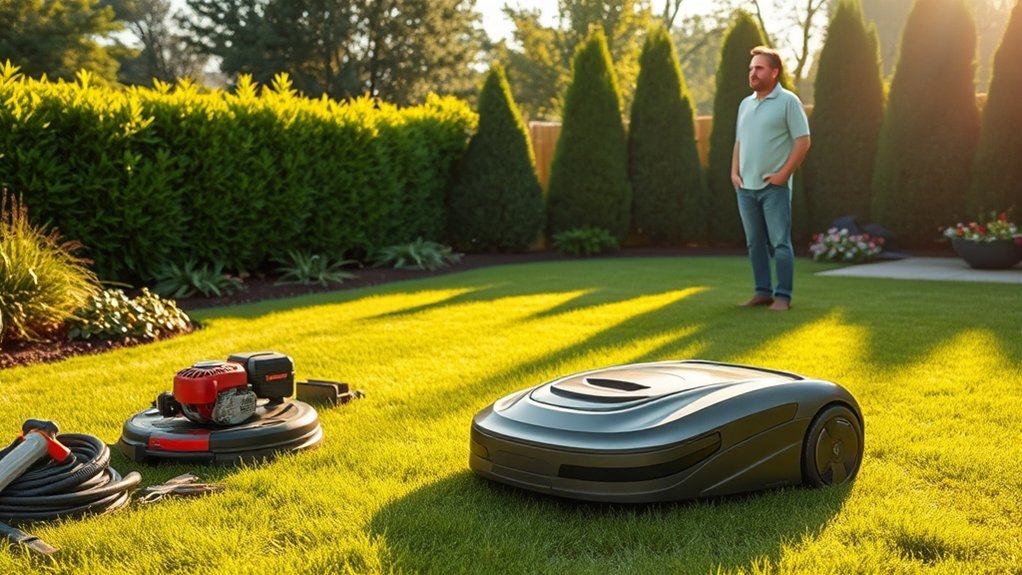
While the benefits of robot mowers are clear, it’s important to carefully evaluate the associated costs and potential hurdles before making a purchase. Legal restrictions, such as local noise ordinances or boundary regulations, can limit operational hours or require permits. Additionally, noise levels, although generally lower than traditional mowers, may still disturb neighbors depending on the model and environment.
| Cost/Challenge | Description | Mitigation Strategies |
|---|---|---|
| Legal restrictions | Zoning laws or noise ordinances may restrict operation | Research local laws; seek permits if necessary |
| Noise levels | Potential disturbance despite quieter operation | Choose models with lower noise ratings; schedule mowing during appropriate hours |
| Initial investment | Upfront cost for quality robot mowers | Compare long-term savings versus initial expense |
| Maintenance & repairs | Ongoing upkeep and potential repairs | Regular servicing; select reliable brands |
How Do Robot Mowers Compare to Traditional Lawn Mowers in Performance?
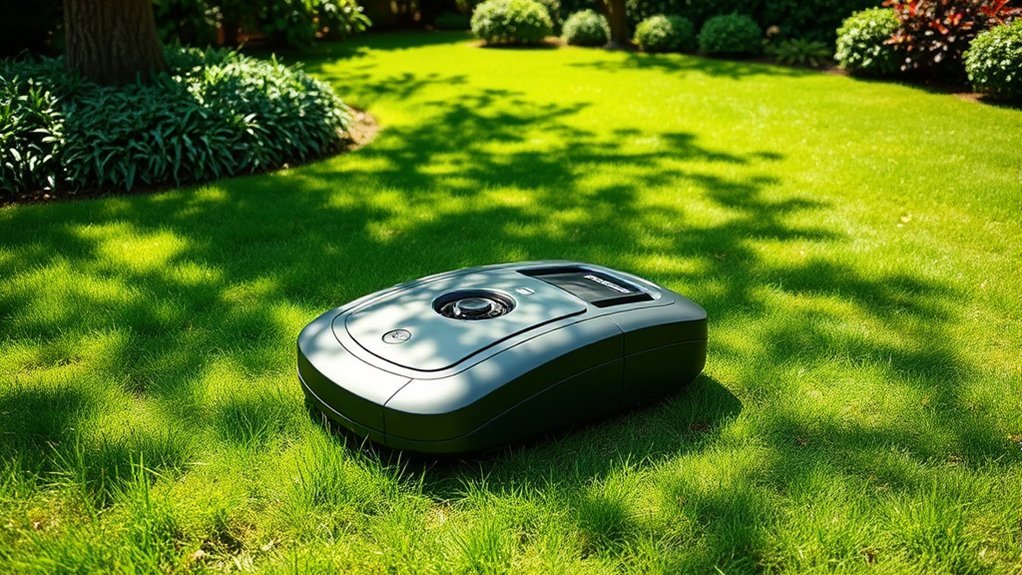
Robot mowers have advanced considerably in recent years, offering performance that often rivals or surpasses that of traditional gas or electric mowers in specific aspects. Their battery life has improved markedly, allowing extended mowing sessions and reducing the need for frequent recharging. This enhancement guarantees consistent coverage over larger areas with minimal downtime. Noise levels are also noticeably lower; robot mowers operate quietly, often below 60 decibels, making them suitable for noise-sensitive environments. When it comes to cutting precision, sensors and adaptive algorithms enable precise edge trimming and obstacle avoidance, maintaining a uniform lawn. While traditional mowers may outperform in power for thick or tall grass, robot mowers excel in efficiency, consistency, and environmental friendliness, making them a competitive alternative in many residential settings.
Which Yard and Lifestyle Factors Influence a Robot Mower’s Suitability?
The suitability of a robot mower largely depends on specific yard characteristics and lifestyle considerations. Factors like gardening aesthetics influence whether a robot can maintain a uniform appearance or handle intricate landscape features. Seasonal maintenance requirements, such as adjusting mowing schedules for growth cycles, also impact compatibility.
Consider the following:
| Yard Factors | Lifestyle Factors |
|---|---|
| Flat terrain or gentle slopes | Time availability for manual lawn care |
| Complex landscaping or irregular borders | Preference for automated solutions |
| Grass type and growth rate | Willingness to perform seasonal adjustments |
Understanding these elements helps determine if a robot mower aligns with your yard’s design and your maintenance routine, ensuring ideal performance and satisfaction.
Is a Robot Mower Easy to Set Up and Maintain?
Setting up a robot mower typically involves configuring its initial parameters, installing boundary wires, and ensuring proper connectivity, which can be straightforward with detailed instructions. The process requires calibrating cutting height, scheduling mowing times, and verifying the Wi-Fi or Bluetooth connection. Maintenance primarily focuses on battery life management—regularly charging and monitoring battery health to prevent performance issues. Additionally, routine blade sharpening and cleaning help sustain peak cutting efficiency. Noise levels are generally low, making operation unobtrusive, but it’s essential to check for any unusual sounds that could indicate mechanical issues. Overall, setup is precise but manageable, and ongoing maintenance is minimal, emphasizing battery care and blade upkeep for smooth, efficient operation.
How Can You Decide If Upgrading to a Robot Mower Is Worth It for You?
To determine if upgrading to a robot mower is worthwhile, we need to analyze your budget constraints and potential long-term cost savings, considering initial investment versus ongoing maintenance expenses. Yard size and terrain complexity are critical factors, as larger or uneven areas may influence the efficiency and suitability of robotic mowing. Evaluating these technical parameters helps establish whether the automation benefits justify the investment for your specific landscaping needs.
Budget and Cost Savings
Evaluating whether upgrading to a robot mower makes financial sense requires a detailed comparison of upfront costs versus long-term savings. Initial investment includes the purchase price, which varies based on features like battery life and cutting capabilities. Longer battery life reduces replacement frequency and operational interruptions, impacting ongoing costs positively. Noise levels are also significant; quieter models may qualify for fewer local restrictions or noise ordinances, potentially avoiding fines or modifications. While robot mowers typically have higher upfront costs, they reduce labor expenses and maintenance over time, especially with durable batteries that extend lifespan. Analyzing these factors helps determine if the initial expense offsets future savings, making a robot mower a cost-effective choice based on your yard’s size, terrain, and your maintenance preferences.
Yard Size and Terrain
Determining whether upgrading to a robot mower is worthwhile hinges on evaluating your yard’s size and terrain characteristics. Larger lawns, typically over a quarter-acre, benefit from the efficiency and autonomy of robot mowers, which can maintain consistent cutting without manual effort. Steep or uneven terrain, with slopes exceeding 15 degrees, may pose challenges for some models, so examining the mower’s capacity for varied topography is essential. Additionally, the garden aesthetic influences the decision—robot mowers excel in creating uniform, manicured lawns, but seasonal changes like leaf fall or snow can impact performance and scheduling. For yards with complex landscapes or significant seasonal variation, understanding these factors ensures the robot mower can maintain the desired aesthetic while efficiently handling terrain complexities.
Frequently Asked Questions
Can Robot Mowers Handle Uneven or Hilly Terrain Effectively?
Robot mowers with higher battery life and advanced terrain adaptability can handle uneven or hilly terrain effectively, but their performance varies based on slope degree and grass density. We recommend models with robust motors and smart navigation systems for best results.
What Is the Typical Lifespan of a Robot Mower?
Ever wonder how long a robot mower lasts? Typically, their lifespan ranges 5-8 years, influenced by battery longevity and maintenance needs, which are essential for ideal performance and ensuring the mower’s durability over time.
Are Robot Mowers Safe for Children and Pets?
Robot mowers are generally safe for children and pets, thanks to child safety features and pet safety sensors that halt operation if obstacles are detected, minimizing risk during their autonomous mowing cycles.
How Do Robot Mowers Perform in Different Weather Conditions?
We’ve found robot mowers excel in weather adaptability, maintaining 85% efficiency across varying conditions. Seasonal performance varies, but modern models are designed to handle rain, snow, and heat, ensuring reliable operation year-round.
Do Robot Mowers Require Wi-Fi or Internet Connection?
Robot mowers typically don’t require Wi-Fi or internet, relying on smart navigation and sensors. However, internet connectivity can enhance features like remote control and updates, and it may improve battery longevity through smarter operation management.
Conclusion
Ultimately, whether we switch to a robot mower depends on weighing convenience against initial costs and terrain constraints. Ironically, the very innovation promising effortless lawn care might demand more setup and maintenance than traditional methods—especially on uneven or complex landscapes. While the promise of a perfectly manicured yard with minimal effort is enticing, it’s essential we consider the technical limitations and ongoing commitments. Sometimes, the simplest solution still requires a little human touch.