Ad Blocker Detected
Our website is made possible by displaying online advertisements to our visitors. Please consider supporting us by disabling your ad blocker.
Did you know that a small oversight in selecting or setting up a robot mower can lead to serious safety issues? As professionals committed to safe and reliable operation, we recognize the importance of thorough knowledge in this area. Ensuring your mower’s safety features are up to standard, properly configuring boundaries, and following strict operational guidelines are essential steps. The key to avoiding potential hazards lies in understanding these vital safety considerations, which we’ll explore in detail.
Key Takeaways
- Look for advanced sensor technology to detect obstacles, humans, and pets, minimizing collision risks.
- Ensure the mower has an emergency stop function for immediate halting during hazards.
- Verify proper setup, including boundary wires and obstacle-free zones, for safe operation.
- Choose models with child safety locks and physical barriers to prevent accidents.
- Prioritize regular maintenance features like blade checks and software updates for reliable safety.
What Are the Key Safety Features to Look for in a Robot Mower?
When selecting a robot mower, prioritizing safety features that prevent accidents and protect users and bystanders is essential. Sensor technology plays a crucial role, allowing the mower to detect obstacles, humans, and pets in its path. Advanced sensors can distinguish between objects and adjust the mower’s trajectory, reducing collision risks. An important safety feature is the emergency stop function, which immediately halts operation when triggered—either manually or automatically—upon detecting a hazard or obstacle. Reliable sensor technology combined with a responsive emergency stop mechanism ensures the mower reacts swiftly to unforeseen situations. These features are indispensable in minimizing accidents, especially in shared spaces. Guaranteeing your robot mower has robust sensor systems and an accessible emergency stop is a non-negotiable step toward safer, more dependable operation.
How Can You Properly Set Up Your Robot Mower to Ensure Safety?
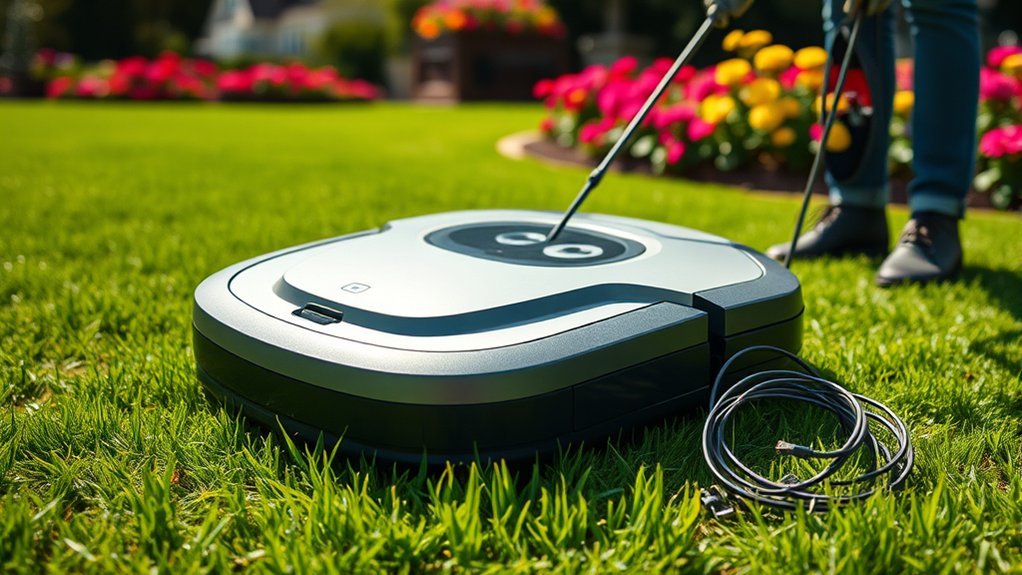
Proper setup is fundamental to guaranteeing your robot mower operates safely and effectively. We recommend starting with clear, obstacle-free boundaries, using reliable installation tips to prevent accidental escapes. Securely installing boundary wires or sensors guarantees the mower stays within designated areas, reducing safety risks. Proper placement of charging stations and mowing paths is essential, as it affects battery lifespan and operational reliability. Regularly check that sensors and safety features are functioning correctly during setup. Avoid shortcuts that compromise safety or mower efficiency. By meticulously planning the installation, you minimize potential hazards and extend battery lifespan, ensuring the mower performs at its best over time. Remember, thorough initial setup is key to maintaining safety and maximizing your mower’s lifespan.
What Safety Precautions Should You Follow During Robot Mower Operation?
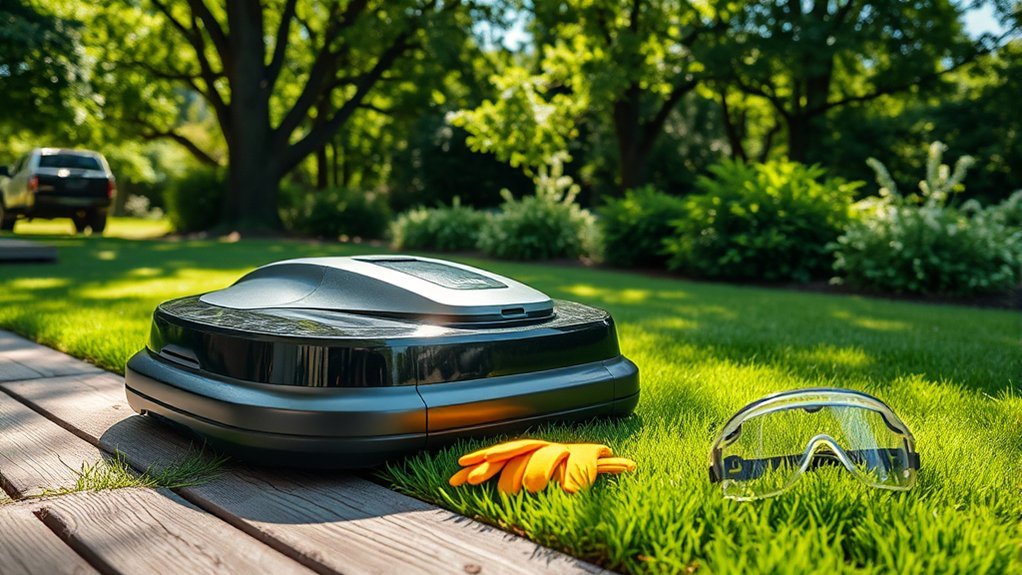
Operating your robot mower requires strict adherence to safety precautions to prevent accidents and injuries. Always make certain you’re familiar with the remote control functions before starting, and avoid operating the mower in unfamiliar or hazardous conditions. Key safety measures include:
Follow safety guidelines, familiarize yourself with controls, and avoid hazardous conditions for safe robot mower operation.
- Keep children and pets away during operation
- Conduct safety training to understand emergency stops
- Never override safety features or disable sensors
- Inspect the area for debris or obstacles beforehand
- Use the remote control exclusively to start and stop the mower
Remaining vigilant and cautious minimizes risks. Follow manufacturer guidelines meticulously, and never operate the mower without proper safety training. Implement these precautions consistently to ensure safe, efficient mowing while preventing potential accidents.
How Do You Maintain and Troubleshoot Your Robot Mower for Safe Use?
Regular maintenance and troubleshooting are essential to guarantee your robot mower operates safely and efficiently. We recommend routinely inspecting the battery for signs of wear, corrosion, or damage, and verifying it’s properly charged to prevent malfunctions. Proper battery maintenance reduces the risk of overheating or leaks, which could pose safety hazards. Equally important is blade safety; always turn off the mower and disconnect the power before inspecting or replacing blades. Keep blades sharp to ensure clean cuts and reduce strain on the motor, but handle them cautiously to avoid injuries. Regularly clean debris from the mower’s underside and check for worn parts. Promptly address any operational issues, such as erratic movement or abnormal noises, to prevent accidents and ensure ongoing safe use.
What Are Common Safety Risks Associated With Robot Mowers and How Can You Avoid Them?
While maintaining your robot mower is essential for safe operation, understanding the specific safety risks it poses helps prevent accidents. Common risks include unintended contact with children or pets, which can cause injury or distress, and the mower’s blades, which can be dangerous if accessed during operation. Additionally, improper boundary setup may allow the mower to stray into unsafe areas, and faulty sensors could fail to detect obstacles. To mitigate these risks:
- Use child safety locks and disable features when children are nearby
- Install physical barriers to protect pets and children
- Regularly update the mower’s software and sensors
- Clearly mark the mowing area with visible boundary wires
- Supervise the mower during initial uses and whenever in doubt
Proactive measures guarantee safer operation and peace of mind.
Frequently Asked Questions
Are Robot Mowers Suitable for All Types of Lawns?
Robot mowers aren’t suitable for all lawns; we recommend considering lawn size and terrain type carefully. Steep slopes or uneven ground may pose safety risks, so evaluate your specific terrain before choosing a robot mower for ideal performance and safety.
What Is the Typical Lifespan of a Robot Mower’s Safety Features?
We find that a robot mower’s safety features typically endure 3-5 years with diligent safety maintenance, acting as steadfast guardians. Regular checks and cautious handling guarantee these features remain reliable, safeguarding your lawn like an unyielding fortress.
Can Children or Pets Be Safely Around a Robot Mower?
Children and pets can be safe around a robot mower if it has reliable child safety features and pet protection sensors. We recommend strict supervision, secure boundaries, and choosing models with advanced safety measures to minimize risks effectively.
Do Robot Mowers Have Emergency Stop Functions?
Like a vigilant guardian, robot mowers feature emergency shutdowns activated by safety sensors, ensuring immediate power cut-off if hazards are detected, emphasizing their cautious design and prioritization of child and pet safety during operation.
How Do Weather Conditions Affect Robot Mower Safety?
Weather hazards like rain, snow, or high winds can compromise robot mower safety, so we recommend strict safety precautions, including avoiding mowing in adverse conditions, to prevent accidents or damage and guarantee ideal operation.
Conclusion
In summary, ensuring our robot mowers operate safely is like steering a delicate dance—precision and vigilance are key. By prioritizing advanced safety features, meticulous setup, and ongoing maintenance, we can minimize risks and protect everyone nearby. We must stay cautious, supervise closely, and follow recommended procedures to prevent accidents. A well-maintained, carefully operated mower isn’t just efficient; it’s a trustworthy partner that keeps your lawn safe and beautiful, season after season.