Ad Blocker Detected
Our website is made possible by displaying online advertisements to our visitors. Please consider supporting us by disabling your ad blocker.
Ensuring safety when operating a robotic mower at night requires careful planning and strict adherence to best practices. While these devices can be efficient, the risks associated with low visibility, obstacles, and unexpected encounters are real. We need to take into account proper setup, sensors, and local regulations to prevent accidents. Let’s explore the critical steps you should take to keep everyone safe and your mower functioning reliably after dark.
Key Takeaways
- Ensure proper outdoor lighting and clear boundary markers to improve visibility and prevent accidents during night mowing.
- Regularly inspect and maintain safety features such as obstacle sensors, boundary wires, and emergency stop functions.
- Remove obstacles, debris, and tools from the mowing area to reduce hazards in low-light conditions.
- Schedule night mowing during calm weather and avoid operating in adverse conditions for safety.
- Confirm compliance with local regulations and implement safety protocols to prevent legal issues and ensure safe operation.
Understanding the Risks of Night Mowing With a Robotic Lawn Mower
While robotic lawn mowers offer convenience, mowing at night introduces specific safety risks that are important to understand. Nighttime noise can be a concern, as it may disturb neighbors or go unnoticed if the mower encounters obstacles. Additionally, reduced visibility makes it harder to detect hazards, increasing the chance of accidents. Battery performance is another critical factor; colder temperatures at night can diminish battery efficiency, leading to shorter mowing times or unexpected shutdowns. This unpredictability can leave areas unevenly cut or cause the mower to malfunction mid-operation. Being aware of these risks helps prevent potential issues, ensuring safe operation during nighttime hours. Proper planning and understanding of these factors are essential for safe and effective night mowing with a robotic lawn mower.
Checking Your Robotic Mower’s Safety Features for Night Use
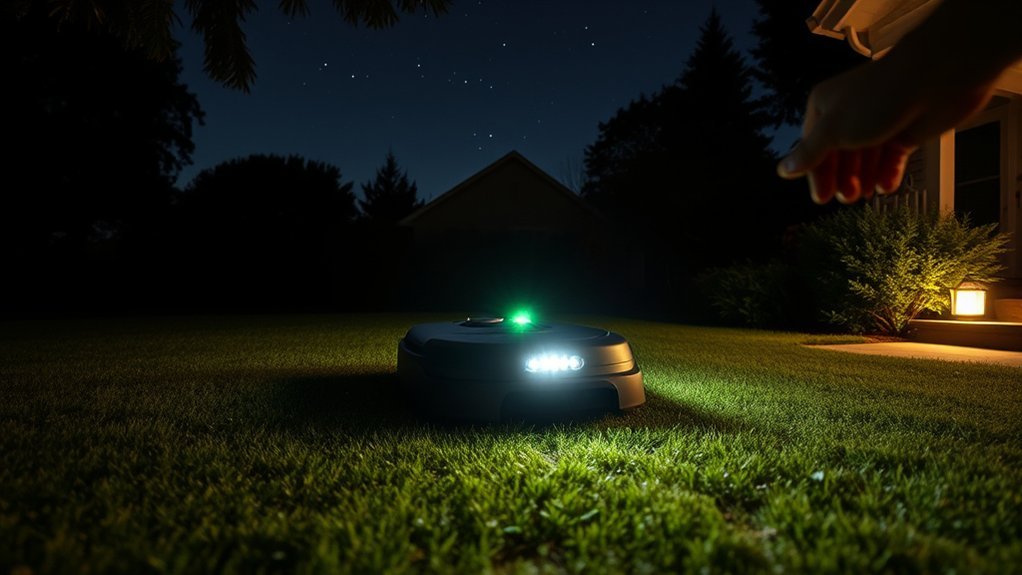
Ensuring your robotic mower’s safety features are fully functional before night use is essential for safe operation. We recommend systematically inspecting the mower’s safety features, such as obstacle sensors, blade shut-off switches, and boundary detection systems. Confirm that all sensors are clean, unobstructed, and responsive. Test the emergency stop function to ensure it halts the mower immediately. Check that the boundary wire is correctly installed and signals are consistent. Verify that safety alarms or alerts are working properly. It’s crucial to address any malfunction or misalignment before operating the mower at night. By thoroughly evaluating these safety features, you reduce risks and ensure the robotic mower operates safely in low-light conditions. Always prioritize caution and double-check before scheduled night mowing.
Setting Up Proper Lighting and Boundaries for Safe Night Mowing
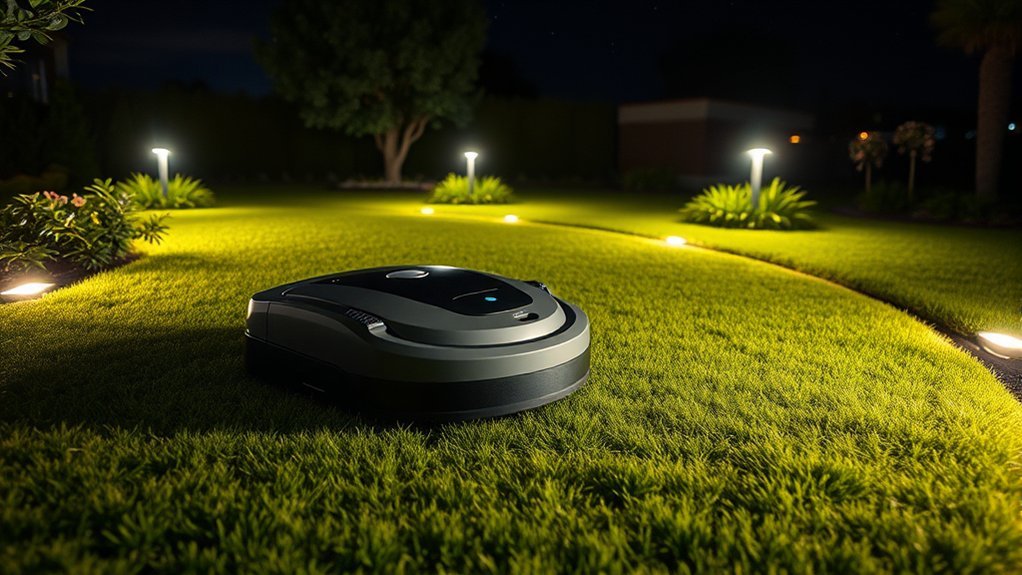
Setting up proper lighting and boundaries is essential for safe night mowing, as low visibility can increase the risk of accidents with your robotic mower. Adequate lighting guarantees we can clearly see the mowing area and quickly identify any obstacles or hazards. Using outdoor floodlights or motion-activated lights creates a well-lit environment that enhances night safety. Additionally, establishing clear boundaries with physical markers or boundary wires prevents the robotic mower from venturing into unsafe areas or off-limits zones. Regularly inspecting these boundaries ensures they remain effective. Proper lighting and boundaries are critical to minimizing risks during night mowing, helping us operate our robotic mowers with increased confidence and safety. Precise setup is key to safe, efficient night mowing.
Best Practices for Operating Your Robotic Mower Safely After Dark
Operating your robotic mower safely after dark requires careful attention to each step of the process. We must guarantee night safety by verifying that the mower’s sensors and cameras are clean and functioning properly before starting. Always activate the boundary perimeter to prevent the mower from entering restricted areas, and double-check that lighting conditions won’t impair its sensors. Adjust the mowing schedule to avoid extended runs late at night, and monitor the mower remotely if possible. Never leave the mower unattended during night safety operations, and always have a plan to stop it immediately if issues arise. By following these cautious practices, we can minimize risks and maintain safe, effective night mowing with your robotic mower.
How to Keep People and Pets Safe During Night Mowing Sessions
To guarantee safety during night mowing, we must keep the area clear of people and pets. Proper lighting is essential to make obstacles visible in low light. These precautions help prevent accidents and protect everyone nearby.
Clear Mowing Area
Ensuring the mowing area is clear before night sessions is vital for safety. We recommend reviewing your garden design to identify potential hazards and remove any objects that could interfere with the robotic mower’s operation. Pay close attention to weather considerations; avoid mowing during or immediately after rain, as wet grass can cause slipping or uneven cutting. Additionally, clear pathways of tools, toys, and debris that could trap or damage the mower. It’s essential to maintain a tidy, obstacle-free space to prevent accidents and guarantee the mower operates smoothly. Taking these precautions reduces risks for both people and pets, especially since visibility is limited during night mowing. A well-prepared, clear area promotes safer, more efficient robotic mowing sessions.
Use Proper Lighting
Proper lighting is essential for safe night mowing, as it helps us see obstacles, pets, and people clearly. When operating a robotic mower at night, adequate illumination reduces the risk of accidents and enhances night safety. We should install motion-activated or low-voltage landscape lights around the mowing area to guarantee consistent visibility. It’s important to avoid overly bright or flickering lights, which can cause glare and confusion. Proper lighting allows us to monitor the robotic mower’s path and quickly spot any potential hazards. We must also ensure that pathways are well-lit, especially near garden features or uneven terrain. By prioritizing proper lighting, we make night mowing safer for everyone, including pets, and maintain control over the robotic mower’s operation during low-light conditions.
Troubleshooting Common Safety Concerns When Mowing at Night
When mowing at night, proper lighting is essential to guarantee visibility and safety. We need to carefully check that all lights are functioning and strategically placed to reduce shadows. Additionally, we should remain vigilant to prevent obstacle collisions by maintaining a clear, well-marked mowing area.
Proper Lighting Techniques
Lighting plays a critical role in safe night mowing with robotic mowers, and inadequate illumination can lead to accidents or missed obstacles. To guarantee ideal night safety, we recommend installing focused, bright lighting around your mowing area. Use motion-activated lights to conserve energy and provide immediate illumination when needed. Position lights to eliminate shadows and ensure the robotic mower’s path remains clearly visible. Avoid overly bright or flickering lights, which can cause glare and confusion. Regularly check and maintain your lighting system, replacing any burnt-out bulbs promptly. Proper lighting not only helps prevent mishaps but also enhances overall safety during night mowing, giving us confidence that the robotic mower operates efficiently and securely in low-light conditions.
Preventing Obstacle Collisions
To prevent obstacle collisions during night mowing, we must prioritize thorough obstacle detection and avoidance strategies. Accurate obstacle detection relies on regular mower calibration to guarantee sensors function correctly. We should verify that sensors are clean and properly aligned, as dirt or misalignment can impair detection capabilities. It’s essential to test the mower’s obstacle detection system in low light conditions, adjusting settings if necessary. Installing additional reflective markers or lights can improve sensor accuracy at night. Consistent calibration and careful environmental assessment help reduce the risk of unexpected obstacles. By maintaining ideal sensor performance and verifying calibration, we improve safety and minimize collision risks, ensuring night mowing remains safe and effective.
Maintaining Your Robotic Mower for Safe Night Operation
Regular maintenance is essential to guarantee your robotic mower operates safely during night hours. Proper upkeep ensures peak performance and enhances night safety, reducing the risk of malfunctions that could pose hazards in low light conditions. We recommend inspecting the blades for sharpness and wear, cleaning debris from sensors and wheels, and checking battery health regularly. These steps prevent unexpected breakdowns and ensure the mower responds accurately to its environment during night operation.
Regular maintenance ensures safe, reliable night operation and optimal performance of your robotic mower.
- Regularly clean sensors and blades
- Check battery levels and charging system
- Inspect and trim any overgrown grass or obstacles
Legal and Local Regulations for Night Robotic Mower Use
Understanding and complying with local regulations is essential when operating a robotic mower at night, as laws governing outdoor equipment use can vary markedly between regions. Regulatory compliance guarantees you avoid legal penalties and promotes safe operation. Before starting, verify any restrictions on nighttime mowing, noise ordinances, and property boundaries. Insurance considerations are equally important—some policies may require adherence to specific safety standards or restrict night use altogether. Failing to meet legal requirements could jeopardize coverage in the event of an accident. We recommend consulting local authorities or legal experts to confirm your plans align with applicable laws. This cautious approach helps prevent unintended violations, supports responsible use, and safeguards your property and finances.
Tips to Maximize Safety and Minimize Risks During Night Mowing
Operating a robotic mower at night requires careful attention to safety, as reduced visibility increases the risk of accidents. To enhance night safety, we recommend thorough pre-mowing checks and ensuring all sensors are clean and functioning properly. Use boundary wires clearly marked to prevent the mower from entering unsafe areas. Install adequate lighting around the mowing zone to improve visibility without disturbing neighbors. Additionally, schedule mowing during calm weather conditions to reduce unforeseen hazards.
- Regularly inspect and maintain the robotic mower for ideal performance
- Use perimeter wires and boundary markers to define safe zones
- Keep the mowing area well-lit and free of obstacles
Following these tips helps maximize safety and minimize risks during night mowing, ensuring a safer experience for everyone involved.
Frequently Asked Questions
Can I Schedule My Robotic Mower to Operate Automatically at Night?
Yes, you can schedule your robotic mower to operate automatically at night with proper safety precautions. Guarantee adequate nighttime lighting and set the automatic scheduling feature carefully, respecting safety guidelines to avoid accidents or damage.
What Should I Do if My Mower Encounters an Obstacle in the Dark?
If our robotic mower encounters an obstacle in the dark, we stop it immediately, check obstacle detection features, guarantee proper lighting visibility, and clear any obstruction before restarting, prioritizing safety and accurate operation at night.
Are There Specific Brands With Better Night Safety Features?
Like a watchdog watching the night, we find brands like Husqvarna and Worx excel in safety feature highlights. When comparing brands, we recommend cautious evaluation of their night safety features, ensuring reliable obstacle detection and illuminated controls for safer nighttime mowing.
How Loud Is a Robotic Mower During Night Operation?
Robotic mowers are generally quiet at night, with noise levels often below 60 decibels, thanks to sound insulation. We advise checking specific models’ noise ratings to guarantee minimal disturbance during nighttime operation.
Is It Necessary to Wear Safety Gear While Overseeing Night Mowing?
We absolutely wear safety gear while overseeing night mowing—think protective clothing and visibility accessories—because even in darkness, potential hazards are like lurking shadows, and cautious vigilance keeps us safe from unseen dangers.
Conclusion
As we’ve seen, night mowing with a robotic mower demands careful planning and adherence to safety measures. It’s easy to overlook details until the unexpected happens—like a stray pet or a poorly lit boundary. By staying vigilant, regularly inspecting our equipment, and following local regulations, we can enjoy a safer, more efficient lawn care routine. After all, a well-maintained mower and thoughtful precautions often turn coincidental mishaps into smooth, worry-free nights.