Ad Blocker Detected
Our website is made possible by displaying online advertisements to our visitors. Please consider supporting us by disabling your ad blocker.
When considering whether a robot mower surpasses a ride-on mower, we recognize that each offers distinct advantages depending on lawn size, terrain, and user priorities. While robot mowers excel in convenience and low maintenance for smaller to medium yards, ride-on models deliver higher power and faster coverage for larger, uneven landscapes. To determine the best fit, it’s essential to analyze their features, costs, and long-term benefits—factors that ultimately influence your decision-making process.
Key Takeaways
- Robot mowers are ideal for small to medium lawns, offering frequent, uniform cutting with minimal manual effort.
- Ride-on mowers are better suited for large or uneven terrains, providing higher power and faster coverage.
- Robotic mowers have lower long-term maintenance costs and operate quietly, reducing environmental impact.
- Ride-on mowers typically require more manual operation and maintenance, but handle challenging terrains more effectively.
- Overall, robotic mowers excel in convenience and efficiency for small spaces, while ride-on mowers are preferable for larger, complex areas.
What Are the Main Differences Between Robot Mowers and Ride-On Mowers?
While both robot mowers and ride-on mowers serve the primary purpose of lawn maintenance, they differ considerably in design, operation, and suitability for various lawn sizes and terrains. Robot mowers are compact, autonomous devices that navigate lawns via sensors and algorithms, fitting into modern gardening trends emphasizing automation and low maintenance. They promote consistent cutting, contributing to improved lawn aesthetics through uniform grass height. Conversely, ride-on mowers are larger, powered machines operated manually, ideal for extensive or uneven terrains requiring higher power and speed. The choice between them hinges on lawn size and terrain complexity, with robot mowers excelling in smaller, flat areas. Understanding these differences helps in aligning equipment with landscaping goals, ensuring the lawn’s visual appeal aligns with current gardening trends.
Which Lawn Size Is Better Suited for a Robot Mower?
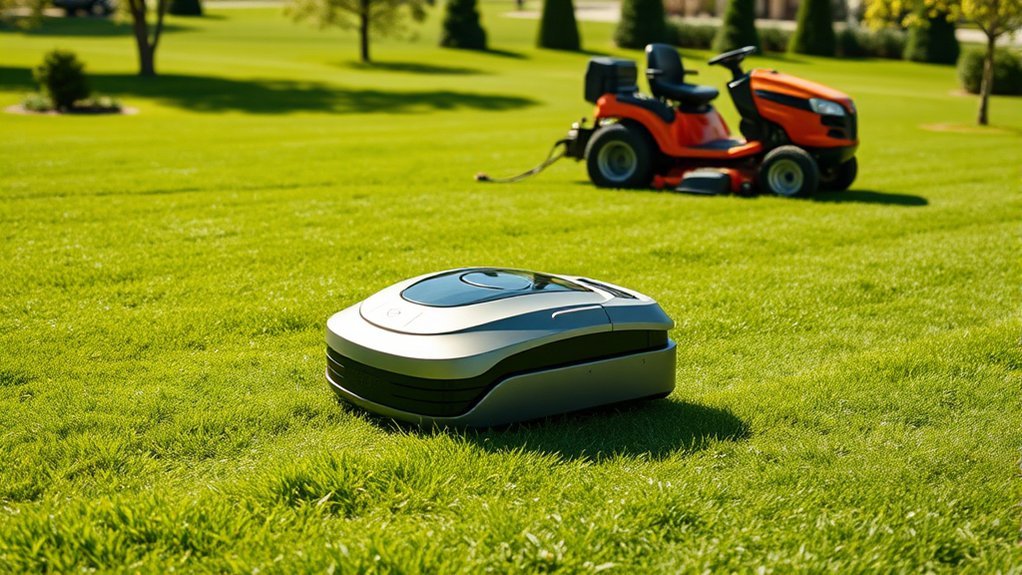
Evaluating which lawn size suits a robot mower involves examining compatibility with the mower’s coverage capacity, terrain complexity, and obstacle navigation. Smaller lawns with even terrain allow for more efficient, consistent mowing, while larger or uneven areas may challenge the mower’s endurance and precision. Understanding these factors helps determine if a robot mower can meet the specific demands of your lawn size.
Lawn Size Compatibility
Determining which mower type best suits a given lawn size hinges on understanding their operational capacities. Robot mowers excel on small to medium-sized lawns—typically up to a quarter-acre—ensuring consistent mowing without disrupting lawn aesthetics. Their ability to operate frequently promotes uniform grass height and healthier turf, which benefits lawn fertilization. Larger lawns, however, may challenge a robot mower’s battery life and coverage speed, potentially requiring multiple charges or extended runtimes, which can compromise efficiency. Ride-on mowers are better suited for expansive areas, providing rapid coverage and maintaining the desired lawn aesthetics with minimal effort. Ultimately, matching mower type to lawn size ensures peak maintenance, supporting both aesthetic appeal and effective fertilization cycles.
Terrain and Obstacle Navigation
Terrain and obstacle guidance greatly influence whether a robot mower is suitable for a particular lawn size. Complex terrain, such as steep slopes, uneven ground, or numerous obstacles, challenges the mower’s guidance capabilities. A robot mower’s battery life directly impacts its ability to cover larger areas, especially when maneuvering around obstacles or on varied terrain. Limited battery capacity may require frequent recharging, reducing efficiency. Additionally, blade durability becomes critical when encountering debris or rough patches, as weaker blades may wear out faster or break, compromising mowing quality. For lawns with intricate features or challenging terrain, a mower with advanced sensors and robust blades is essential. Overall, terrain complexity and obstacle density determine whether a robot mower can effectively manage a specific lawn size without frequent interruptions or maintenance issues.
Mowing Frequency and Coverage
The frequency at which a mower operates and the total coverage it can achieve are key factors in matching a lawn size to a suitable mowing method. Robot mowers typically mow more frequently, maintaining a consistent lawn pattern that promotes healthier grass by preventing long, uneven growth. Ride-on mowers, with less frequent cycles, may create uneven cut areas, affecting grass health over time. Coverage efficiency varies: robot mowers excel on smaller to medium lawns, ensuring thorough and uniform mowing, while ride-ons suit larger properties with less frequent passes. Consider this comparison:
| Mowing Frequency | Coverage Capacity | Best Lawn Size |
|---|---|---|
| High | Moderate | Small to medium lawns |
| Moderate | Extensive | Large lawns |
| Low | Very extensive | Commercial areas |
Optimal choice depends on lawn size, desired pattern, and grass health goals.
How Do Maintenance and Operating Costs Compare?
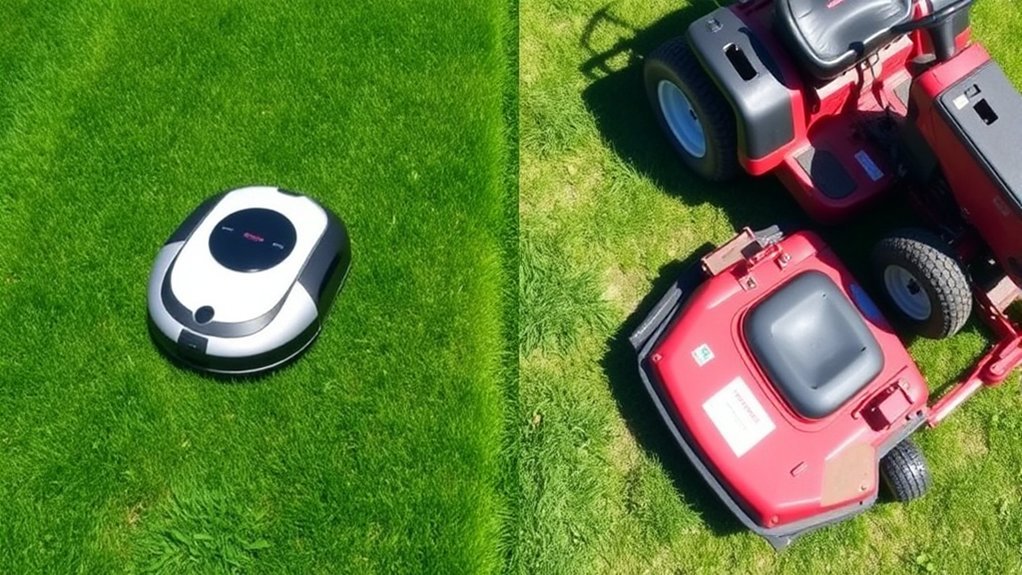
While robotic mowers typically have higher upfront costs, their long-term maintenance and operating expenses tend to be lower compared to ride-on mowers. Robotic models require minimal upkeep, mainly involving occasional blade replacements and software updates, which reduces ongoing costs. In contrast, ride-on mowers often demand regular engine servicing, oil changes, and tire replacements, increasing expenses over time. Additionally, robotic mowers contribute to better garden design by evenly maintaining grass, reducing the need for extensive lawn aeration or patch repairs. Their consistent mowing promotes healthier turf, decreasing the frequency of lawn renovation. Overall, the reduced need for manual interventions and fewer consumable parts make robotic mowers more cost-effective over the lifespan, especially for those prioritizing efficient lawn management without the frequent, costly maintenance associated with traditional ride-on equipment.
What Are the Key Features and Technology in Robot Mowers?
Robot mowers utilize advanced autonomous navigation systems that enable precise, efficient coverage of lawns with minimal human intervention. They also incorporate cutting-edge safety features such as obstacle detection, anti-collision sensors, and safety shut-offs to prevent accidents. Analyzing these technologies reveals how they enhance reliability and safety compared to traditional mowing methods.
Autonomous Navigation Systems
Autonomous navigation systems are the core technology enabling robot mowers to operate efficiently without human intervention. These systems rely heavily on artificial intelligence to interpret sensor data, allowing precise mapping and obstacle avoidance. Advanced algorithms analyze the environment, optimizing mowing paths and guaranteeing full coverage. Critical to this process is battery technology, which determines runtime and recharge cycles; high-capacity batteries enable longer, uninterrupted operation. Navigation features such as GPS integration and boundary sensors help define mowing zones and maintain boundaries, reducing overlap and missed spots. The combination of AI-driven decision-making and robust battery technology ensures that robot mowers work reliably in complex yard layouts, providing consistent results while minimizing user input. This integration of key technologies advances autonomous capabilities, making robot mowers more efficient and adaptable.
Cutting Edge Safety Features
Advancements in safety technologies are transforming robot mowers into highly secure devices, integrating multiple features to prevent accidents and protect users. These systems rely on sophisticated sensors, responsive software, and improved battery technology to guarantee safe operation. Significantly, sensors detect obstacles and human presence, activating safety protocols. Enhanced cutting precision minimizes debris ejection, reducing hazards. Additionally, battery technology advancements enable swift shutdowns during malfunctions or obstacles, preventing accidents. Here are key safety features:
- Obstacle and human detection sensors
- Emergency stop and automatic shutoff
- Geo-fencing for restricted areas
- Cutting precision controls to reduce debris ejection
These innovations collectively enhance safety, making robot mowers a reliable alternative to traditional ride-on models.
How Fast and Efficient Are Ride-On Mowers for Large Lawns?
How quickly a ride-on mower can cover large lawns depends on several factors, including engine power, cutting width, and terrain. Typically, higher horsepower models with wider cutting decks mow faster while maintaining quality. Efficiency also relates to consistent mowing patterns, which influence lawn aesthetics and prevent uneven growth. The table below illustrates typical speeds and coverage:
| Mower Model | Speed (mph) | Coverage (acres/hour) |
|---|---|---|
| Standard | 4-5 | 1-2 |
| Heavy-duty | 6-7 | 2-3 |
| Commercial | 7-8 | 3-4 |
While faster models excel in efficiency, uneven terrain or complex mowing patterns can diminish speed and affect lawn aesthetics. Properly calibrated ride-on mowers guarantee both speed and precision.
What Are the Environmental Impacts of Both Mower Types?
Both ride-on mowers and robot mowers have distinct environmental footprints, influenced by their design and operation. Ride-on mowers typically consume more fuel, resulting in higher greenhouse gas emissions and contributing to air pollution. Their larger size can also impact garden aesthetics negatively if not maintained properly. Conversely, robot mowers operate on electricity, producing no direct emissions, which benefits air quality. However, they can generate continuous noise pollution during operation, affecting local wildlife and neighbor comfort.
Ride-on mowers emit more greenhouse gases, while robot mowers lead to noise pollution; both have unique environmental impacts.
Key environmental considerations include:
- Fuel consumption and emissions
- Noise pollution levels
- Impact on garden aesthetics
- Energy efficiency and sustainability
These factors highlight the trade-offs between the two mower types, emphasizing their respective ecological effects and suitability for environmentally conscious landscaping.
Which Mower Offers More Convenience and Ease of Use?
While both ride-on and robot mowers aim to simplify lawn maintenance, their levels of convenience and ease of use differ considerably. Robot mowers excel in automation, requiring minimal user input once programmed, which benefits diverse garden designs with complex layouts. They also adapt well to varying plant compatibility, maneuvering around flower beds and obstacles with precision. Conversely, ride-on mowers demand more physical effort, especially for larger lawns, but offer quick coverage and control over terrain. Setup for robot mowers involves initial mapping and programming, which may be complex but pays off through consistent, unattended operation. Overall, robot mowers provide greater convenience for intricate garden designs and diverse plant arrangements, while ride-on mowers suit those prioritizing speed and manual control.
How Do Safety and Security Considerations Differ?
Safety and security are essential factors to contemplate when choosing between robot and ride-on mowers, especially as their operation methods and potential hazards differ. Robot mowers rely heavily on automated systems, making the user interface and manual control critical for safe operation. Conversely, ride-on mowers involve direct manual control, which requires awareness of physical safety measures. Consider these aspects:
- Automation Risks: Robot mowers can malfunction or misinterpret obstacles, necessitating robust safety protocols within their user interface.
- Physical Control: Ride-on mowers depend on manual control, where operator vigilance is key to avoiding accidents.
- Security Concerns: Robot mowers may be vulnerable to theft or tampering, requiring security features integrated into their design.
- Safety Features: Both systems benefit from emergency stop functions and obstacle detection, but implementation varies considerably.
What Factors Should Influence Your Budget and Investment?
When considering your budget, it is crucial to compare the initial purchase costs of robot and ride-on mowers, as well as their long-term maintenance expenses. Evaluating these factors helps determine which option offers better value over time. By analyzing upfront investments alongside ongoing costs, you can make a more informed decision aligned with your lawn care needs.
Initial Purchase Cost
Determining the initial purchase cost of a robot mower versus a ride-on mower requires a careful assessment of several key factors that influence budgeting decisions. First, the complexity of your garden design impacts cost, as irregular shapes or slopes may necessitate more advanced features. Second, mower storage requirements play a role; robot mowers need minimal space, whereas ride-on mowers demand dedicated storage solutions, influencing overall expenses. Third, the size of your lawn directly affects the cost; larger areas often require higher-capacity models. Fourth, upfront costs are influenced by brand reputation and technological features, such as navigation systems for robot mowers or engine power for ride-ons. Evaluating these factors helps determine a realistic budget aligned with your landscape’s specific needs.
Long-Term Maintenance Expenses
Long-term maintenance expenses play a significant role in evaluating the overall value of a robotic mower compared to a ride-on model. Robotic mowers generally incur lower ongoing costs due to fewer moving parts and simplified components, reducing repair and replacement expenses over time. However, factors like garden design and lawn aesthetics influence maintenance needs; complex layouts or irregular terrain may increase wear and calibration requirements for robotic units. Ride-on mowers often demand more frequent engine servicing, blade sharpening, and fuel costs, adding to long-term expenses. Additionally, robotic mowers’ durability varies with usage patterns and lawn complexity. Understanding these factors helps in budgeting effectively, ensuring that the investment aligns with maintenance costs that are manageable within the scope of your garden design and desired lawn aesthetics.
Is a Robot Mower a Good Long-Term Investment for Your Garden?
A robot mower can be a worthwhile long-term investment for your garden, provided its benefits align with your landscaping needs and maintenance preferences. Its consistent mowing promotes a uniform lawn, supporting better soil health over time. When considering this investment, we evaluate:
A robot mower offers long-term value by ensuring a uniform lawn and promoting healthier soil through consistent, efficient trimming.
- Garden design flexibility—robot mowers adapt well to complex layouts, reducing manual labor.
- Soil health—regular, even trimming minimizes soil compaction and encourages healthy grass growth.
- Operational costs—lower energy and maintenance expenses compared to ride-on mowers.
- Longevity and reliability—quality models offer durable performance, making them cost-effective long-term.
Frequently Asked Questions
Can Robot Mowers Handle Uneven or Sloped Terrain Effectively?
Robot mowers can handle uneven or sloped terrain effectively thanks to advanced terrain navigation and obstacle detection features. However, their performance varies with steepness and complexity, so evaluating specific models’ capabilities is essential for ideal results.
How Do Robot Mowers Adapt to Changing Weather Conditions?
We find that robot mowers adapt to changing weather through built-in sensors and seasonal adjustments, enhancing weather resilience. They automatically modify mowing patterns and schedules, ensuring consistent performance despite rain, heat, or cold, which boosts efficiency and lawn health.
Are Robot Mowers Suitable for All Grass Types?
Robot mowers are suitable for many grass types, but mower compatibility varies; thick, tall, or uneven grass may challenge some models, so it is crucial to analyze grass type and mower specifications before choosing a robot mower.
What Are the Warranty and Support Options for Each Mower Type?
Surprisingly, both mower types offer solid warranties, but robot mowers excel with longer battery life and lower noise levels, while ride-ons often provide extensive support. We find evaluating support options essential for long-term satisfaction.
How Easily Can Robot Mowers Be Integrated With Smart Home Systems?
We find that robot mowers with smart home compatibility integrate via dedicated apps and automation features, allowing seamless scheduling and control, though compatibility varies by brand and system, requiring careful selection for ideal integration and security.
Conclusion
In the end, choosing between a robot mower and a ride-on boils down to your lawn’s personality—and your patience for mowing. If you enjoy manual labor and have sprawling, uneven terrain, a ride-on might be your trusty steed. But if you prefer hands-off, eco-friendly, and consistent trimming, a robot mower could turn your yard into a manicured paradise without breaking a sweat. Either way, your grass gets cut—just maybe not with the same level of drama.