Ad Blocker Detected
Our website is made possible by displaying online advertisements to our visitors. Please consider supporting us by disabling your ad blocker.
While the choice between robot mowers and cordless lawn mowers might seem straightforward, it’s often more nuanced than it appears at first glance. Each offers distinct advantages and challenges that could substantially impact your landscape management, depending on your specific needs and expectations. Understanding these differences is essential to making an informed decision, especially as technology continues to evolve and reshape lawn care options. Let’s explore the key factors that differentiate these two mowing solutions.
Key Takeaways
- Robot mowers offer autonomous, scheduled lawn care, while cordless mowers require manual operation and control.
- Robot mowers typically have higher upfront costs but lower ongoing maintenance and operational expenses.
- Cordless mowers provide immediate power and manual control, ideal for dense or uneven grass.
- Robot mowers are quieter, environmentally friendly, and suited for large or complex lawns.
- Cordless mowers are more affordable initially and better for smaller, simple lawns or quick tasks.
What Are the Main Differences Between Robot Mowers and Cordless Lawn Mowers?
While both robot mowers and cordless lawn mowers are designed to simplify grass maintenance, they differ considerably in operation, autonomy, and functionality. Robot mowers leverage smart technology to autonomously navigate and mow large or complex lawns, often integrating sensors and algorithms for efficient coverage. Their battery life is optimized for continuous operation, with advanced models offering extended mowing sessions before recharge. In contrast, cordless mowers rely on manual control, with battery life dictating their runtime per use. Although simpler technically, cordless models are limited by user intervention and typically have shorter battery durations. The key distinction lies in automation: robot mowers’ smart technology enables autonomous operation, while cordless mowers depend on human input, making battery life an essential factor in both.
How Do Robot Mowers and Cordless Mowers Compare in Cost and Value?
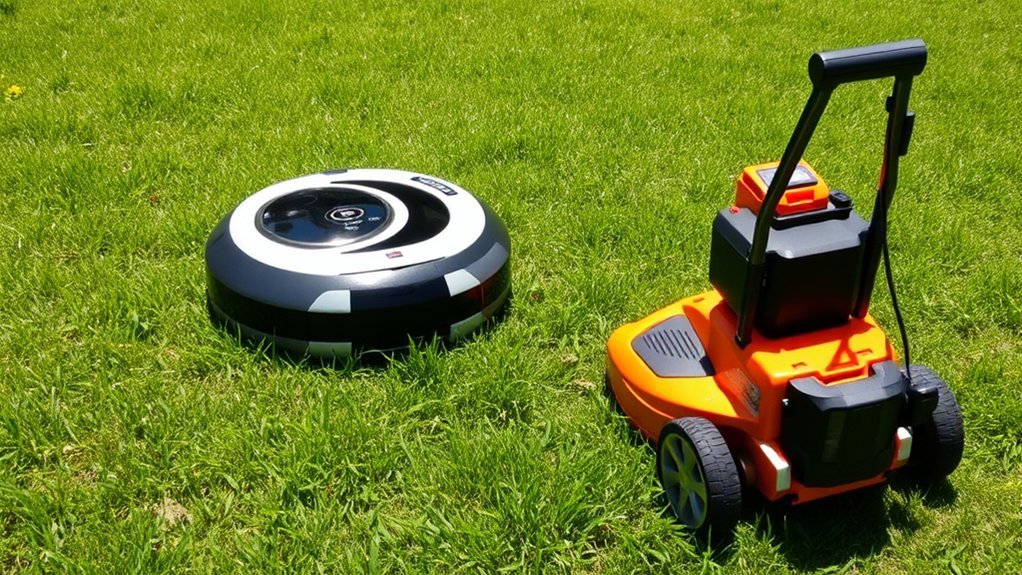
When comparing cost and value, robot mowers generally require a considerably higher initial investment than cordless lawn mowers. This upfront cost reflects advanced features such as longer battery longevity and sophisticated navigation systems, which enhance efficiency and coverage. Over time, robot mowers may prove cost-effective due to reduced labor and maintenance needs, though their higher purchase price can be a barrier. Noise levels are also a factor; robot mowers operate more quietly, adding value in noise-sensitive environments. Conversely, cordless mowers typically have lower initial costs but may incur higher long-term expenses from frequent battery replacements and manual operation. Ultimately, evaluating total cost of ownership and performance benefits helps determine which option offers greater value for specific lawn care needs.
Which Is Easier to Use and Maintain: Robot or Cordless Mowers?
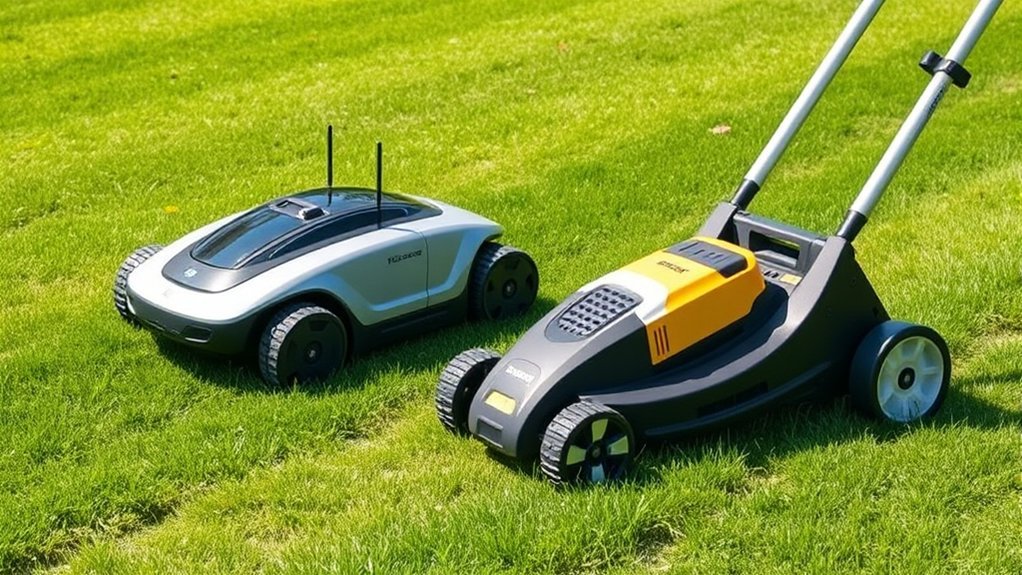
Determining which mower is easier to use and maintain depends on the user’s familiarity with technology and willingness to perform regular upkeep. Robot mowers typically feature advanced user interfaces, often app-controlled, making setup and adjustments straightforward for tech-savvy users. They require minimal physical maintenance but demand attention to battery longevity, as frequent charging cycles can impact performance over time. Conversely, cordless lawn mowers usually have simpler controls and less reliance on digital interfaces, making them more accessible for users preferring manual operation. Maintenance involves periodic blade sharpening and battery management, which is generally easier but requires routine effort. Overall, robot mowers are more complex initially but excel in automated operation, whereas cordless mowers are more straightforward but demand hands-on involvement for upkeep.
How Do Performance and Cutting Quality Vary Between the Two Options?
The performance and cutting quality of robot mowers and cordless lawn mowers vary considerably based on their design and operational mechanisms. Robot mowers typically feature sensors and adaptive algorithms that optimize mowing paths, resulting in consistent, even cuts, but their battery life can limit operational duration, especially on larger lawns. Cordless mowers often deliver higher cutting power and more precise control, which can enhance cut quality on dense or uneven grass. Noise levels also differ markedly; robot mowers operate quietly, minimizing disturbance, while cordless models generate more noise, potentially affecting user comfort. Overall, cordless mowers tend to provide superior performance in challenging conditions, but robot mowers excel in maintaining consistent cuts over time, especially when battery management is optimized.
What Are the Key Features to Consider When Choosing a Mower?
Selecting the right mower involves evaluating several key features that directly impact performance, convenience, and suitability for specific lawn conditions. Critical factors include battery life, which determines operational duration and reduces downtime, especially for larger areas. Mowing speed is essential for efficiency, influencing how quickly the lawn is maintained without sacrificing cut quality. Additionally, motor power, blade design, and terrain adaptability are essential, guaranteeing the mower can handle various grass types and slopes. For cordless models, battery capacity and recharge times are vital, while robot mowers benefit from sensors and navigation algorithms that optimize coverage. Overall, balancing these features ensures an ideal match between mower capabilities and yard requirements, facilitating effective, reliable, and efficient lawn maintenance.
Which Mower Fits Different Yard Sizes and Landscapes Best?
Selecting the appropriate mower depends on yard size, terrain, and landscape complexity, as these factors influence performance and suitability. Robot mowers excel in small to medium, open areas with minimal obstacles, while cordless lawn mowers are better suited for larger or more intricate landscapes requiring manual control. Analyzing these variables guarantees ideal mower choice to match specific yard characteristics.
Suitable Yard Size
How do different yard sizes influence the choice between robot mowers and cordless lawn mowers? For smaller to medium-sized yards, cordless mowers excel due to their portability, ease of maneuvering, and ability to quickly restore garden aesthetics. They require minimal storage solutions and are effective for precise edging and detailed landscaping. Conversely, larger yards benefit from robot mowers, which operate autonomously over extended periods, maintaining consistent grass height without user intervention. Robot mowers also reduce the need for multiple storage solutions, as they store easily and work continuously. The decision hinges on yard size, with cordless models suited for smaller spaces demanding detailed care, and robot mowers ideal for expansive landscapes where consistent, hands-off maintenance is prioritized.
Terrain and Obstacle Handling
Terrain and obstacles considerably influence which mower performs best across different yard sizes and landscapes. Robot mowers excel on flat or gently sloped terrain, maneuvering around obstacles with sensors that enhance pet safety and prevent damage. Their low noise levels make them suitable for environments with pets or nearby residents, reducing disturbance. Conversely, cordless lawn mowers handle uneven or rugged terrain more effectively, thanks to manual control and more powerful blades capable of managing dense or tall grass. Pet safety remains a key consideration; robot mowers are designed with obstacle detection to avoid harming animals, while cordless models require careful operator attention to prevent accidents. Overall, selecting the right mower depends on terrain complexity, obstacle density, pet presence, and acceptable noise levels for your landscape.
Landscape Complexity
The suitability of a robot mower or cordless lawn mower largely depends on the complexity of your landscape and yard size. For intricate landscapes with uneven terrain or numerous obstacles, robot mowers equipped with advanced artificial intelligence excel at navigation, adapting to complex layouts. Conversely, cordless mowers with larger battery life are better suited for straightforward, expansive lawns.
Consider these factors:
- Landscape complexity: Highly intricate yards benefit from AI-driven robot mowers that can map and adjust in real-time.
- Yard size: Larger areas require longer battery life, favoring cordless models with extended runtime.
- Terrain features: Steep slopes and obstacles demand smart obstacle detection in robot mowers, while open lawns are efficiently maintained by cordless mowers.
Are Robot Mowers More Environmentally Friendly Than Cordless Mowers?
While both robot mowers and cordless lawn mowers offer eco-friendly alternatives to traditional gas-powered equipment, their environmental impacts differ markedly. Robot mowers typically utilize advanced battery technology, which often results in higher energy efficiency and longer lifespan compared to cordless models. This reduces overall energy consumption and minimizes waste. Additionally, robot mowers operate with considerably lower noise pollution, contributing to less disturbance in residential areas and less stress on local wildlife. Cordless mowers, while also battery-powered, generally have shorter runtime and may rely on less efficient battery chemistries. Overall, robot mowers tend to be more environmentally friendly by optimizing energy use through superior battery technology and producing less noise pollution, making them a more sustainable choice for eco-conscious consumers.
Which Mower Is Better for Your Lifestyle and Budget?
When evaluating which mower suits your lifestyle and budget, we consider initial costs, ongoing maintenance, and ease of use. Robot mowers typically have higher upfront prices but lower maintenance, while cordless mowers often require more frequent attention and replacement parts. Analyzing these factors helps determine the most cost-effective and convenient option for your specific needs.
Cost Considerations
Have you considered how the initial and ongoing costs of robot mowers compare to cordless lawn mowers? Robot mowers typically have higher upfront costs driven by advanced features like longer battery life and integrated safety features, which enhance operational security and autonomy. However, their long-term expenses can be lower due to reduced maintenance and manual labor. Conversely, cordless mowers often have lower purchase prices but may incur additional costs over time, such as battery replacements and increased energy consumption.
- Initial purchase price: robot mowers are generally more expensive due to technology integration.
- Battery longevity: longer battery life in robot mowers can reduce replacement frequency.
- Safety features: enhanced safety systems in robot mowers may justify higher costs for peace of mind.
Maintenance Requirements
Choosing between robot mowers and cordless lawn mowers depends considerably on their maintenance requirements and how well these fit into our lifestyle and budget. Robot mowers typically demand minimal physical maintenance but require attention to battery life, which influences their operational longevity and charging cycles. Regularly monitoring battery health is essential to prevent performance decline. Conversely, cordless mowers necessitate periodic blade sharpening, cleaning, and battery replacements, which can add to ongoing costs. Both systems often need software updates to improve functionality and security; robot mowers may require more frequent updates to optimize navigation algorithms. The complexity of these updates varies, impacting maintenance time and technical proficiency needed. Overall, robot mowers tend to be lower maintenance but hinge on software stability, while cordless mowers demand more manual upkeep.
User Convenience
Evaluating user convenience requires analyzing how each mower type integrates into daily routines and aligns with budget constraints. Robot mowers leverage smart technology for autonomous operation, minimizing manual input and optimizing mowing schedules. Their battery efficiency allows for extended operation, although initial setup may require monitoring. Cordless lawn mowers, on the other hand, demand active user involvement for operation and maintenance, which might suit those seeking immediate control.
- Robot mowers offer scheduled, autonomous mowing, reducing user effort but requiring initial programming.
- Cordless mowers provide instant power, but demand regular recharging and manual operation.
- Budget considerations include upfront costs for robot mowers with advanced smart tech versus ongoing battery replacements for cordless models.
Choosing depends on balancing convenience, tech integration, and budget priorities.
Frequently Asked Questions
How Long Do Robot and Cordless Mowers Typically Last Before Needing Replacement?
We find that both robot and cordless mowers typically last 3-8 years, with battery degradation affecting cutting performance over time. Proper maintenance can extend lifespan, but eventually, replacement becomes necessary due to diminishing efficiency and wear.
Can Robot Mowers Handle Uneven or Sloped Terrains Effectively?
Like skilled mountain climbers, robot mowers excel in terrain adaptability, traversing slopes with precision. Their advanced sensors and programming enable effective slope navigation, making them suitable for uneven or sloped terrains, though performance varies by model.
What Safety Features Are Included in Robot and Cordless Lawn Mowers?
We find that both robot and cordless lawn mowers include safety features like obstacle detection, remote control operation, and noise level controls, ensuring user safety and minimizing disturbances during operation. This extensive approach enhances overall lawn maintenance safety.
How Do Battery Life and Recharge Times Compare Between the Two Types?
We’ve found that battery technology considerably impacts power consumption, with robot mowers often offering longer-lasting batteries and quicker recharge times due to advanced lithium-ion tech, whereas cordless mowers typically have shorter run times but faster recharging.
Are There Any Limitations on Grass Types or Yard Conditions for Either Mower?
Both mower types face limitations based on grass density and soil moisture; dense grass or overly moist soil can hinder operation, causing jams or uneven cuts, especially for robots, which are less adaptable to tough conditions than cordless mowers.
Conclusion
In analyzing both options, we find that robot mowers, with their autonomous operation, can reduce lawn maintenance time by up to 70%, making them ideal for busy households seeking efficiency. Cordless mowers, however, offer immediate control and power for detailed or challenging terrains. Ultimately, selecting the right mower depends on your yard size, landscape complexity, and budget. A strategic choice enhances lawn quality while aligning with environmental and lifestyle priorities, ensuring peak long-term value.