Ad Blocker Detected
Our website is made possible by displaying online advertisements to our visitors. Please consider supporting us by disabling your ad blocker.
Manual mowing demands significant physical effort and time, especially on uneven or overgrown lawns, while robotic mowers operate autonomously with minimal user intervention. This contrast highlights not only the ergonomic benefits but also the potential for efficiency gains. Yet, understanding the true extent of these advantages requires a detailed comparison of operational mechanics, effort investment, and long-term costs—considerations that are essential for making an informed decision about lawn care solutions.
Key Takeaways
- Robot mowers significantly reduce physical effort by operating automatically, while manual mowing requires strenuous physical exertion.
- Automated mowers save up to 80% of the time compared to manual lawn care.
- Manual mowing demands consistent scheduling and physical labor, especially on uneven or tall grass.
- Robot mowers are user-friendly, with minimal setup, whereas manual tools require more effort and skill.
- Using a robot mower minimizes ergonomic strain and overall effort, making lawn maintenance easier.
How Do Robot Mowers Work Compared to Traditional Lawn Mowers
Although both robot mowers and traditional lawn mowers serve the primary function of cutting grass, their operational mechanisms differ fundamentally. Robot mowers rely on rechargeable batteries, with battery lifespan directly impacting operational duration and maintenance schedules. They utilize sensors and boundary wires to navigate and avoid obstacles, integrating advanced safety features like automatic shutoff and collision detection to enhance user safety. Conversely, traditional mowers depend on manual operation powered by engines or cords, offering immediate control but requiring physical effort. Robot mowers are programmed via apps or onboard controls, enabling autonomous, scheduled mowing cycles. Their safety features are designed to minimize accidents, whereas manual mowers depend on operator vigilance. Understanding these distinctions clarifies how each system functions and how safety and battery longevity influence overall efficiency.
Assessing the Effort Required for Manual Mowing
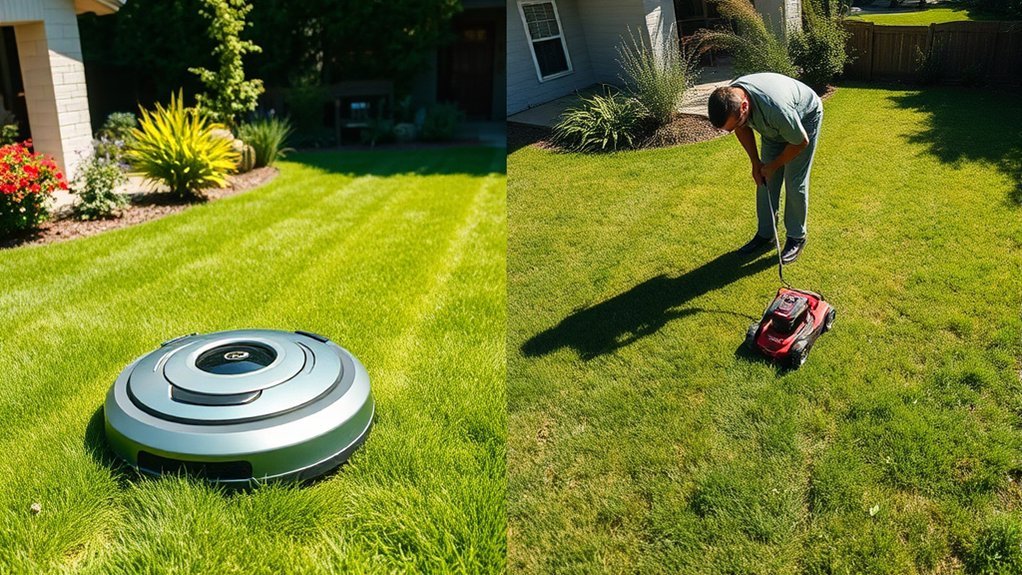
To accurately assess manual mowing efforts, we must quantify physical exertion levels through metrics such as energy expenditure and muscle engagement, considering variations in mower design and user strength. Time commitment analysis involves measuring average mowing durations across different yard sizes and terrain complexities, highlighting the labor intensity involved. By systematically evaluating these factors, we can establish an all-encompassing understanding of the manual effort required and its impact on user fatigue and resource allocation.
Physical Exertion Levels
Have you ever considered how much physical effort manual mowing demands, especially when accounting for variables such as grass height, terrain, and mower type? Manual mowing requires significant muscular exertion, particularly for pushing or maneuvering over uneven terrain or tall grass, increasing energy expenditure. This effort directly influences lawn aesthetics, as inconsistent mowing can lead to uneven cuts and visual imperfections. Additionally, the physical strain varies with terrain complexity, with hilly or rocky landscapes demanding higher exertion. From an environmental impact perspective, manual mowing contributes to physical fatigue but spares energy consumption associated with motorized devices. Hence, the level of exertion hinges on terrain and mower design, affecting both the quality of the cut and the sustainability of mowing practices.
Time Commitment Required
Manual mowing requires a significant time investment, as it involves both the physical act of cutting grass and the preparatory and finishing steps that accompany it. The effort to maintain ideal lawn aesthetics depends heavily on adherence to a consistent mowing schedule, which can range from weekly to biweekly sessions. This schedule ensures an even cut and healthy growth, but it also demands precise planning and dedicated time. Each session involves setup, such as checking equipment and clearing debris, followed by the actual mowing, which varies based on lawn size and terrain complexity. The cumulative time commitment can be substantial, especially for larger or irregularly shaped lawns. This detailed process highlights how manual mowing’s temporal demands directly influence overall maintenance efficiency and lawn appearance.
How Much Time Can You Save With a Robot Mower?
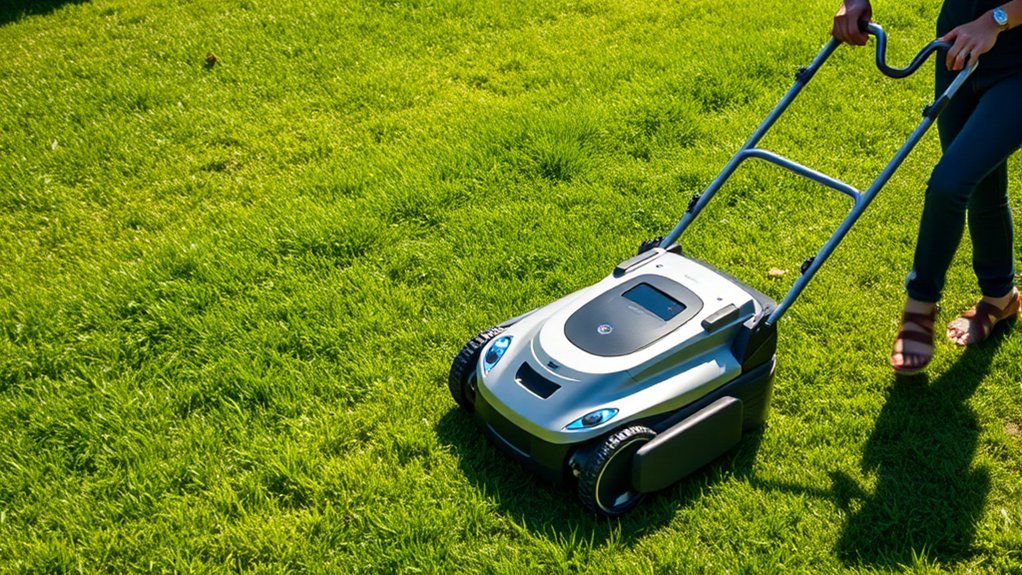
By automating the mowing process, robot lawn mowers considerably reduce the amount of time homeowners spend maintaining their lawns. Historically, manual mowing required substantial effort and time, often spanning hours weekly, with environmental impact from gasoline emissions and noise pollution. Modern robot mowers operate efficiently, saving significant time:
- Daily, automatic mowing ensures consistent lawn maintenance, typically requiring only initial setup and occasional adjustments.
- Reduced manual intervention, with most tasks handled autonomously, saving 60-80% of traditional mowing time.
- Optimized mowing schedules adapt to lawn size and growth rate, leading to a predictable, time-efficient routine.
Comparing Physical Strain: Manual vs Robot Mowing
While automation markedly reduces the time spent on lawn maintenance, it also has a profound impact on physical exertion. Manual mowing requires continuous physical effort, engaging core muscles and maintaining posture for extended periods, which can lead to fatigue and strain. In contrast, robot mowers minimize physical activity, allowing users to avoid ergonomic issues like back pain or joint stress. This shift influences gardening aesthetics, as consistent, automated mowing preserves uniform turf height and health without user fatigue interfering with precision. Additionally, reduced physical exertion correlates with a lower environmental impact, as less energy is expended and fewer emissions are generated from manual labor. Overall, robot mowing substantially diminishes physical strain, supporting healthier postures and promoting sustainable gardening practices.
What Are the Costs of Robot Mowers Versus Manual Equipment?
Although the initial investment in robot mowers is notably higher than purchasing traditional manual equipment, the long-term cost comparison reveals nuanced differences. Key factors include:
- Upfront Cost: Robot mowers typically cost between $1,000 and $3,000, considerably exceeding manual tools like trimmers and push mowers.
- Operational Expenses: Robot mowers feature rechargeable batteries with a lifespan of 2-5 years, leading to replacement costs, while manual equipment requires minimal ongoing expenses aside from fuel or electricity.
- Equipment Durability: Manual equipment tends to have longer-lasting parts with fewer electronic failures, whereas robot mowers’ complex systems might incur higher maintenance or replacement costs over time.
Evaluating Lawn Quality and Maintenance Needs
When evaluating lawn quality, we focus on uniformity and texture, which directly influence aesthetic appeal and turf health. Weed control effectiveness is also critical, as it impacts long-term maintenance and resource allocation. Additionally, we compare maintenance frequency and effort, considering how each mowing method supports or hinders consistent turf conditions.
Lawn Uniformity and Texture
How does the choice between a robot mower and manual mowing influence lawn uniformity and texture? Robot mowers typically produce a more consistent grass height, resulting in a uniform lawn with even texture. This precision minimizes variability in lawn color and promotes healthier growth. Conversely, manual mowing can introduce irregularities due to uneven cutting, affecting both grass height and uniformity. Consider these factors:
- Grass height consistency—robot mowers maintain a precise, even cut, optimizing lawn color and texture.
- Cut quality—robot mowers cut with clean, precise blades, reducing tear and uneven patches common with manual mowing.
- Maintenance needs—manual mowing often leads to uneven wear and tear, creating patches of different grass height and texture, while robotic systems ensure more uniformity over time.
Weed Control Effectiveness
Robotic mowers often enhance weed control effectiveness by providing a more consistent and thorough coverage of the lawn, which suppresses weed germination and growth. Their precise mowing patterns reduce uneven patches, minimizing bare soil areas where weeds typically establish. Additionally, consistent mowing promotes a dense turf canopy that naturally outcompetes weeds. When combined with strategies like biodegradable mulch, which suppresses weed emergence, robotic mowing optimizes lawn health. Furthermore, uniform turf density acts as a pest deterrent, reducing pest habitat and further limiting weed spread. Unlike manual mowing, robotic systems maintain an even height, preventing weeds from gaining a foothold. Overall, these technological advantages contribute to a healthier, more resilient lawn with fewer invasive weeds, reducing the need for chemical herbicides and intensive manual interventions.
Maintenance Frequency and Effort
Robotic mowers considerably reduce the frequency and physical effort required for lawn maintenance compared to manual mowing methods. They enable more consistent mowing schedules, which directly benefits garden aesthetics by maintaining uniform grass height and texture. Additionally, robotic mowing allows for optimized integration with irrigation systems, reducing uneven watering caused by inconsistent grass growth.
Key advantages include:
- Reduced mowing frequency—robots operate daily or multiple times per week, minimizing overgrowth and promoting a healthier lawn.
- Lower physical effort—less manual labor, especially for large or complex terrains.
- Enhanced lawn quality—consistent cutting aligns with irrigation schedules, improving overall aesthetics and reducing the need for additional maintenance.
This regularity simplifies lawn care, ensuring a visually appealing, healthy landscape with less effort.
How User-Friendly Are Robot Mowers for Beginners?
While initial setup can seem intimidating, most robot mowers are designed with user-friendliness in mind, simplifying the process for beginners. The user interface plays a vital role, typically featuring intuitive controls, clear displays, and step-by-step prompts that facilitate straightforward operation. Ease of setup involves minimal tools and quick installation procedures, often requiring only basic measurements and boundary wire placement. Many models incorporate smart features like app connectivity, enabling remote configuration and real-time monitoring, which further reduce the learning curve. The combination of simplified interfaces and streamlined installation processes makes robot mowers accessible, even to those with limited technical experience. Overall, their design prioritizes ease of use, allowing beginners to operate them confidently without extensive technical knowledge.
Troubleshooting Common Challenges With Robot Mowing
Despite their advanced design, robot mowers can encounter specific operational challenges that require systematic troubleshooting. Common issues often relate to battery longevity, which diminishes over time and affects mowing duration. To address this, we recommend regularly calibrating the battery health and replacing cells if necessary. Weather resistance problems also arise; prolonged exposure to moisture can impair electronic components. Ensuring proper sealing and avoiding mowing in excessive rain can mitigate damage. Lastly, navigation errors may occur due to sensor obstructions or debris. Troubleshooting involves cleaning sensors, clearing pathways, and updating firmware. By systematically evaluating these key areas—battery health, weather resistance, and sensor functionality—we can maintain ideal performance and extend the lifespan of our robot mowers.
Which Lawn Size and Terrain Are Best for Robot Mowers?
Selecting the appropriate lawn size and terrain is fundamental to optimizing robot mower performance and longevity. Smaller, flat lawns typically suit robot mowers best, ensuring consistent cutting and minimal soil disruption, which preserves soil compatibility. Conversely, larger or uneven terrains demand models with stronger motors and advanced navigation to maintain garden aesthetics without damaging delicate soil structures.
| Lawn Size | Terrain Type | Soil Compatibility |
|---|---|---|
| Small (up to 500 m²) | Flat, even surfaces | High, minimal soil disruption |
| Medium (500-1500 m²) | Slight slopes | Moderate, requires soil stability |
| Large (1500+ m²) | Uneven, hilly areas | Low, demands soil preservation |
| Complex landscapes | Multi-level, obstacles | Critical, requires terrain-aware models |
Making the Decision: Is a Robot Mower Worth the Investment?
Deciding whether a robot mower justifies its cost requires a thorough analysis of both the initial investment and long-term benefits. We evaluate factors such as improved garden aesthetics, minimized manual effort, and the ability to maintain planting diversity. Consider these points:
Assess initial costs and long-term gains to determine if a robot mower enhances your garden efficiently and beautifully.
- Cost-Benefit Analysis: Initial purchase, maintenance, and potential repairs versus savings in labor and time.
- Impact on Garden Aesthetics: Consistent, even mowing preserves visual appeal and encourages healthy, diverse plant growth.
- Long-term Efficiency: Automated operation adapts to varied terrains and complex landscapes, supporting planting diversity with less disruption.
If your garden features diverse plantings and varied terrain, a robot mower can sustain aesthetics with less effort, making it a worthwhile investment over traditional manual mowing.
Frequently Asked Questions
How Long Do Robot Mowers Typically Last Before Needing Replacement?
Robot mowers typically last 5-8 years, depending on battery lifespan and motor durability. Regular maintenance extends their lifespan, but eventual component wear necessitates replacement, ensuring consistent performance and efficiency over their operational life.
Are Robot Mowers Suitable for All Types of Grass and Terrain?
Robot mowers are generally suitable for various grass types and terrains, but their effectiveness depends on terrain adaptability features and blade design. We analyze these factors to guarantee maximum performance across different conditions.
What Maintenance Is Required to Keep a Robot Mower Functioning Properly?
To maintain our robot mower, we regularly check battery life, ensuring proper charging cycles, and replace blades as needed to maintain cutting efficiency; routine cleaning and software updates also prevent mechanical or electronic issues.
Can Robot Mowers Handle Uneven or Hilly Lawns Effectively?
Absolutely, our robot mowers excel with hill navigation, tackling uneven terrain through advanced sensors and adaptive algorithms. Like a skilled climber, they adjust speed and direction, ensuring efficient, consistent mowing on hilly, uneven lawns without manual effort.
How Do Robot Mowers Perform in Different Weather Conditions?
We find robot mowers excel in weather adaptability, maintaining seasonal performance by incorporating advanced sensors and weatherproof designs, allowing efficient operation across diverse conditions, though extreme weather may temporarily hinder functionality, requiring manual intervention for ideal results.
Conclusion
In conclusion, robot mowers drastically reduce physical effort—saving up to 80% of mowing time—making lawn maintenance more efficient and less strenuous. Their autonomous operation minimizes ergonomic strain and manual labor, especially on uneven terrain. With proper assessment of lawn size and terrain, investing in a robot mower can be highly cost-effective and user-friendly, even for beginners. Considering these factors, adopting robotic technology enhances productivity while easing physical demands, ultimately transforming traditional lawn care into a streamlined, low-effort process.