Ad Blocker Detected
Our website is made possible by displaying online advertisements to our visitors. Please consider supporting us by disabling your ad blocker.
Did you know that the emissions from a typical petrol mower can be comparable to those of a small vehicle over its operational lifetime? While many are aware of petrol mowers’ noise and pollution, fewer consider the broader environmental implications, especially when comparing them to electric alternatives like robot mowers. As we examine their respective impacts, it becomes clear that understanding the nuances could influence how we make sustainable choices for lawn care—choices that might surprise you.
Key Takeaways
- Petrol mowers emit higher levels of CO₂, NOx, and particulate matter, contributing significantly to air pollution and climate change.
- Robot mowers produce minimal direct emissions, especially when powered by renewable energy sources.
- Fuel combustion in petrol mowers results in greater greenhouse gas emissions and environmental footprint.
- Robot mowers have lower noise pollution, reducing their impact on ecosystems and communities.
- Emissions from robot mowers are mainly linked to battery production and disposal, whereas petrol mowers continuously emit during use.
How Do Petrol and Robot Mowers Compare in Emissions?
Although petrol and robot mowers serve similar lawn maintenance purposes, their emissions profiles differ markedly. Petrol mowers rely on internal combustion engines, emitting CO₂, NOx, and particulate matter, contributing to air pollution. In contrast, robot mowers utilize advanced battery technology, which substantially reduces direct emissions. However, the environmental impact of battery production and disposal remains notable. Additionally, robot mowers produce minimal noise pollution compared to petrol counterparts, making them more neighbor-friendly and reducing noise-related stress. The shift toward battery-powered systems highlights technological advancements that lower greenhouse gases and pollutants, yet emphasizes the importance of sustainable battery lifecycle management. Overall, robot mowers offer a cleaner, quieter alternative, aligning with environmental goals of reducing air and noise pollution.
The Environmental Impact of Petrol Mowers Explained
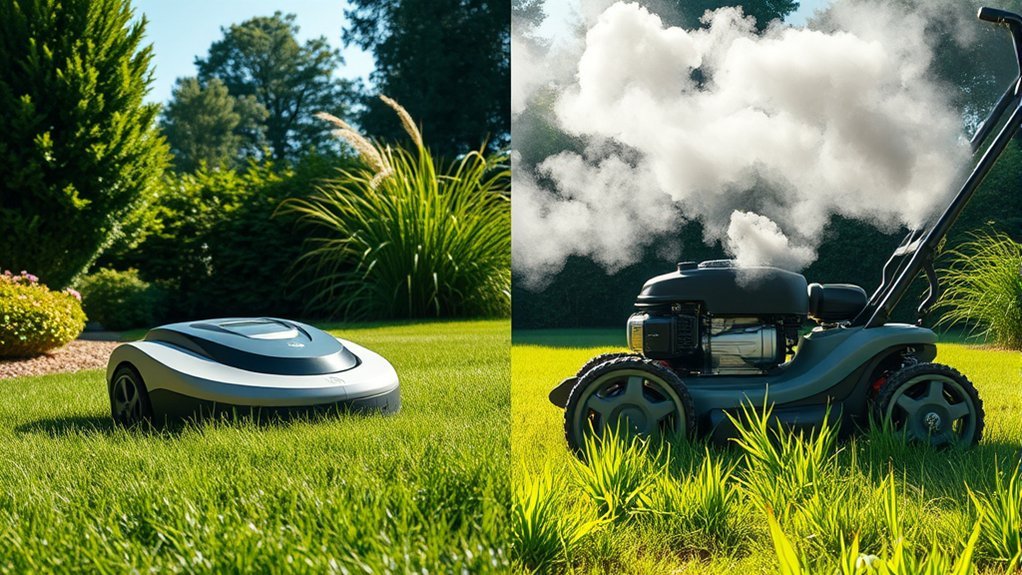
Petrol mowers, with their internal combustion engines, have a significant environmental footprint rooted in their emission of pollutants. Their fuel efficiency varies but is generally low, leading to higher fuel consumption and increased greenhouse gas emissions per hour of operation. These engines release carbon monoxide, nitrogen oxides, and volatile organic compounds, contributing to air pollution and climate change. Additionally, petrol mowers generate substantial noise pollution, disrupting local ecosystems and communities. The noise levels from these machines can exceed recommended safety thresholds, affecting both human health and wildlife. Overall, the environmental impact of petrol mowers is considerable, driven by inefficient fuel use and high emissions. This underscores the need to evaluate cleaner, quieter alternatives for sustainable lawn care.
How Much Do Robot Mowers Reduce Your Carbon Footprint?
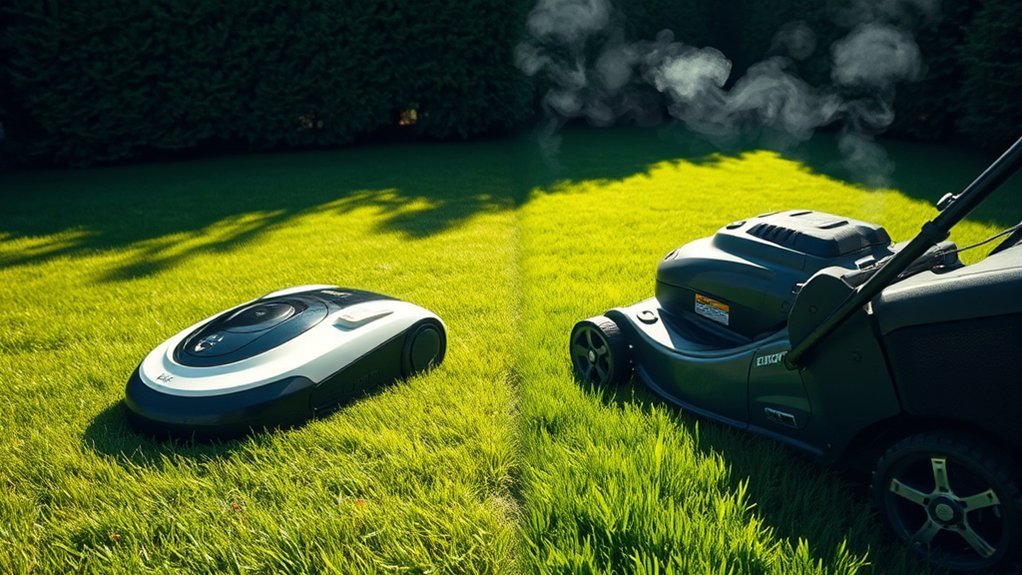
Since robot mowers operate on electricity rather than combustion engines, they inherently produce fewer direct emissions, markedly reducing our carbon footprint. The environmental benefits are amplified when powered by renewable energy sources, which minimize lifecycle greenhouse gases. Additionally, these mowers contribute to decreased noise pollution, improving local air quality and community well-being. Specifically:
- They emit negligible direct CO₂, relying on clean energy sources.
- Their operation reduces reliance on fossil fuels, decreasing overall carbon emissions.
- When used with renewable energy, the reduction in greenhouse gases is maximized.
This environment-focused approach underscores how robot mowers can substantially lower our carbon footprint while mitigating noise pollution, aligning with sustainable practices. The shift to renewable energy integration further enhances these benefits, making robot mowers a greener alternative to petrol counterparts.
Key Factors Influencing Mower Emissions and Efficiency
The efficiency and emissions profiles of mower types are primarily shaped by several interconnected factors, including energy source, design, and operational practices. Battery life directly impacts a robot mower’s operational efficiency, as longer-lasting batteries reduce downtime and energy consumption per session. Noise levels also influence environmental impact, with robot mowers typically operating at lower decibel levels, minimizing noise pollution. Design considerations, such as motor efficiency and blade mechanisms, further affect emissions and operational effectiveness. Operational practices, including mowing frequency and terrain management, determine overall efficiency. Understanding these factors helps us evaluate how different mower types contribute to environmental sustainability.
| Factor | Impact on Emissions & Efficiency |
|---|---|
| Battery life | Longer batteries improve operational efficiency and reduce energy use. |
| Noise levels | Lower noise indicates efficient, environmentally friendly operation. |
| Design | Optimized design enhances energy use and reduces emissions. |
| Operational practices | Proper scheduling and terrain management improve efficiency. |
Real-World Emissions: Comparing Petrol and Robot Mowers in Action
While laboratory measurements provide valuable insights, real-world emissions from petrol and robot mowers often diverge considerably due to operational variables. Factors such as runtime, terrain, and user habits influence actual emissions, impacting noise pollution and maintenance requirements.
- Petrol mowers generate higher emissions under extended use, contributing substantially to local air pollution and noise levels.
- Robot mowers typically produce lower emissions, but frequent operation can accumulate noise pollution, especially in densely populated areas.
- Maintenance demands vary; petrol mowers often require more frequent servicing due to engine wear, increasing emissions from oil and filter disposal, whereas robot mowers tend to have lower maintenance-related emissions but may need battery replacements over time.
Understanding these real-world dynamics helps in evaluating their environmental impact more accurately.
Making an Eco-Friendly Choice: Which Mower Is Better for the Planet?
Choosing an eco-friendly mower requires evaluating their overall environmental footprints, including emissions, energy use, and resource consumption. Robot mowers leverage smart technology to optimize operation, reducing unnecessary energy expenditure and minimizing emissions compared to petrol models. They operate quietly, markedly lowering noise pollution, which benefits urban and suburban ecosystems. Petrol mowers, in contrast, emit greenhouse gases directly and often generate higher noise levels, contributing to environmental degradation and community disturbance. By integrating smart sensors and programmable features, robot mowers enhance efficiency and reduce resource waste. Overall, robot mowers present a more sustainable option, aligning technological innovation with environmental preservation. Making a conscious choice involves weighing these factors to select a mower that minimizes ecological impact while maintaining effective lawn care.
Frequently Asked Questions
What Are the Long-Term Maintenance Emissions of Each Mower Type?
We find that robot mowers, with sustainable design, substantially reduce long-term maintenance emissions through electric operation and fewer parts, whereas petrol mowers emit more over time due to engine wear and fuel use, impacting emission reduction efforts.
Do Robot Mowers Produce Any Noise Pollution?
Robot mowers produce minimal noise pollution, with lower sound levels compared to petrol mowers, reducing sound pollution considerably. Their quiet operation minimizes disturbance, making them more environmentally friendly and sustainable for urban and residential environments.
How Do Battery Disposal Impacts Compare to Petrol Waste?
They say, “what’s thrown away comes back,” and we see that with battery disposal’s impact versus petrol waste. Battery recycling minimizes environmental harm, unlike petrol spills, which cause severe soil and water contamination, emphasizing the need for responsible waste management.
Are There Any Regulations Affecting Eco-Friendly Mower Choices?
Regulations increasingly favor eco-friendly mowers with renewable energy standards and eco-friendly certifications, guiding us toward sustainable choices. These policies aim to reduce emissions, promote renewable resources, and guarantee environmentally responsible manufacturing and disposal practices for mower options.
What Is the Lifespan Difference Between Robot and Petrol Mowers?
In our analysis, robot mowers typically last 7-10 years, outlasting petrol mowers’ 3-5 years due to technological advancements and electric efficiency. This longevity benefits environmental sustainability by reducing waste and resource consumption.
Conclusion
In sum, choosing a robot mower over a petrol one considerably reduces emissions and our environmental footprint. While battery production has some impacts, the overall benefits of cleaner air, lower greenhouse gases, and quieter operation are clear. As the saying goes, “Every little bit helps,” and opting for sustainable lawn care aligns with our collective effort to protect the planet. By making informed choices, we can foster a healthier environment for future generations.