Ad Blocker Detected
Our website is made possible by displaying online advertisements to our visitors. Please consider supporting us by disabling your ad blocker.
As the saying goes, “the grass is always greener,” but choosing between robot and electric mowers calls for a precise evaluation of their technical merits. Both options promise efficient lawn maintenance, yet their operational mechanisms, cost structures, and suitability vary markedly. Understanding these differences is essential for making an informed decision. To navigate this landscape, we’ll explore their design, performance, and long-term value, revealing which option aligns best with your specific yard and preferences.
Key Takeaways
- Robot mowers offer autonomous, scheduled operation ideal for large or complex lawns, while electric mowers are manually operated and better for smaller yards.
- Robot mowers typically have higher upfront costs but lower maintenance; electric mowers are cheaper initially but may require more repairs.
- Robot mowers provide precise cuts with advanced sensors, whereas electric mowers deliver more powerful, targeted cutting performance.
- Electric mowers are easier to set up and manage, while robot mowers require complex boundary and programming setup.
- Both options are eco-friendly, but robot mowers tend to operate more quietly and efficiently over time.
How Do Robot Lawn Mowers and Electric Mowers Work?
While both robot lawn mowers and electric mowers are designed to cut grass efficiently, they operate through fundamentally different mechanisms. Robot mowers rely on autonomous navigation systems, using sensors and boundary wires to map and cover the lawn systematically. Their battery life determines operational duration, requiring frequent recharges for larger areas. Safety features are integral, including obstacle detection, lift sensors, and emergency stop functions, which prevent accidents during operation. Electric mowers, on the other hand, are manually operated, powered by either cords or batteries, with battery capacity influencing runtime. They feature safety mechanisms such as blade shut-off switches and automatic cord retractors. While electric mowers depend on user control, robot mowers incorporate safety systems that enable hands-off, secure operation, highlighting their distinct operational principles.
Comparing Design and Setup: Which Is Easier to Use?
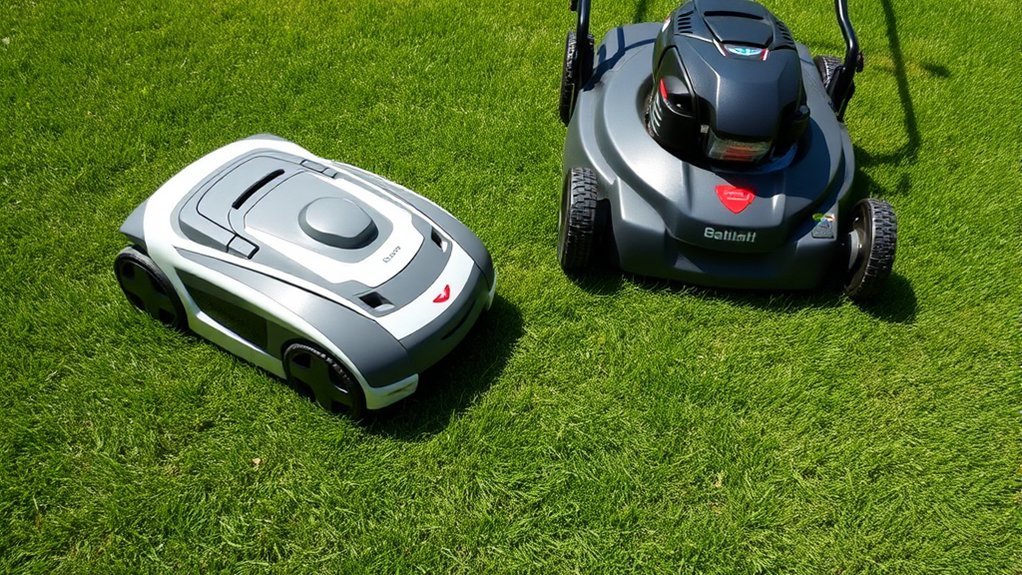
When comparing the design and setup of robot lawn mowers and electric mowers, it becomes clear that their ease of use hinges on different factors. Robot mowers rely heavily on advanced battery technology, requiring initial programming of boundary wires and navigation zones, which can be complex but once set, simplifies ongoing operation. Electric mowers generally involve straightforward assembly and cord management, making setup more immediate. Safety features also differ markedly; robot mowers incorporate sensors and automatic shutoffs to prevent accidents, enhancing user confidence but adding initial complexity. Electric mowers often depend on manual controls and safety switches, which are simpler but less automated. Overall, robot mowers demand more initial technical input but offer easier daily operation, whereas electric mowers provide a more intuitive, less involved setup process.
Performance Differences: Cutting Power and Precision
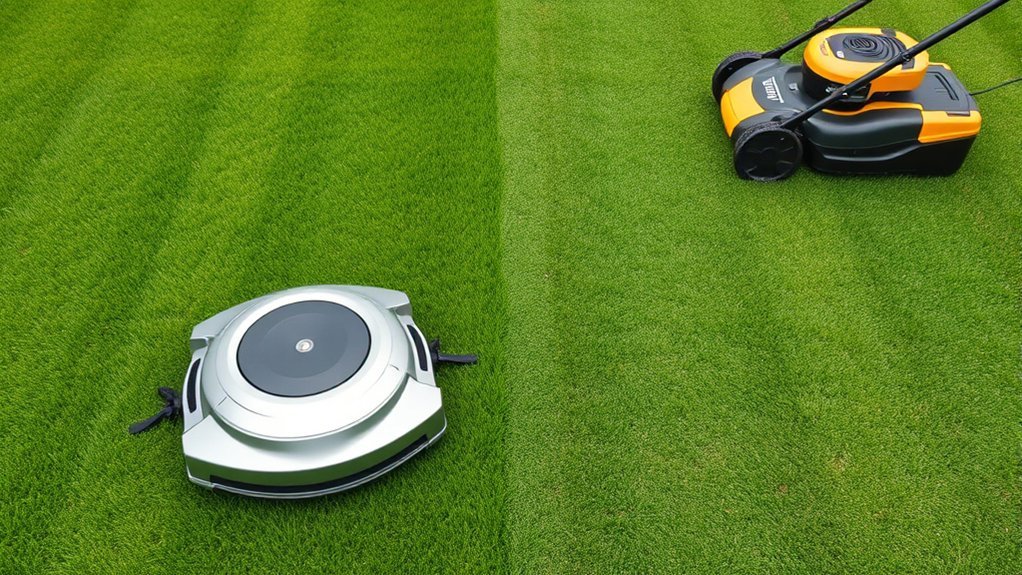
When comparing cutting power efficiency, robot and electric mowers exhibit distinct strengths and limitations, especially across varying grass densities. Precision and accuracy are influenced by each mower’s sensor technology and blade design, affecting the quality of the cut. Handling diverse terrain presents additional challenges, requiring stability and adaptability that differ between the two mower types.
Cutting Power Efficiency
How do the cutting power and precision of robot lawn mowers compare to those of traditional electric mowers? Robot mowers generally rely on smaller, more efficient motors, which can limit their raw cutting power but enhance motor efficiency, leading to longer battery lifespan. While electric mowers typically have higher wattage motors designed for robust cutting, their power consumption can be less efficient during extended operation. The efficiency of the motor directly impacts cutting power, especially on thicker or denser grass. Robot mowers optimize power usage through adaptive motor control, but this can sometimes compromise cutting strength compared to electric mowers with dedicated, high-performance motors. Overall, the balance between motor efficiency and battery lifespan determines their relative cutting power efficiency in different lawn conditions.
Precision and Accuracy
Despite their smaller size, robot lawn mowers are engineered to deliver notable precision through advanced navigation systems and sensor technology, which enable accurate and consistent cutting patterns. Their precision hinges on sophisticated algorithms that optimize path planning, minimizing overlaps and missed patches. Battery life directly impacts accuracy, as longer-lasting batteries facilitate uninterrupted mowing, maintaining uniformity across the lawn. Safety features, such as obstacle detection and automatic shutoff, enhance precision by preventing unintended cuts or damage—ensuring the mower stays within designated boundaries. These integrated systems collectively improve cutting accuracy, but their effectiveness depends on the quality of sensors and battery performance. Overall, robot mowers excel in delivering precise, consistent results, provided their safety features are properly calibrated and battery life remains sufficient for the lawn size.
Handling Diverse Terrain
Handling diverse terrain presents distinct challenges for robot and electric mowers, particularly regarding their cutting power and precision. Robot mowers often excel in maneuvering irregular surfaces due to advanced sensors and adaptive algorithms, but their battery life can limit operation duration on steep or uneven grounds. Electric mowers typically provide higher cutting power, especially on dense or thick grass, yet may struggle with complex terrain without manual adjustment. Safety features are vital; robot mowers rely on obstacle detection to prevent accidents, while electric mowers depend on sturdy design and safety cut-off systems. Overall, each mower type’s performance in diverse terrain hinges on their ability to balance cutting power, safety features, and battery capacity to guarantee effective and safe operation across varied landscapes.
Cost and Maintenance: Which Offers Better Long-Term Value?
When comparing long-term value, we analyze initial purchase costs against ongoing maintenance expenses for both robot and electric mowers. Robot mowers typically involve higher upfront investments but tend to reduce maintenance needs over time, while electric mowers often have lower initial prices but may incur higher repair or part replacement costs. Evaluating these financial factors helps determine which option provides better cost efficiency over its lifespan.
Upfront Purchase Costs
Are upfront costs the decisive factor in choosing between a robot lawn mower and an electric mower? Typically, robot mowers have a higher initial investment due to advanced technology, including longer battery lifespans and integrated safety features. While these features contribute to operational safety and longevity, they substantially impact the purchase price. Electric mowers tend to be more affordable upfront, but their shorter battery lifespan often means more frequent replacements or upgrades. The initial cost analysis must consider these technological factors, as safety features like obstacle detection and automatic shutoff can justify a premium for robot models. Ultimately, the choice hinges on balancing initial expenditure with the expected long-term benefits derived from technological advancements and durability.
Ongoing Maintenance Expenses
Over the long term, maintenance expenses considerably influence the overall value of a lawn mower, with clear differences between robot and electric models. Robot mowers often require less routine maintenance but depend heavily on battery life, which degrades over time, impacting performance and replacement costs. Electric mowers typically need more frequent parts replacement, such as brushes and belts, but benefit from broader warranty coverage for major repairs.
| Aspect | Robot Mower | Electric Mower | Notes |
|---|---|---|---|
| Battery Life | Decreases over time, costly to replace | Not applicable | Battery replacement can be significant |
| Warranty Coverage | Usually limited, excludes battery | Often extensive, covers major parts | Longer warranty reduces long-term costs |
| Maintenance Frequency | Low, mainly cleaning blades | Moderate, replacing consumables | Maintenance frequency affects costs |
| Cost of Repairs | Generally lower | Varies, sometimes higher | Repair costs impact total expense |
Environmental Impact: Eco-Friendliness of Both Options
While both robot lawn mowers and electric mowers are marketed as environmentally friendly alternatives to traditional gas-powered equipment, their ecological impacts differ considerably upon closer examination. Electric mowers produce zero emissions during operation, reducing air pollutants and greenhouse gases; however, their overall eco-friendliness hinges on the source of electricity. Robot mowers, with their automated, low-emission operation, also minimize noise pollution and reduce fossil fuel use. Battery longevity plays a pivotal role, as longer-lasting batteries decrease waste and the frequency of replacements, enhancing sustainability. Additionally, brand reliability influences environmental impact, as reputable brands tend to prioritize eco-conscious manufacturing and disposal practices. Overall, both options present benefits, but their true environmental credentials depend on manufacturing standards, energy sources, and maintenance practices.
Suitability for Different Yard Sizes and Landscapes
Choosing the appropriate mowing technology depends heavily on yard size and landscape complexity. For larger areas, robot lawn mowers excel due to their ability to consistently maintain lawn aesthetics with minimal human intervention, although they require a defined, relatively flat terrain for ideal performance. Smaller yards benefit from electric mowers, which offer higher mowing frequency and precise control over lawn appearance, especially in varied landscapes with obstacles. Complex terrains with uneven surfaces or intricate landscaping may challenge robot mowers’ navigation, reducing effectiveness. The choice hinges on ensuring consistent mowing frequency to achieve desired lawn aesthetics; robot mowers offer automated, scheduled maintenance, while electric mowers provide flexibility for targeted, manual cuts. Understanding these technical nuances helps select the most suitable mower for specific yard conditions.
User Experience: Convenience, Noise, and Smart Features
User experience is a critical factor when comparing robot lawn mowers and electric mowers, particularly regarding convenience, noise levels, and smart features. Robot mowers excel in user comfort by offering autonomous operation, which minimizes manual effort and scheduling concerns. They often include safety features such as obstacle detection and automatic shutoff, enhancing overall safety. Noise emissions are markedly lower with robot mowers, reducing disturbance during operation and contributing to a more pleasant user experience. Conversely, electric mowers, while generally quieter than gas models, require manual operation, which can impact convenience. Smart features like app connectivity and programmable schedules in robot mowers further elevate user experience by enabling remote control and real-time monitoring. Overall, robot mowers tend to provide superior convenience and safety, aligning with modern user expectations.
Common Challenges and Troubleshooting Tips
Despite their convenience and advanced features, both robot and electric mowers can encounter specific operational challenges that users should be prepared to troubleshoot. Common issues include connectivity problems, battery degradation, and sensor malfunctions, often linked to smart technology or battery life limitations. Troubleshooting starts with verifying power sources, cleaning sensors, and updating firmware. For battery issues, recalibrating or replacing batteries may be necessary. The following table summarizes typical challenges and solutions:
| Issue | Troubleshooting Tip |
|---|---|
| Connectivity problems | Reset Wi-Fi modules, update app firmware |
| Battery drain | Optimize mowing schedule, reduce workload |
| Sensor errors | Clean sensors, recalibrate sensors |
| Motor stalls | Inspect blades, check for obstructions |
| Software glitches | Perform software updates, factory reset |
Which Mower Is Right for Your Lawn? Making the Final Choice
How do you determine which mower best suits your lawn’s specific needs? A thorough assessment involves analyzing your garden aesthetics and understanding seasonal adjustments. For lawns requiring precise, uniform cuts to maintain visual appeal, electric mowers offer consistent results with adjustable cutting heights. Conversely, robot lawn mowers excel in maintaining large or irregularly shaped lawns with minimal user intervention, but may require strategic boundary setup for aesthetic continuity. Seasonal adjustments influence mower choice—robot mowers adapt well to frequent, low-height cuts, while electric mowers handle seasonal growth surges effectively. Consider factors like terrain complexity, desired aesthetics, and maintenance ease. Ultimately, aligning mower capabilities with your lawn’s size, shape, and aesthetic goals ensures a suitable, long-term solution.
Frequently Asked Questions
How Long Do Robot Lawn Mowers Typically Last Before Replacement?
We find robot lawn mowers typically last 3-8 years, depending on battery life and maintenance needs. Proper care extends their lifespan, but battery degradation and motor wear gradually reduce efficiency, necessitating eventual replacement for peak performance.
Can Electric Mowers Handle Thick or Uneven Grass Effectively?
When tackling thick grass and uneven terrain, electric mowers can be up to the task if equipped with sufficient power and quality blades. They handle challenging conditions well, but may require adjustments for peak efficiency on dense, uneven patches.
Are There Safety Concerns With Autonomous Robot Mowers?
We recognize safety risks and collision hazards with autonomous robot mowers, but advanced sensors and software substantially mitigate these concerns. Ongoing technical improvements aim to enhance safety, ensuring reliable operation and minimizing potential accidents during lawn maintenance.
What Are the Warranty Options for Both Mower Types?
Warranty coverage varies; robot mowers often include extended warranties and dedicated customer support, while electric mowers typically offer standard coverage. Both demand careful review of terms, ensuring technical support and protection against potential malfunctions.
How Do Weather Conditions Impact Mower Performance and Operation?
Weather conditions considerably impact mower performance and operation; poor weather reduces weather durability and mowing efficiency, causing potential malfunctions or safety risks. Both robot and electric mowers require weather-aware features for ideal, reliable, year-round functionality.
Conclusion
Ultimately, choosing between a robot mower and an electric mower is like selecting the right tool for a precise job—each excels in different terrains and user needs. By analyzing performance, costs, and environmental impact, we can ascertain which aligns best with our lawn’s demands and our automation preferences. Making an informed decision guarantees our yard maintenance is both efficient and sustainable, turning what once was a chore into a well-orchestrated, high-tech symphony.