Ad Blocker Detected
Our website is made possible by displaying online advertisements to our visitors. Please consider supporting us by disabling your ad blocker.
Imagine standing in your yard, contemplating whether a robotic mower or a petrol model better suits your needs. Both options offer distinct advantages and limitations, from power output to environmental impact, and understanding these differences is essential for making an informed choice. As we examine their performance, maintenance, and suitability for various lawn sizes, you’ll find that selecting the right mower involves balancing technical features with practical lifestyle considerations—something worth exploring further.
Key Takeaways
- Robotic mowers are autonomous, quiet, and eco-friendly, while petrol mowers are more powerful but require manual operation and emissions management.
- Robotic models have lower ongoing maintenance costs and no fuel expenses, unlike petrol mowers that need regular engine upkeep and fuel refills.
- Petrol mowers are better suited for large or dense lawns, whereas robotic mowers excel in small to medium, flat terrains.
- Robotic mowers feature obstacle sensors and safety functions, making them safer for households with children and pets.
- Petrol mowers provide higher power and faster coverage, ideal for complex landscapes, but come with higher environmental and operational costs.
How Do Robotic and Petrol Mowers Differ in Performance?
While both robotic and petrol mowers are designed to cut grass, their performance characteristics differ substantially due to their underlying mechanisms. Robotic mowers utilize precision-guided, sensor-based navigation, ensuring consistent cutting patterns and minimal overlap, which enhances lawn aesthetics. Their blades operate at a steady, controlled speed, providing high cutting precision and uniform grass height. Petrol mowers, on the other hand, rely on manual maneuvering and variable blade speed, often resulting in uneven cuts if not operated carefully. The robotic mower’s ability to follow systematic paths minimizes missed patches, maintaining a tidy appearance, whereas petrol mowers may leave irregular patches without meticulous oversight. Overall, robotic mowers excel in delivering consistent, precise cuts that optimize lawn aesthetics through advanced navigation and blade control.
Which Mower Is More Eco-Friendly and Cost-Effective?
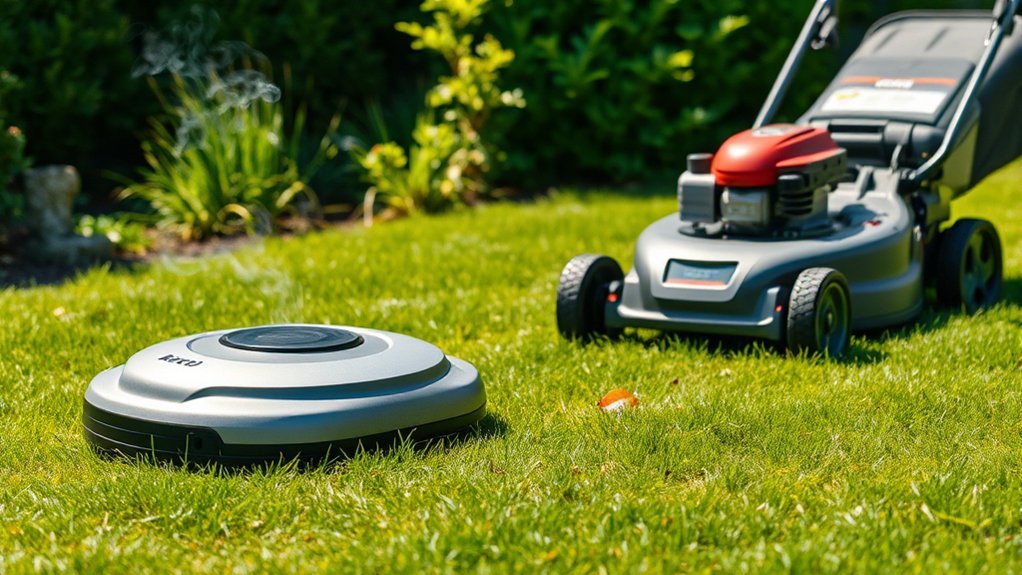
When comparing eco-friendliness and cost-effectiveness, we consider emissions, operating expenses, and energy usage. Robotic mowers generate no direct emissions and typically have lower ongoing maintenance costs, whereas petrol mowers emit pollutants and require more frequent repairs. Analyzing these factors reveals which mower provides a more sustainable and economical solution over its lifecycle.
Emissions and Air Quality
Electrically powered robotic mowers considerably reduce emissions compared to traditional petrol-powered models, making them a more environmentally friendly choice. They produce negligible tailpipe emissions, markedly decreasing contributions to urban air pollution, which is critical in densely populated areas. Unlike petrol mowers, robotic models do not emit nitrogen oxides or particulate matter, both of which impair air quality. Additionally, electric motors generate minimal noise pollution, contributing to healthier urban environments. This reduction in harmful emissions directly benefits air quality by curbing pollutants responsible for smog formation and respiratory issues. Overall, robotic mowers offer a cleaner, more sustainable alternative, aligning with efforts to improve urban air quality and mitigate noise pollution, essential factors for eco-conscious consumers seeking environmentally responsible landscaping solutions.
Operating Costs and Maintenance
Have we considered which mower type offers greater long-term savings through lower operating and maintenance costs? Robotic mowers generally have higher upfront costs but lower ongoing expenses, thanks to minimal fuel requirements and reduced maintenance needs. Their battery life typically ranges from 1 to 3 years, depending on usage and model quality, influencing replacement costs. Maintenance involves periodic blade sharpening and battery replacement, which are less frequent and less costly than petrol mower servicing. Petrol mowers, on the other hand, incur ongoing fuel costs and more frequent maintenance, including oil changes and engine repairs. Additionally, robotic mowers operate with markedly lower noise levels, reducing potential disturbance and compliance issues. Overall, robotic mowers tend to be more eco-friendly and cost-effective over time, primarily due to lower operating costs and quieter operation.
Energy Efficiency and Usage
Which mower type proves more eco-friendly and cost-effective over its operational lifespan? Robotic mowers generally excel due to advancements in battery technology, offering higher energy efficiency and lower operational costs. They utilize lithium-ion batteries with longer cycle lives and faster charging, reducing energy consumption over time. Additionally, robotic mowers produce notably lower noise levels, minimizing environmental disruption and enabling extended use during quiet hours. In contrast, petrol mowers rely on internal combustion engines that consume fossil fuels, emit greenhouse gases, and generate high noise pollution. The table below summarizes key differences:
| Feature | Robotic Mower | Petrol Mower | Impact |
|---|---|---|---|
| Battery Technology | Lithium-ion, high efficiency | N/A | Lower energy use, renewable potential |
| Noise Levels | Low | High | Reduced noise pollution |
| Energy Cost | Lower over lifespan | Higher due to fuel | Cost savings |
| Emissions | Zero emissions | CO₂ and pollutants | Eco-friendly |
| Maintenance | Minimal | Regular engine upkeep | Cost-effective over time |
What Are the Key Factors to Consider Before Buying?
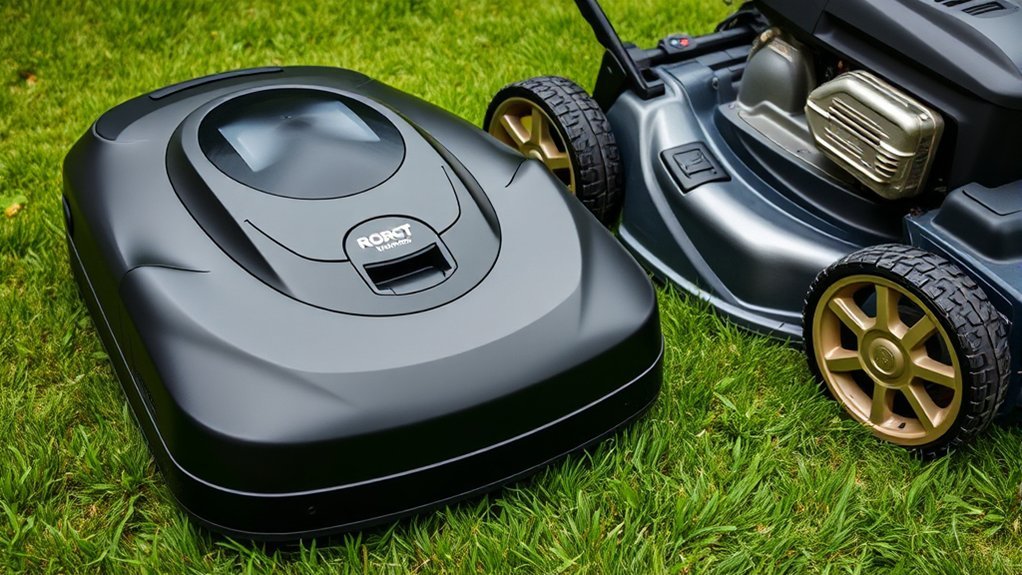
When selecting between a robotic mower and a petrol mower, it’s essential to evaluate several critical factors that directly impact performance, cost-efficiency, and suitability for your lawn. Key considerations include battery life, which determines mowing duration and frequency for robotic models, and is crucial for uninterrupted operation. Noise levels also play a significant role; robotic mowers generally operate at substantially lower decibel levels, making them suitable for noise-sensitive environments. Additionally, assess power source reliability, runtime capacity, and how these factors align with your lawn size and terrain complexity. Durability, energy consumption, and environmental impact further influence long-term costs and maintenance schedules. By carefully analyzing these technical aspects, you can select the mower type that most effectively balances operational efficiency with your specific lawn care needs.
How Easy Is Maintenance and Operation for Each Type?
Robotic mowers generally require minimal routine maintenance, such as blade replacement and software updates, making them easier to manage for most users. In contrast, petrol mowers involve more complex tasks like engine oil changes, spark plug checks, and fuel management, which can be more labor-intensive. Troubleshooting for robotic models often involves software diagnostics, whereas petrol mowers rely on mechanical inspection and parts replacement.
Routine Maintenance Requirements
Maintaining these two types of mowers involves distinct procedures that considerably impact user convenience. Robotic mowers require minimal upkeep, primarily focusing on battery longevity, which involves monitoring charge cycles and replacing batteries when capacity declines. Blade sharpening is infrequent but essential; robotic blades are designed for self-maintenance but may need manual sharpening to ensure ideal cutting performance. Petrol mowers, on the other hand, demand more routine attention, including regular oil changes, air filter replacements, and spark plug checks. Blade sharpening is more frequent due to higher usage and tougher grass conditions. Overall, robotic mowers offer a simplified maintenance cycle centered on battery health and blade upkeep, while petrol mowers necessitate a more thorough, hands-on approach to keep them functioning efficiently.
Ease of Operation
While robotic mowers are designed for intuitive operation with minimal user intervention, their setup and ongoing management are relatively straightforward, primarily involving initial programming and routine battery monitoring. Autonomous navigation systems allow the mower to efficiently cover complex terrains with minimal input, reducing manual effort. Ensuring *ideal* battery lifespan requires periodic checks and timely recharging, which is automated in most models.
Key considerations include:
- Precise mapping and boundary setting to maximizeautonomous navigation
- Regularly updating firmware for improved navigation algorithms
- Monitoring battery health to prevent capacity loss
- Adjusting mowing schedules based on terrain and grass growth
Troubleshooting Simplicity
Given their advanced technology, robotic mowers generally simplify troubleshooting processes through integrated diagnostic systems that detect and report issues automatically. They monitor parameters like battery life and noise levels continuously, alerting users via app notifications or onboard indicators when maintenance is needed. Troubleshooting battery life involves checking charging stations and ensuring ideal power management, while noise level irregularities can signal motor or sensor malfunctions. In contrast, petrol mowers require manual inspection of engine components, spark plugs, and fuel systems—making diagnostics more involved. The robotic mower’s automated alerts streamline maintenance, reducing downtime and technical guesswork. Overall, robotic models offer clearer, more accessible troubleshooting, especially for issues related to battery performance and noise irregularities, whereas petrol mowers demand more hands-on technical intervention.
Which Mower Fits Different Lawn Sizes and User Lifestyles?
Choosing the right mower depends heavily on lawn size and user lifestyle, as these factors determine the most efficient and practical option. For larger lawns, petrol mowers offer extended runtime and powerful cutting capacity, maintaining consistent lawn aesthetics and minimizing user fatigue. Robotic mowers excel for small to medium lawns, providing consistent, autonomous mowing that enhances lawn uniformity. User safety considerations influence equipment choice, with robotic mowers reducing manual handling risks. For irregular or complex landscapes, petrol mowers handle obstacles better, while robotic models require a clear, obstacle-free zone. Additionally, user lifestyle impacts decision-making, as robotic mowers demand less manual effort, fitting active schedules. Conversely, petrol mowers necessitate more maintenance but deliver greater control over mowing parameters in diverse terrain.
What Are the Pros and Cons of Robotic vs Petrol Mowers?
Robotic and petrol mowers each present distinct advantages and limitations that influence their suitability for different users and lawn conditions. Robotic mowers excel in safety features, such as obstacle sensors and automatic shut-off, reducing risk and making them ideal for households with children or pets. They also offer extensive user customization options, allowing precise scheduling, cutting height adjustments, and zone mapping for tailored lawn care. Conversely, petrol mowers provide greater power and faster coverage, especially on large, dense, or uneven terrains, but lack the advanced safety features inherent to robotic models. Petrol units require regular maintenance and fuel management, making them less convenient but more adaptable to tougher mowing tasks. Ultimately, the decision hinges on safety priorities, desired customization, and the specific demands of the lawn.
Frequently Asked Questions
How Long Does Each Mower Typically Last Before Needing Replacement?
We find robotic mowers typically last 5-8 years, with battery life and maintenance costs influencing longevity, whereas petrol mowers often reach 10-15 years, but require more frequent engine repairs and higher ongoing maintenance expenses.
Are Robotic Mowers Suitable for All Types of Terrain?
Robotic mowers offer limited terrain adaptability, excelling on flat, even surfaces but struggling with steep slopes, uneven ground, or dense vegetation, which increases mower maintenance needs and may require manual intervention for ideal performance.
What Safety Features Do Both Mower Types Include?
We’ve seen robotic mowers with safety sensors that automatically stop when obstacles are detected, enhancing safety, while petrol mowers often feature safety switches and throttle controls; battery life impacts operational safety, especially in robotic models.
Can Robotic Mowers Handle Uneven or Sloped Lawns?
Robotic mowers excel in terrain adaptability, efficiently maneuvering uneven or sloped lawns with specialized sensors and adaptive algorithms, while maintaining low maintenance complexity, as they require minimal manual intervention compared to traditional petrol mowers.
How Does Noise Level Compare Between Robotic and Petrol Mowers?
Silent operation characterizes robotic mowers, substantially reducing noise pollution compared to petrol mowers. This eco-friendly symbolism highlights their minimal environmental impact, making them ideal for quiet, sustainable lawn care while preserving natural harmony and community tranquility.
Conclusion
Ultimately, choosing between a robotic and petrol mower is like selecting the right tool for a precise craft—we must match performance, environmental impact, and lifestyle needs. Robotic mowers excel in quiet, eco-friendly operation, ideal for small to medium lawns, while petrol mowers deliver brute strength for larger, tougher terrains. By weighing these detailed factors, we can guarantee our lawn care solution is both efficient and sustainable, turning a mundane task into a well-oiled symphony of technology.