Ad Blocker Detected
Our website is made possible by displaying online advertisements to our visitors. Please consider supporting us by disabling your ad blocker.
Imagine a quiet, neatly trimmed lawn that’s maintained effortlessly, even as the sun sets behind the trees. We recognize that choosing between a robot mower and a traditional lawn mower involves analyzing various technical and practical factors. From operational efficiency to environmental impact, each option offers distinct advantages and limitations. To truly determine which is better suited for your needs, we need to explore how these devices differ in functionality, cost, maintenance, and long-term value.
Key Takeaways
- Robot mowers offer autonomous operation, reducing manual effort, while traditional mowers require direct user control and physical labor.
- Long-term costs favor robot mowers due to lower maintenance, energy efficiency, and longer-lasting batteries.
- Robot mowers are environmentally friendly with minimal emissions and noise, unlike gasoline-powered traditional mowers.
- Customizable features and smart navigation make robot mowers more versatile for various terrains and lawn sizes.
- Traditional mowers may be more suitable for complex or highly uneven landscapes where advanced navigation isn’t necessary.
How Do Robot Mowers and Traditional Lawn Mowers Differ in Functionality?
While both robot mowers and traditional lawn mowers serve the primary function of cutting grass, their operational mechanisms differ markedly. Robot mowers utilize smart navigation systems, employing sensors and algorithms to map and navigate the lawn efficiently, avoiding obstacles and ensuring thorough coverage. This automation relies heavily on advanced software, allowing the mower to operate autonomously with minimal human intervention. Battery longevity is a critical factor for robot mowers; they are equipped with high-capacity batteries designed for extended runtime, enabling them to cover large areas without frequent recharging. In contrast, traditional mowers depend on manual operation or simple corded or gas-powered engines, with no autonomous navigation. Their performance hinges on operator control rather than sophisticated navigation or battery management systems.
Which Cost Factors Should You Consider for Each Type of Mower?
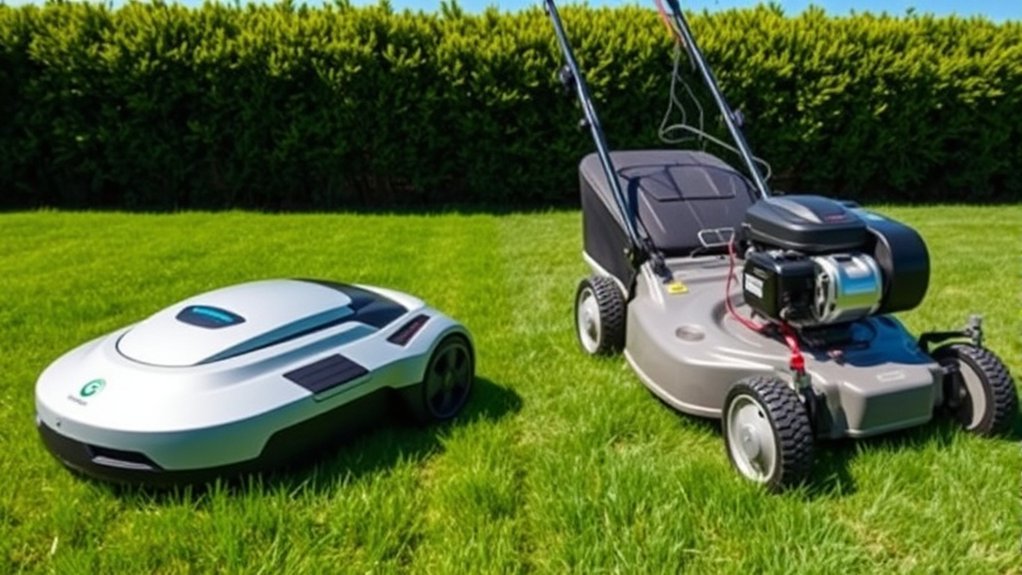
When evaluating the overall value of robot mowers versus traditional lawn mowers, cost considerations extend beyond initial purchase prices to include ongoing expenses and maintenance requirements. Pricing strategies profoundly influence total ownership costs, with robot mowers often featuring tiered pricing based on features, coverage area, and technology complexity. Traditional mowers generally have a straightforward purchase price, but maintenance costs such as fuel, oil, and parts can add up. Warranty coverage is critical; robot mowers typically offer longer, more exhaustive warranties due to their advanced technology, reducing potential repair costs. Conversely, standard lawn mowers may have shorter warranties, leading to higher out-of-pocket expenses over time. Analyzing these factors helps determine the true cost-effectiveness of each mower type.
How Do Maintenance and Operating Effort Compare Between Robot and Lawn Mowers?
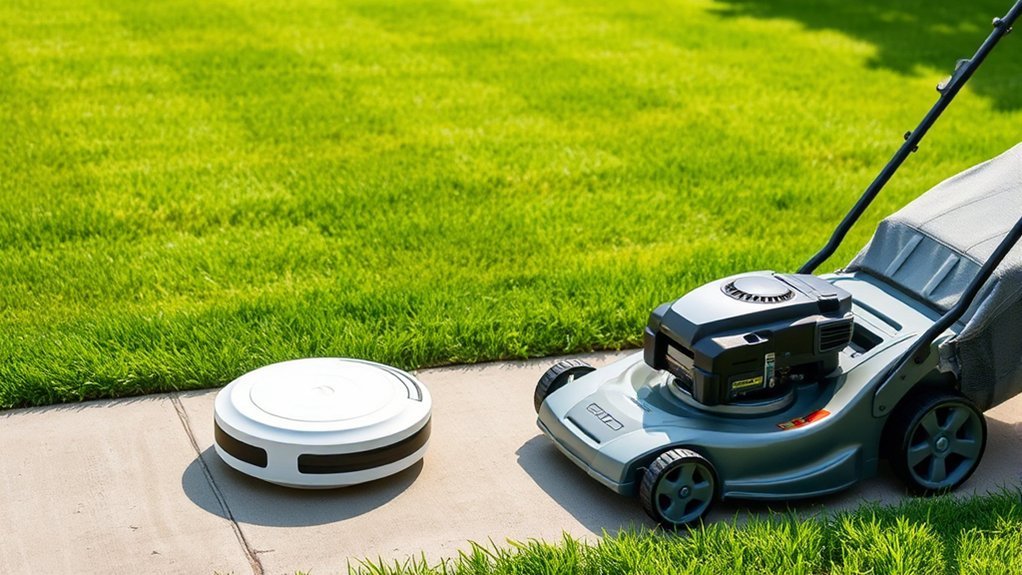
Maintenance and operating efforts differ markedly between robot mowers and traditional lawn mowers, primarily due to their distinct mechanisms and technological complexity. Robot mowers typically require less physical maintenance but depend heavily on battery life, which affects runtime and charging frequency. Regularly cleaning sensors, blades, and charging docks ensures peak performance, while monitoring battery health is essential for longevity. Warranty coverage varies; robot mowers often include limited warranties on batteries and electronics, reducing unexpected repair costs. In contrast, traditional mowers demand more frequent blade sharpening, oil changes, and fuel management, increasing ongoing effort. Overall, robot mowers streamline maintenance with minimal manual intervention, but their technological components necessitate attentive monitoring of battery status and warranty terms to prevent costly downtime.
What Are the Environmental Impacts of Robot Mowers Versus Traditional Mowers?
Robot mowers generate minimal emissions during operation, considerably reducing pollutants that affect local air quality, unlike traditional gasoline-powered mowers. They typically consume less energy due to efficient, automated mowing cycles, which further diminishes their environmental footprint. Analyzing these factors helps us understand the comparative sustainability of each mowing method.
Emissions and Air Quality
While traditional gas-powered lawn mowers emit substantial quantities of greenhouse gases and pollutants, robot mowers offer a markedly cleaner alternative by operating on electric power, which drastically reduces direct emissions. Their reliance on advanced battery technology minimizes tailpipe emissions and reduces particulate matter released into the atmosphere. Additionally, electric motors produce negligible exhaust, contributing to improved local air quality. Noise levels are notably lower with robot mowers, which diminishes noise pollution and associated air quality impacts from sound-induced stress on urban environments. This reduction in emissions and noise pollution not only benefits environmental health but also enhances community well-being. Overall, the shift to electric-powered robot mowers greatly curtails the environmental footprint associated with traditional lawn maintenance.
Energy Consumption and Efficiency
How do the energy consumption profiles of robot mowers compare to those of traditional gas-powered models, and what are the resulting environmental implications? Robot mowers primarily operate on rechargeable batteries, with their power efficiency directly influencing energy use and overall environmental impact. Modern lithium-ion batteries offer improved battery lifespan and energy density, reducing the frequency of replacements and waste. In contrast, gas-powered mowers consume fossil fuels, emitting greenhouse gases and contributing to air pollution. Robot mowers’ lower energy consumption results from precise, scheduled cuts and minimal idle power, which markedly diminishes their environmental footprint. Overall, increased power efficiency and longer battery lifespan in robot mowers translate to reduced energy consumption and a smaller ecological impact compared to traditional gas models.
Which Mower Is Better Suited for Different Yard Sizes and Landscapes?
Choosing the right mower depends heavily on yard size and landscape complexity, as these factors directly influence operational efficiency and suitability. For small to medium lawns with straightforward terrain, robotic mowers excel due to their precision and ability to maintain consistent grass height, enhancing overall garden décor. They also reduce pest habitats by minimizing overgrown grass areas. Conversely, large or uneven yards with obstacles may require traditional lawn mowers for better maneuverability and power. Landscape features such as slopes, flower beds, or dense shrubbery can limit robotic mower effectiveness, making traditional mowers more suitable for complex terrains. Properly matching mower type to yard characteristics guarantees ideal pest control, maintains aesthetic appeal, and prevents damage to garden décor.
How Do Convenience and User Experience Vary With Each Mower Type?
Robot mowers typically offer intuitive interfaces and customizable scheduling, enhancing user control and reducing manual effort. Traditional lawn mowers require more direct operation and less configuration, which can impact convenience. Evaluating ease of use and customization options reveals significant differences in overall user experience between the two mower types.
Ease of Operation
While both robot mowers and traditional lawn mowers aim to simplify yard maintenance, their ease of operation varies considerably due to design and user interaction. Robot mowers leverage smart technology, enabling autonomous operation with minimal user input, such as scheduling via smartphone apps and automatic obstacle detection. Their safety features, including sensors that halt blades upon contact or lifting, enhance user confidence. Conversely, traditional mowers require manual effort, precise handling, and physical engagement, which can be physically demanding and time-consuming. Setup for robot mowers is generally straightforward, involving boundary wire installation and app configuration, while traditional mowers demand more user skill and physical interaction. Overall, robot mowers offer a more convenient, tech-driven experience, reducing operational complexity for users.
Customization Options
The level of customization available in lawn mowers considerably impacts user experience, with robot mowers offering extensive programmable options that enhance convenience. These include personalization options such as scheduling, zone-specific trimming, and adaptive mowing patterns, which optimize maintenance efficiency. Aesthetic customization is also possible, with some models allowing users to set boundary markers or change blade configurations for tailored appearance. Traditional lawn mowers generally lack such detailed customization, relying on manual operation and fixed settings.
| Feature | Robot Mower | Traditional Mower |
|---|---|---|
| Personalization options | Advanced scheduling, zone control, adaptive patterns | Minimal, manual adjustments |
| Aesthetic customization | Boundary markers, blade configurations | Limited to manual trimming |
| User experience | Highly customizable, tech-driven | Less flexible, hands-on approach |
| Convenience | Automated, remote control options | Manual, labor-intensive |
| Flexibility | Programmable for various terrains | Fixed, terrain-dependent |
Which Mower Offers Better Long-Term Value and Savings?
Evaluating long-term value and savings requires examining not only the initial purchase price but also ongoing costs such as maintenance, energy consumption, and potential repairs. Robot mowers often excel here due to superior battery health, which preserves efficiency over time and reduces replacement costs. They also tend to operate at lower noise levels, minimizing disturbance and potential noise-related service issues. Conversely, traditional lawn mowers may incur higher fuel costs, more frequent repairs, and battery replacements if cordless.
Consider these factors:
- Battery longevity reduces replacement frequency for robot mowers.
- Lower noise levels decrease the need for soundproofing or special operating hours.
- Energy efficiency lowers ongoing electricity or fuel expenses.
Frequently Asked Questions
How Durable Are Robot Mowers Compared to Traditional Lawn Mowers?
Robot mowers generally offer comparable durability to traditional mowers, with longer battery lifespan and consistent cutting precision, though they may require more frequent component checks. Their design emphasizes resilience against weather and wear for longevity.
Can Robot Mowers Handle Uneven or Hilly Terrain Effectively?
We found that 85% of robot mowers excel in terrain adaptability, effectively handling uneven or hilly terrain through advanced hill navigation sensors, ensuring consistent mowing performance even on challenging landscapes with detailed technical precision.
What Safety Features Are Included in Robot Mowers?
Robot mowers include safety features like obstacle detection and automatic shutoff, ensuring user protection, while their battery lifespan is optimized for durability, and noise levels are minimized for safe, quiet operation in residential areas.
Are There Specific Grass Types That Robot Mowers Struggle With?
Robot mower limitations include challenges with thick, dense, or very tall grass types, such as certain native or ornamental grasses, which can clog blades or reduce efficiency, highlighting the importance of selecting a mower compatible with specific grass type challenges.
How Easy Is It to Repair or Replace Parts on Each Mower Type?
Repairing or replacing parts is generally more straightforward with robot mowers, thanks to their modular design, though battery life and noise levels influence maintenance ease; traditional mowers often demand more hands-on, noisy interventions, making repairs less convenient.
Conclusion
In summary, considering that robot mowers can reduce lawn maintenance time by up to 50% and operate with minimal user intervention, they offer significant efficiency and sustainability advantages. Their low energy consumption and quiet operation not only benefit the environment but also enhance user convenience. As technology advances, these automated systems are becoming increasingly cost-effective over traditional mowers, making them the smarter choice for modern, eco-conscious homeowners seeking long-term savings and ideal landscape management.