Ad Blocker Detected
Our website is made possible by displaying online advertisements to our visitors. Please consider supporting us by disabling your ad blocker.
When evaluating the operational costs of lawn maintenance equipment, fuel consumption stands out as a key factor. Robotic mowers, powered solely by rechargeable batteries, offer a clear energy-efficient advantage, while ride-on mowers rely on internal combustion engines with variable fuel demands. Understanding these differences requires a detailed analysis of usage patterns, terrain, and lawn size, which can notably influence long-term expenses. Let’s explore how these factors impact overall costs and determine which mower type aligns best with your needs.
Key Takeaways
- Robotic mowers run on rechargeable batteries, eliminating fuel costs entirely.
- Ride-on mowers rely on gasoline or diesel, with fuel costs varying based on engine size and usage.
- Larger, older ride-on models can consume up to 1.5 gallons of fuel per hour, while efficient models use less.
- Battery-powered robotic mowers have minimal operational costs but may incur battery replacement expenses over time.
- Overall, robotic mowers are more cost-effective regarding fuel, especially for regular, small to medium lawns.
Understanding How Robotic and Ride-On Mowers Consume Fuel
Although robotic mowers are often marketed as energy-efficient solutions, their fuel consumption isn’t a factor since they operate solely on rechargeable batteries. The core component influencing their grass cutting capabilities is the mower battery, which determines runtime and power output. These batteries supply energy directly to the electric motor, enabling precise, consistent grass cutting without fuel. In contrast, ride-on mowers rely on internal combustion engines, consuming fuel proportional to the size of the area and cutting intensity. Robotic mowers typically have smaller, high-capacity batteries optimized for frequent, low-intensity tasks, resulting in minimal energy use. Understanding this distinction helps clarify why robotic mowers are considered low-energy solutions, whereas ride-on mowers’ fuel consumption varies considerably based on engine size and operational demands.
Comparing Typical Fuel Usage of Robotic Mowers vs Ride-On Mowers
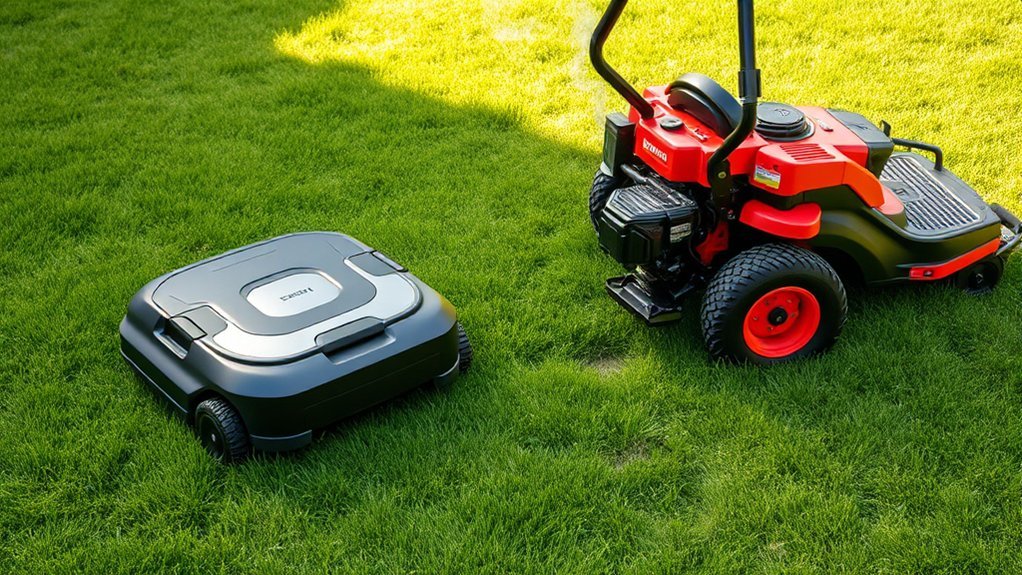
When comparing fuel efficiency between robotic and ride-on mowers, it’s crucial to analyze their typical fuel consumption rates relative to their operational output. Operating costs vary considerably due to differences in energy use, with robotic mowers generally consuming less fuel over extended periods. Examining these efficiency metrics helps clarify the long-term cost implications of each mower type.
Fuel Efficiency Comparison
How do robotic mowers and ride-on mowers compare regarding fuel efficiency? Robotic mowers generally consume significantly less fuel, thanks to their optimized, incremental mowing cycles that reduce unnecessary engine operation. Ride-on mowers, while more powerful, tend to use fuel more intensively per hour, especially when covering large areas. When considering lawn aesthetics, robotic mowers maintain a consistent, even cut, often without the need for frequent refueling, which supports sustained mowing safety. Conversely, ride-on mowers require larger fuel tanks and longer operation times, increasing overall fuel consumption and potential safety risks during refueling. Overall, robotic mowers demonstrate superior fuel efficiency, reducing operational costs and minimizing environmental impact while ensuring consistent lawn aesthetics.
Operating Cost Differences
Robotic mowers generally incur lower fuel costs compared to ride-on mowers when examining typical fuel consumption patterns. This is largely due to their efficient use of battery technology, which minimizes operational energy requirements. Unlike ride-on mowers that rely on internal combustion engines, robotic models operate on rechargeable batteries, reducing ongoing fuel expenses. Additionally, mower aesthetics influence efficiency; sleek, lightweight designs contribute to less energy consumption. The advanced battery technology in robotic mowers enables optimized power management, extending runtime and reducing charging frequency. Consequently, operating costs favor robotic systems, especially over the long term, as fuel expenses and maintenance decrease. Overall, the combination of energy-efficient design and modern battery technology considerably lowers operating costs relative to traditional ride-on mowers.
Factors That Influence Fuel Efficiency in Both Mower Types
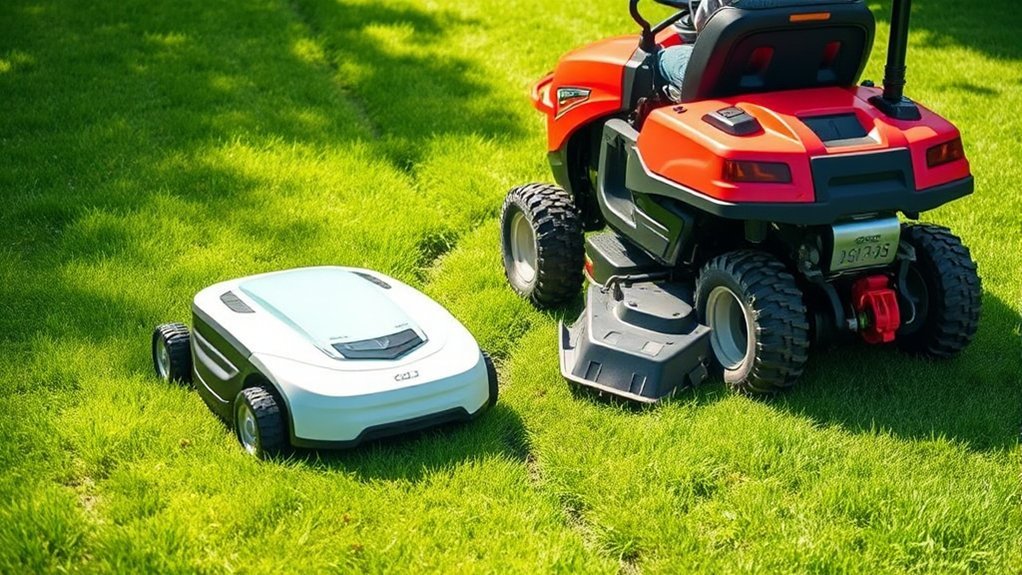
Fuel efficiency in both robot and ride-on mowers depends on multiple interconnected factors, including engine design, maintenance practices, and operational conditions. Engine efficiency directly impacts fuel consumption and influences lawn aesthetics by guaranteeing consistent, precise cuts. Proper maintenance minimizes energy waste caused by clogged filters or dull blades, optimizing fuel use. Operational conditions, such as mowing speed and load, also play critical roles; higher speeds or uneven terrain can increase fuel consumption. Additionally, mower noise can indicate engine strain, correlating with lower efficiency. Overall, selecting equipment with optimized engine design and adhering to maintenance schedules helps improve fuel efficiency, while understanding how operational factors influence performance ensures minimal fuel waste and maintained lawn aesthetics.
How Lawn Size and Terrain Affect Fuel Costs for Mowers
Lawn size and terrain considerably influence the amount of fuel a mower consumes during operation. Larger areas demand longer run times, increasing fuel use for both robot and ride-on mowers. Terrain complexity also plays a critical role:
- Slope and unevenness: Steeper grades require more power, therefore higher fuel consumption, impacting lawn aesthetics by potentially creating uneven cuts.
- Obstacles and clutter: Charting around trees or flower beds prolongs mowing time, raising fuel costs and generating more mower noise.
- Grass density: Thicker, denser grass demands greater engine effort, especially on hilly terrain, further elevating fuel expenditure.
Understanding these factors helps optimize mowing efficiency, controlling costs while maintaining a quiet operation and a well-manicured lawn.
Calculating Long-Term Fuel Expenses for Robotic vs Ride-On Mowers
Estimating long-term operational costs requires analyzing the fuel consumption patterns of both robotic and ride-on mowers over extended periods. Robotic mowers, which rely on mower batteries, typically have minimal fuel costs but operate continuously, increasing battery wear and necessitating efficient energy use. Ride-on mowers consume fuel proportionally to hours of operation and grass clipping volume. To accurately compare, we assess total fuel expenses by factoring in mower runtime, fuel efficiency, and the frequency of grass clipping disposal. Robotic mowers reduce grass clipping volume through precise cutting, which can influence fuel or battery usage, while ride-on mowers may require more fuel due to larger grass clipping accumulations. This analysis helps determine which mower offers lower long-term fuel expenses based on their operational efficiencies.
Maintenance and Operational Costs Impacting Overall Fuel Efficiency
Maintenance frequency and costs directly influence the operational efficiency of both mower types, impacting their overall fuel consumption. Energy efficiency also varies based on how each system manages power and usage patterns. Analyzing these factors clarifies the true cost implications beyond initial purchase and fuel expenses.
Maintenance Frequency and Costs
How often and at what cost do maintenance activities influence the overall fuel efficiency of robot mowers compared to ride-on mowers? Maintenance frequency directly impacts operational costs and efficiency, with robot mowers benefiting from less frequent service due to advanced mower design and durable battery technology. Specifically:
- Routine battery checks and replacements are less frequent, thanks to improved battery longevity.
- Mechanical components in robot mowers require minimal maintenance, reducing downtime and associated fuel costs.
- Regular calibration and software updates optimize mower performance, preventing inefficiencies that increase fuel consumption.
Energy Efficiency and Usage
Although robot mowers typically incur lower maintenance and operational costs, their energy efficiency directly influences overall fuel consumption compared to ride-on mowers. Robot models generally use less power due to precise, sensor-driven navigation and optimized cutting paths, reducing energy waste. Their efficiency can be impacted by factors like color options, which may influence heat absorption and battery performance, and brand reputation, affecting design quality and energy management features. Conversely, ride-on mowers often consume more fuel due to larger engines and less precise operation, leading to higher energy use over time. Consequently, evaluating energy efficiency involves analyzing operational patterns, equipment design, and brand reliability, all of which shape the total fuel cost and environmental impact of each mowing approach.
Real-World Examples of Fuel Costs for Different Mower Models
When comparing fuel costs across different mower models, real-world data reveals significant variations influenced by engine efficiency, mower size, and usage patterns. For example:
- Larger ride-on mowers with older engines consume up to 1.5 gallons of fuel per hour, increasing operational costs.
- Modern ride-on models with improved engine efficiency reduce fuel consumption to around 0.75 gallons per hour, lowering expenses.
- Robot mowers, powered by advances in battery technologies, eliminate fuel costs altogether but raise questions about environmental impact due to battery disposal.
These examples highlight that fuel costs are directly affected by technical factors like engine efficiency. Transitioning to battery-powered options offers benefits in reducing environmental impact, though initial costs and battery lifecycle remain considerations.
Tips to Minimize Fuel Consumption and Save Money
To reduce fuel consumption, we should optimize mowing schedules to match growth patterns and avoid unnecessary runs. Proper equipment maintenance guarantees engines operate efficiently, while choosing energy-efficient models can considerably lower long-term costs. Implementing these strategies allows for more cost-effective mowing without compromising performance.
Optimize Mowing Schedule
How can we effectively reduce fuel consumption and lower costs when scheduling mowing sessions? By refining mowing schedules, we can leverage advancements in battery technology and strategic mowing patterns. First, aligning mowing times with ideal weather conditions prevents unnecessary runs, conserving energy. Second, adopting consistent mowing patterns—such as circular or grid layouts—minimizes overlap, reducing fuel or battery drain. Third, adjusting mowing frequency based on growth rates prevents over-mowing, lowering operational costs. For battery-powered systems, scheduling in manageable segments ensures batteries are not drained excessively, extending their lifespan. Implementing these strategies requires precise planning and data analysis but results in significant savings, especially when integrated with intelligent scheduling algorithms that account for grass growth cycles and equipment efficiency.
Maintain Equipment Properly
Proper equipment maintenance is essential for minimizing fuel consumption and reducing operational costs. Regularly inspecting and calibrating components guarantees peak performance, especially in systems integrated with smart technology, which can monitor operational efficiency and alert users to issues. Proper maintenance also supports extending battery lifespan, particularly in robotic mowers, reducing the need for frequent replacements and conserving resources. Keeping blades sharp minimizes strain on motors, decreasing energy use. Additionally, cleaning debris and lubricating moving parts reduce resistance, ensuring smoother operation. This proactive approach prevents inefficiencies that lead to increased fuel or power consumption. Ultimately, diligent maintenance not only enhances equipment longevity but also guarantees energy is used efficiently, translating to lower operational costs over time.
Use Energy-Efficient Models
Choosing energy-efficient models is a vital step in minimizing fuel consumption and reducing overall operational costs. Selecting machines with advanced power management features can optimize energy use, benefiting both cost and environmental impact. When evaluating equipment, consider:
- High-efficiency motors that reduce energy waste while maintaining performance, essential for precise lawn decoration and preserving garden aesthetics.
- Smart sensors that adapt mowing patterns based on terrain and grass density, decreasing unnecessary operation and fuel use.
- Battery-powered options that eliminate fuel dependency altogether, ideal for maintaining a pristine lawn without emissions.
These models not only lower fuel costs but also align with sustainable lawn decoration practices. Implementing energy-efficient equipment ensures efficient, cost-effective maintenance that enhances garden aesthetics over time.
Pros and Cons of Fuel Efficiency in Robotic and Ride-On Mowers
While both robotic and ride-on mowers are designed to minimize fuel consumption, their efficiency varies considerably based on operational mechanisms and design features. Robotic mowers typically rely on advanced battery technology, offering reduced fuel use and lower emissions, which positively impacts environmental impact. Conversely, ride-on mowers often utilize larger engines, leading to higher fuel consumption but potentially greater runtime and power for demanding tasks. The advantage of robotic mowers lies in their silent, emission-free operation, but their limited battery capacity can restrict operational duration. Ride-on mowers, while less eco-friendly, benefit from quick refueling and longer continuous operation. Ultimately, the pros and cons of fuel efficiency hinge on balancing environmental benefits with operational needs and battery technology advancements.
Making the Best Choice Based on Your Budget and Lawn Care Needs
When selecting between a robotic mower and a ride-on mower, considering your budget and specific lawn care needs is key to making an informed decision. For example:
- Budget Constraints: Robotic mowers often have higher upfront costs but lower long-term fuel expenses, benefiting those prioritizing cost-efficiency.
- Lawn Aesthetics: Robotic mowers provide consistent, precise cuts ideal for maintaining uniform lawn aesthetics, while ride-on mowers suit larger, uneven terrains.
- Mower Safety: Ride-on mowers may pose safety concerns for inexperienced users, whereas robotic mowers incorporate advanced sensors to enhance mower safety, reducing accident risk.
Frequently Asked Questions
How Do Electric Robotic Mowers Compare in Fuel Costs to Gas-Powered Ride-On Mowers?
Electric robotic mowers are more cost-effective than gas-powered ride-ons, thanks to superior fuel efficiency and battery longevity. They minimize ongoing expenses, reduce emissions, and offer consistent performance, making them a smarter, cleaner investment over time.
Are There Significant Differences in Fuel Costs for Mowers Used Seasonally Versus Year-Round?
Like a trusty steed, seasonal mowers save on fuel costs, but year-round use increases expenses. Regular mower maintenance and proper fuel storage are essential to optimize efficiency, whether electric robotic or gas-powered, reducing overall operational costs considerably.
How Does Mower Battery Life Impact Long-Term Operational Costs Compared to Fuel Expenses?
We find that battery degradation raises long-term costs, but solar charging mitigates expenses, reducing replacements. This makes robot mower operational costs more predictable and potentially lower than ongoing fuel expenses for ride-on mowers over time.
Do Automated Mowing Features Influence Overall Fuel Efficiency and Costs?
Automated mowing features improve fuel efficiency by enhancing mowing accuracy and reducing overlap, while safety features prevent accidents, collectively lowering operational costs. Studies show these innovations can cut fuel expenses by up to 20%, making them cost-effective.
What Are the Environmental Costs Associated With Fuel Consumption in Both Mower Types?
We find gasoline emissions from both mower types contribute considerably to environmental impact, with ride-on mowers typically emitting more due to larger engines. Choosing electric or fuel-efficient models reduces overall environmental costs and minimizes adverse ecological effects.
Conclusion
In evaluating fuel costs, we see robotic mowers eliminate fuel expenses entirely, offering energy efficiency and environmental benefits, while ride-on mowers incur ongoing fuel expenses due to their internal combustion engines. The choice depends on your lawn size, terrain complexity, and budget considerations. Weighing long-term savings against operational needs allows us to make informed decisions, optimizing cost-effectiveness, reducing environmental impact, and aligning with our lawn care goals. Ultimately, understanding these factors guides us toward the most suitable, economical mowing solution.