Ad Blocker Detected
Our website is made possible by displaying online advertisements to our visitors. Please consider supporting us by disabling your ad blocker.
When comparing robotic mowers and ride-on mowers, understanding their maintenance requirements is vital for peak performance and cost management. Each type involves distinct processes, from routine blade care to engine servicing, and their upkeep impacts long-term durability. We’ll explore the technical aspects of maintaining both, highlighting the specific tasks, costs, and considerations that can influence your choice—knowledge that’s necessary for maintaining efficiency and avoiding unexpected downtime.
Key Takeaways
- Robotic mowers require regular blade cleaning, sensor checks, and firmware updates, while ride-on mowers focus on engine and blade maintenance.
- Robotic models typically have lower routine maintenance but need software updates, whereas ride-on mowers demand more engine and tire upkeep.
- Both need proper storage; robotic mowers benefit from weatherproofing and secure charging stations, while ride-on mowers need sheltered, dry storage.
- Troubleshooting robotic mowers involves checking sensors, batteries, and wiring, whereas ride-on issues often relate to engine, belts, or tires.
- Maintenance costs vary: robotic mowers may incur software or part upgrades, while ride-on mowers usually have higher routine service expenses.
Understanding the Basics of Robotic and Ride-On Mowers
While both robotic and ride-on mowers serve the primary function of lawn maintenance, they differ considerably in design and operational mechanics. Robotic mowers operate autonomously with integrated safety sensors to prevent collisions and guarantee mower safety during use. They are compact, with low profiles, and feature programmable cutting schedules, requiring secure mower storage to protect sensitive electronics from weather and theft. In contrast, ride-on mowers are manually operated, larger, and equipped with steering mechanisms and safety features like emergency stops. Proper mower storage is essential for both types to prevent damage and assure longevity. Robotic mowers demand secure, sheltered storage to safeguard batteries and electronics, while ride-on models benefit from covered spaces that prevent rust and mechanical deterioration.
What Maintenance Do Robotic Mowers Typically Require?
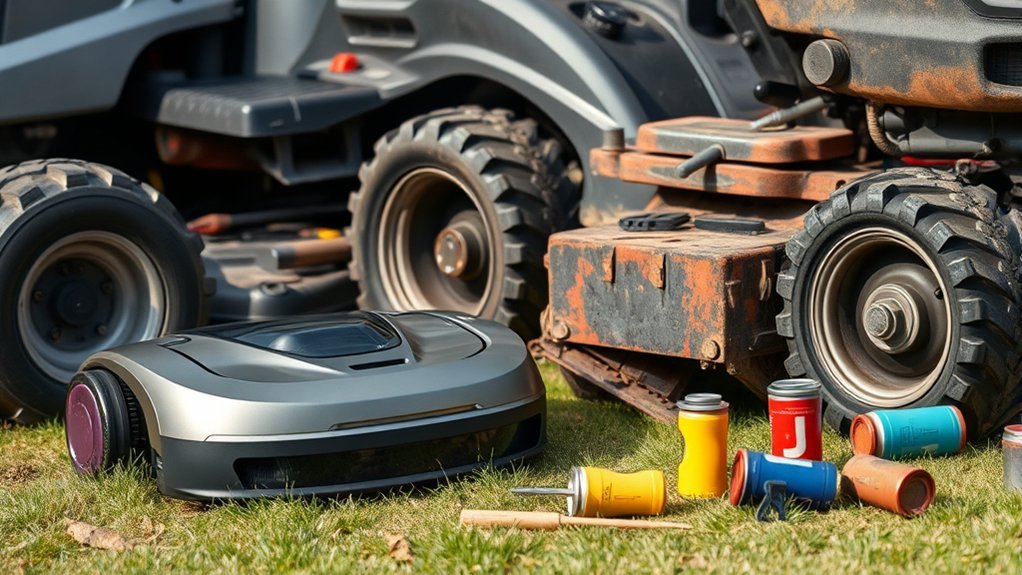
Robotic mowers require regular maintenance to guarantee peak performance and longevity. Key tasks include inspecting and cleaning the cutting blades, which must be sharpened or replaced to ensure clean cuts and prevent strain on the motor. Regularly checking the wheel and sensor alignment helps maintain accurate navigation, while cleaning the mower’s underside prevents grass buildup that can impair movement. Mower safety is paramount; therefore, we recommend consulting the user manual for specific safety procedures and maintenance intervals. Battery management is also critical, involving proper charging practices and periodic capacity checks to extend lifespan. Additionally, inspecting wiring and connection points prevents electrical issues. Staying consistent with these maintenance routines guarantees reliable operation, preserves safety standards, and prolongs the lifespan of robotic mowers.
How Much Maintenance Does a Ride-On Mower Need?
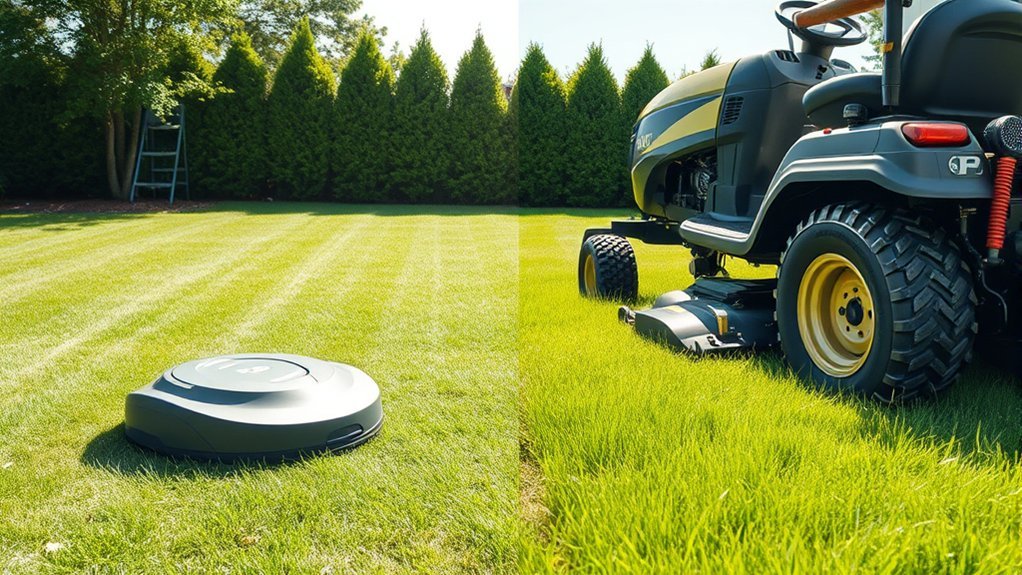
Ride-on mowers require consistent engine checks to guarantee ideal performance and prevent overheating or fuel inefficiency. Regular inspection and sharpening of blades are essential for clean cuts, while tire maintenance involving pressure checks and wear assessment helps maintain stability and traction. These routine tasks, when performed diligently, greatly extend the mower’s operational lifespan and reliability.
Regular Engine Checks
Regular engine checks are essential for maintaining ideal performance and prolonging the lifespan of a ride-on mower. Consistent inspection guarantees maximum fuel efficiency and minimizes noise levels during operation. Key tasks include verifying oil levels, inspecting air filters, and checking spark plugs for wear. Proper maintenance prevents engine strain, reduces emissions, and ensures smoother operation. Neglecting these checks can lead to decreased fuel economy and louder engine noise, signaling potential issues. Below is a visual guide:
| Maintenance Area | Action |
|---|---|
| Oil and filters | Regularly check and replace as needed |
| Spark plugs | Inspect for wear, replace if necessary |
| Air intake system | Clean or replace filters periodically |
| Engine components | Examine for leaks or damage |
Adhering to these checks keeps the engine running efficiently and quietly.
Blade and Tire Care
Maintaining the blades and tires of a mower requires consistent, targeted attention to guarantee ideal cutting performance and safe operation. Regular blade sharpening is essential; dull blades cause uneven cuts and strain the engine. We recommend inspecting blades every 10-15 hours of use and sharpening them with a file or grinder, ensuring a sharp, balanced edge. Tire care involves monitoring pressure and inspecting for damage; under-inflated tires reduce traction and increase wear. Tire replacement may be necessary when tread is worn beyond safe limits or sidewalls are cracked. Proper maintenance extends tire life and improves mowing efficiency. Frequent checks and timely replacements prevent operational issues, ensuring the mower performs reliably and safely over its lifespan.
Comparing Maintenance Costs for Both Mower Types
Although robotic mowers typically feature fewer moving parts and simpler mechanical systems, their maintenance costs can still vary considerably compared to traditional ride-on mowers. For instance, costs are influenced by:
Robotic mower maintenance varies, with potential costs from upgrades, seasonal storage, and component replacements.
- Mower upgrades, which may include software updates or hardware enhancements, ensuring peak performance but adding to long-term expenses.
- Seasonal storage, requiring careful disassembly, cleaning, and weatherproofing to prevent damage during off-season periods, impacting maintenance budgets.
- Component replacement, such as cutting blades or drive wheels, which can be less frequent but costlier when needed due to the specialized parts involved.
While robotic mowers generally have lower ongoing costs, these specific areas can lead to unexpected expenses. Conversely, ride-on mowers often incur higher routine maintenance but fewer upgrade requirements.
Tips for Maintaining Your Robotic Mower’s Battery and Electronics
Properly caring for your robotic mower’s battery and electronic components is essential to guaranteeing the best performance and longevity. Maintaining ideal battery health involves regular checks of voltage levels, avoiding complete discharges, and ensuring proper charging cycles. Use electronic diagnostics tools periodically to assess system performance, identify potential faults, and monitor for corrosion or loose connections. Clean the battery contacts and electronic contacts with a soft, dry cloth to prevent buildup that could impair conductivity. Keep firmware updated to enhance electronic functionality and address security vulnerabilities. Consistent monitoring of battery health through diagnostic reports helps prevent unexpected failures, while routine inspection of wiring and connectors ensures electrical integrity. These precise maintenance measures extend your mower’s operational lifespan and maintain peak efficiency.
Keeping Your Ride-On Mower in Top Shape: Key Maintenance Tasks
Regularly inspecting and servicing your ride-on mower is vital to guarantee peak performance and extend its lifespan. Proper maintenance ensures that innovative features, like adjustable cutting heights and ergonomic controls, remain functional. To keep your mower in top shape, focus on these key tasks:
- Engine Oil and Filter: Regularly check oil levels, change filters, and replace oil as specified in user manuals to prevent engine wear.
- Blades and Deck: Sharpen blades consistently, remove debris from the deck, and inspect for corrosion or damage.
- Belts and Tires: Examine belts for cracks or fraying, and ensure tires are properly inflated to optimize traction and stability.
Adhering to manufacturer guidelines and referencing user manuals guarantees effective maintenance, preserving your mower’s innovative features and performance longevity.
Common Troubleshooting Challenges for Robotic and Ride-On Mowers
When troubleshooting robotic and ride-on mowers, identifying the root causes of common issues requires systematic diagnosis and a thorough understanding of their intricate systems. Challenges often relate to seasonal mowing schedules, such as uneven cutting or blade dullness, and landscaping integration, which can cause navigation errors or sensor failures. Troubleshooting involves examining power connections, sensor alignment, and motor functions. Proper diagnosis prevents unnecessary replacements and minimizes downtime.
| Issue | Probable Cause | Solution |
|---|---|---|
| Cutting inconsistencies | Blade dullness or misalignment | Sharpen or realign blades |
| Navigation errors | Obstructed sensors or landscaping features | Clear obstructions, recalibrate sensors |
| Power failures | Battery or wiring issues | Test batteries, inspect wiring |
| System freezes | Firmware glitches | Reset system, update firmware |
How to Extend the Lifespan of Your Mower Through Regular Upkeep
To maximize your mower’s lifespan, implementing a consistent maintenance routine is essential, as neglecting key components can lead to premature wear and costly repairs. Proper upkeep begins with aligning your garden design to minimize obstructions, reducing strain on the mower. Regularly inspecting and sharpening blades ensures clean cuts, preventing uneven wear. Additionally, correct mower storage—preferably in a dry, sheltered location—protects against rust and corrosion. Specifically:
Regular maintenance and proper storage extend your mower’s lifespan and ensure optimal performance.
- Maintain sharp blades and check for damage after each mowing session.
- Regularly clean undercarriages and air filters to prevent debris buildup.
- Store your mower in a designated, weather-protected area, ideally on a level surface to avoid mechanical stress.
Consistent attention to these details prolongs mower efficiency and durability, regardless of your yard’s size.
Which Mower Is Easier to Maintain for Small vs. Large Yards?
Choosing between a robotic mower and a ride-on mower depends heavily on the size of your yard and the complexity of maintenance involved. For small yards, robotic mowers are generally easier to maintain due to minimal Mower storage requirements and fewer moving parts, which reduces routine checks and lubrication. They operate autonomously, with safety precautions built into their design, minimizing user intervention. Conversely, ride-on mowers are better suited for large yards, but their maintenance involves more frequent blade sharpening, engine oil changes, and belt inspections, making them more labor-intensive. Proper Mower storage is essential to protect equipment from weather, especially for larger, more complex machines. Overall, robotic mowers simplify maintenance for small areas, while large yards demand the durability and detailed upkeep of ride-on models.
Final Tips for Simplifying Mower Maintenance and Saving Time
Implementing a routine maintenance schedule is vital for minimizing downtime and extending the lifespan of your mower. Regular inspections guarantee maximum mower aesthetics, preventing corrosion and wear. To streamline this process, consider these steps:
- Clean and visually inspect the blade assembly, deck, and body for debris, rust, and damage, ensuring the user interface remains responsive and intuitive.
- Lubricate moving parts such as wheels and joints, reducing friction and preventing mechanical failure.
- Replace consumables like filters or belts proactively, avoiding unexpected breakdowns.
Frequently Asked Questions
How Do Weather Conditions Affect Robotic and Ride-On Mower Maintenance?
Weather impact influences both mowers’ maintenance scheduling; rain causes rust and corrosion, prompting more frequent checks, while extreme heat stresses components. We recommend regular inspections after adverse weather to guarantee peak performance and longevity of robotic and ride-on mowers.
Are There Eco-Friendly Maintenance Options for Both Mower Types?
We see eco-friendly options as the roots of sustainable lawn care—using eco-friendly fuels and sustainable lubricants reduces environmental impact. Both mower types benefit from these green choices, ensuring healthier landscapes and ecosystems.
What Safety Precautions Should Be Taken During Mower Maintenance?
We recommend always wearing protective gear like gloves and eye protection, ensuring tools are in excellent condition, and disconnecting power sources before maintenance. Adhering to tool safety protocols minimizes risks during mower maintenance activities.
Can DIY Maintenance Extend the Lifespan of Robotic and Ride-On Mowers?
Yes, DIY maintenance can extend mower lifespan by optimizing battery longevity through proper charging routines and ensuring tire inflation prevents uneven wear, reducing mechanical stress. Regular inspections and component cleaning also maintain efficiency and prevent costly repairs.
How Often Should Blades Be Sharpened or Replaced for Each Mower Type?
We recommend blade replacement every 1-3 years, depending on usage, and regular sharpness maintenance every 4-6 weeks for robotic mowers. For ride-on mowers, sharpen blades every 8-10 hours of use to guarantee peak performance.
Conclusion
In summary, choosing the right mower isn’t just a decision—it’s a strategic move that can save us countless hours, thousands of dollars, and spare us from the chaos of constant repairs. Robotic mowers, with their minimal maintenance demands, are practically the superheroes of small yard upkeep, while ride-on mowers, despite their higher maintenance, dominate larger terrains. Making an informed choice guarantees our lawn care is as efficient and effortless as humanly possible—an investment in peace of mind that pays dividends.