Ad Blocker Detected
Our website is made possible by displaying online advertisements to our visitors. Please consider supporting us by disabling your ad blocker.
When choosing between robotic and regular mowers, understanding their maintenance needs is essential. Robotic mowers promise less hands-on effort with simple software updates and battery management, but they come with their own electronic repairs. Traditional mowers, on the other hand, require more frequent mechanical upkeep and troubleshooting. As we explore these differences, you’ll see how each option impacts long-term convenience and costs—considering what’s truly worth the investment.
Key Takeaways
- Robotic mowers require minimal manual maintenance, mainly software updates and blade replacements, whereas regular mowers need engine oil, spark plug, and blade upkeep.
- Robotic mowers feature self-docking and charging, reducing storage and manual intervention; regular mowers need manual refueling and storage space.
- Software updates are straightforward for robotic mowers via apps, while regular mowers lack software components and mainly need mechanical troubleshooting.
- Regular mowers generally have fewer electronic repairs but require more engine maintenance and part replacements.
- Robotic mowers offer limited customization but less ongoing physical upkeep, unlike regular mowers with adjustable settings and routine engine care.
How Do Robotic and Regular Mowers Differ in Maintenance Needs?
While both robotic and regular mowers are designed to cut grass, their maintenance needs differ substantially. Robotic mowers leverage smart technology, which simplifies many maintenance tasks and enhances user convenience. They automatically adjust cutting patterns, monitor battery health, and alert owners to issues via app notifications, reducing manual checks. In contrast, traditional mowers require routine tasks like oil changes, blade sharpening, and fuel refills, demanding more hands-on effort. Robotic models often have fewer moving parts, resulting in less frequent repairs and easier upkeep. Their smart features also help optimize operation, saving time and minimizing user involvement. Overall, robotic mowers offer a maintenance experience centered on convenience, while regular mowers demand more active, manual maintenance, making them less user-friendly in comparison.
What Regular Maintenance Tasks Do Traditional Mowers Require?
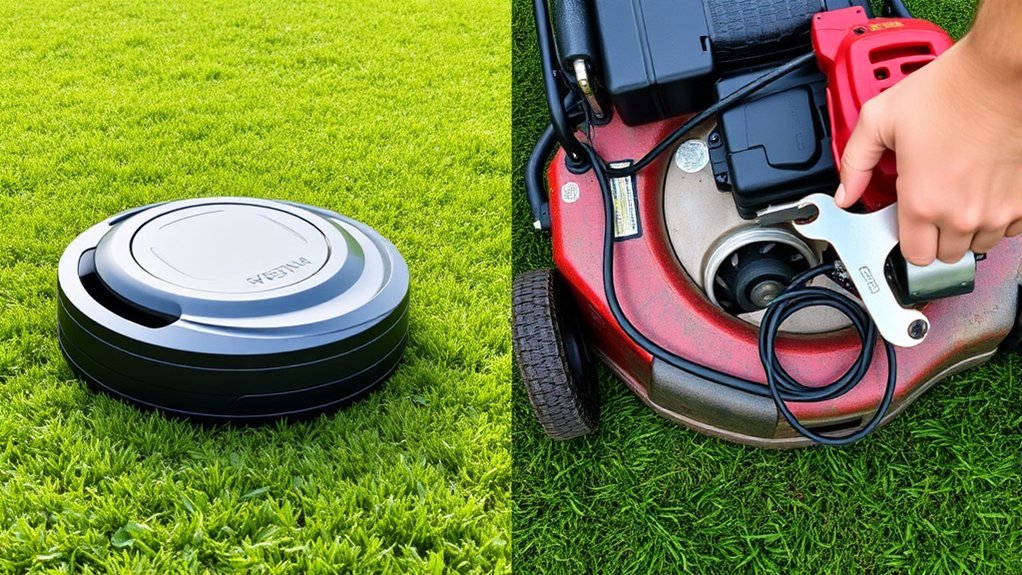
Regular mowers require consistent maintenance to keep them running smoothly and guarantee a clean cut. This includes tasks like sharpening blades regularly to ensure precise mowing and preventing ragged edges. Lawn aeration is also essential; it relieves soil compaction, promoting healthier grass growth and better water absorption. Grass fertilization is equally important, providing necessary nutrients to keep your lawn lush and vibrant. Regularly checking and replacing oil, filters, and spark plugs guarantees the engine performs at its best. Cleaning the underside of the mower prevents grass buildup that can hamper cutting efficiency. Additionally, inspecting the wheels and belts helps prevent breakdowns. These routine tasks, though straightforward, are fundamental for maintaining a healthy, attractive lawn and prolonging your mower’s lifespan.
How Easy Is It to Maintain a Robotic Mower Day-to-Day?
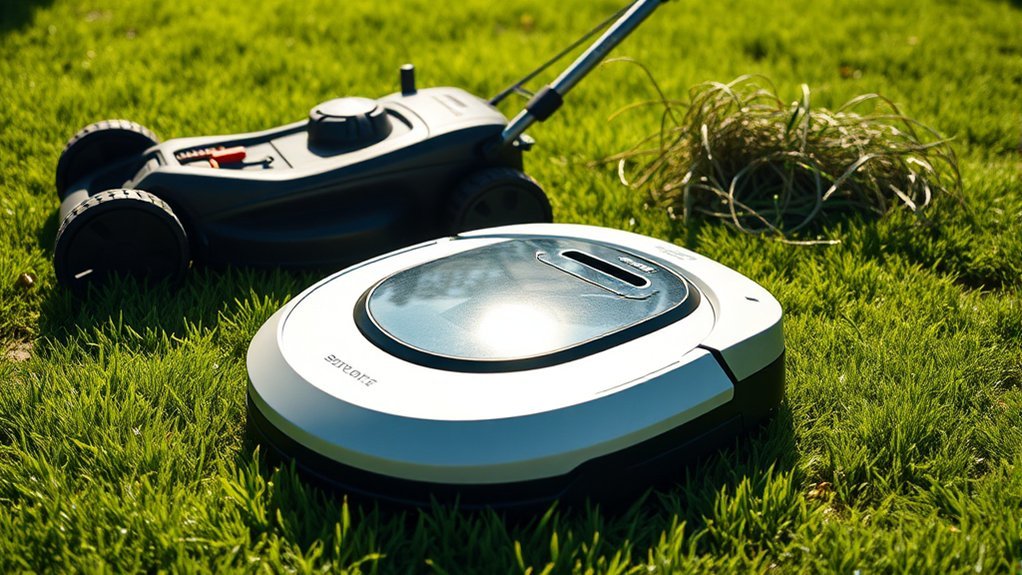
Maintaining a robotic mower mostly involves managing its battery, keeping blades sharp, and ensuring the software stays current. Unlike traditional mowers, it requires less frequent physical upkeep, but attention to these key areas is still essential. Overall, it’s designed to be simpler and more convenient for daily care.
Battery Management Needs
Managing a robotic mower’s battery is straightforward, making daily upkeep less of a chore. Most models are designed to optimize battery longevity, ensuring consistent performance over time. Regularly checking the battery level and ensuring the mower returns to its charging station helps maintain its energy efficiency. Many robotic mowers feature intelligent algorithms that adjust mowing schedules based on battery health, prolonging their effective lifespan. While the batteries are built to last, occasional replacements might be needed, but these are generally simple to handle. Overall, battery management requires minimal effort, and with proper care, robotic mowers stay energy-efficient, reducing both maintenance time and ongoing costs. This ease of management makes robotic mowers a convenient choice for hassle-free lawn care.
Blade Maintenance Frequency
Since battery management is typically straightforward for robotic mowers, many users wonder about the daily upkeep of the blades. Fortunately, robotic mowers require less frequent blade maintenance than traditional mowers. Most models recommend blade sharpening every few months, depending on grass type and cutting frequency. Regularly checking the blades’ cutting height ensures an even cut and prevents blade dullness. When the blades become dull, cutting efficiency drops, and the mower struggles to maintain a clean cut, so sharpening is crucial. Unlike manual mowers, robotic mowers often have easily accessible blades, making maintenance simple. Overall, their blade maintenance frequency is minimal, with routine inspections and occasional sharpening keeping them in excellent condition for healthy, tidy lawns.
Software Updates Required
Are software updates for robotic mowers as demanding as those for other smart devices? Not necessarily. Most robotic mowers require periodic software updates to improve functionality and fix bugs. These updates are usually straightforward, often done via a mobile app or Wi-Fi connection. However, compatibility issues can arise if updates are not compatible with your mower’s specific model or firmware. This may require waiting for manufacturer patches or manually installing updates. While updates add a layer of maintenance, they’re generally simple and quick, keeping your mower running smoothly. Staying on top of software updates ensures peak performance and minimizes issues down the line. Overall, maintaining software is manageable, but it’s important to stay aware of potential compatibility issues.
Which Mower Type Demands More Frequent Repairs and Troubleshooting?
Robotic mowers generally demand more frequent repairs and troubleshooting than traditional mowers, primarily due to their electronic components and sensors. These parts can malfunction or become misaligned, requiring specialists’ attention. While warranty coverage often helps mitigate repair costs, issues with sensors or control boards tend to be more common. Brand reliability also plays a role; reputable brands tend to have fewer breakdowns and better customer support.
| Aspect | Traditional Mower | Robotic Mower |
|---|---|---|
| Repair Frequency | Lower | Higher |
| Troubleshooting Needs | Basic mechanical fixes | Electronic and sensor issues |
| Warranty Coverage | Usually all-inclusive | Varies by brand |
| Brand Reliability | Generally consistent | More dependent on brand |
How Do Power Sources Affect Maintenance for Each Mower?
Power sources profoundly influence the maintenance needs of both traditional and robotic mowers. For traditional mowers, gasoline engines require regular oil changes, filter replacements, and engine tune-ups, making power source durability a key factor. Robotic mowers rely on batteries, which need periodic replacement and proper charging to maintain performance. The charging station also plays a vital role; it requires upkeep to guarantee reliable power delivery and prevent issues like corrosion or connectivity problems. Battery life impacts long-term costs and maintenance routines, while charging station maintenance involves keeping connections clean and checking for wear. Overall, understanding how each power source functions helps us plan for ongoing maintenance, guaranteeing both mower types operate efficiently and reliably over time.
What Are the Long-Term Maintenance Costs and Considerations?
Long-term maintenance costs for mowers vary considerably depending on their power sources and design. Conducting a thorough cost analysis helps identify key longevity factors impacting expenses over time. Robotic mowers typically require less routine maintenance but may incur higher replacement parts costs, especially batteries. Regular mowers often need more frequent blade sharpening, oil changes, and engine servicing.
| Aspect | Robotic Mower | Regular Mower | Notes |
|---|---|---|---|
| Initial Cost | Moderate to high | Low to moderate | Higher upfront for robots |
| Maintenance Needs | Low, mainly software updates | Higher, mechanical parts | Regular blade and oil changes |
| Longevity Factors | Battery life, software durability | Engine wear, blade sharpness | Affects long-term costs |
Which Mower Is More Convenient to Maintain Over Time?
When comparing maintenance convenience over time, robotic and regular mowers each have distinct advantages. Robotic mowers excel with minimal user intervention, offering consistent lawn aesthetics and easy scheduling. They require less manual maintenance, but some customization may be limited. Regular mowers, however, offer more mower customization options, allowing adjustments for different grass types or lawn shapes.
Consider these factors:
- Robotic mowers need occasional blade replacements and software updates.
- Regular mowers may require more frequent engine maintenance and part replacements.
- Robotic models generally have self-docking and charging features, reducing upkeep.
- Regular mowers often demand more storage space and manual troubleshooting.
Frequently Asked Questions
Are Robotic Mowers Suitable for All Types of Grass and Terrain?
Robotic mowers suit most grass types and terrain, thanks to their grass adaptability and terrain versatility. We find they’re great for even uneven areas, but some very thick or rough terrain might require traditional mowers for ideal results.
How Often Should Robotic Mower Blades Be Replaced Compared to Regular Mowers?
While robotic mower blades experience slower wear, we recommend replacing them every 1-2 months, unlike regular mowers needing more frequent blade changes. This minimizes maintenance frequency and keeps your mower performing at its best.
Can Robotic Mowers Be Maintained Without Professional Assistance?
Yes, robotic mowers can often be maintained through DIY troubleshooting, saving you time and money. Just make certain you follow the warranty coverage guidelines, and you’ll be able to handle routine tasks without professional help effectively.
What Safety Precautions Are Necessary During Robotic Mower Maintenance?
Think of maintenance as tending a delicate garden; always prioritize electrical safety by unplugging the mower and handle batteries with care. We recommend wearing gloves, avoiding water, and following manufacturer instructions to stay safe.
Do Weather Conditions Impact the Maintenance Requirements of Robotic vs. Regular Mowers?
Weather impact certainly affects both mower types, often increasing maintenance frequency during rain or extreme heat. Robotic mowers typically need more checks after bad weather, while regular mowers require extra care to prevent rust and mechanical issues.
Conclusion
Overall, choosing between robotic and regular mowers depends on your maintenance preferences. Did you know that robotic mowers typically require 50% less manual intervention? While they cut down on routine tasks like blade sharpening, they may need electronic repairs more often. Ultimately, robotic mowers offer convenience with minimal upkeep, but traditional mowers still demand more hands-on care. Assess your maintenance style and budget to find the best fit for your lawn care routine.