Ad Blocker Detected
Our website is made possible by displaying online advertisements to our visitors. Please consider supporting us by disabling your ad blocker.
When comparing the costs of robot and conventional mowers, it’s important to take into account both initial expenses and ongoing costs. While robot mowers often come with a higher upfront price, they may offer savings over time through reduced maintenance and operational expenses. Conversely, traditional mowers tend to be cheaper initially but can accumulate higher costs for repairs, fuel, and upkeep. Understanding these factors can help determine which option provides better value, but the true financial implications may surprise you.
Key Takeaways
- Robot mowers have higher upfront costs ($800–$2,500) compared to conventional mowers ($200–$1,000).
- Long-term maintenance for robot mowers is generally lower due to less mechanical upkeep.
- Operating expenses for conventional mowers include fuel, oil, and regular maintenance, unlike robot mowers.
- Battery replacements for robot mowers are a hidden long-term cost after 3–5 years.
- Overall value depends on initial budget, lawn size, and preference for automation and convenience.
How Do Robot Mower and Conventional Mower Costs Compare Initially?
When comparing the initial costs of robot mower and conventional mower, it’s clear that a robot mower typically demands a higher upfront investment. Robot mowers often range from $800 to over $2,500, depending on features like cutting width, battery life, and smart technology integration. In contrast, conventional mowers are generally less expensive initially, with basic models starting around $200 and mid-range options reaching $1,000. The difference in initial cost reflects the advanced automation, sensors, and programming that robot mowers incorporate. While conventional mowers require a lower initial payment, the upfront cost of a robot mower is higher due to its technological sophistication. This initial expense is a key factor to weigh when assessing the overall cost-effectiveness of each mower type.
What Are the Long-Term Maintenance Expenses for Each Mower Type?
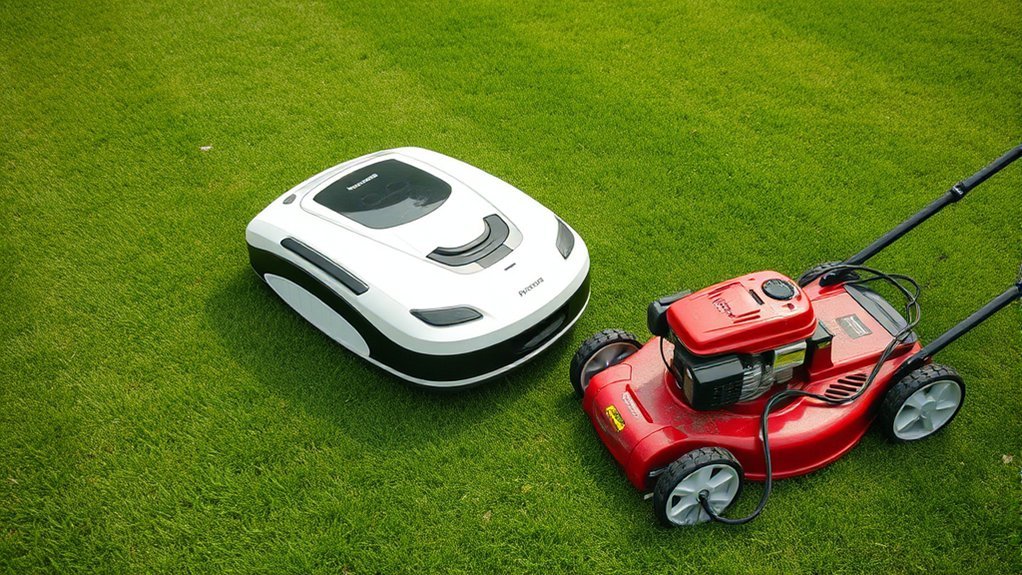
Long-term maintenance expenses for each mower type vary considerably due to their differing technologies and components. Robot mowers generally require less frequent mechanical upkeep but depend heavily on battery lifespan, which impacts replacement costs over time. High-quality batteries typically last 3-5 years, after which replacement becomes necessary, adding to maintenance expenses. Warranty coverage can offset some costs, especially for battery replacement or electronics repairs, but coverage duration and terms differ among models. Conventional mowers, on the other hand, demand regular engine maintenance, blade sharpening, oil changes, and part replacements, which can accumulate annually. While robot mowers might have higher initial battery replacement costs, their lower ongoing maintenance can balance expenses over the long term. Overall, understanding each mower’s warranty coverage and battery longevity is essential for accurate long-term cost assessments.
How Do Operating Costs Differ Between Robot and Traditional Mowers?
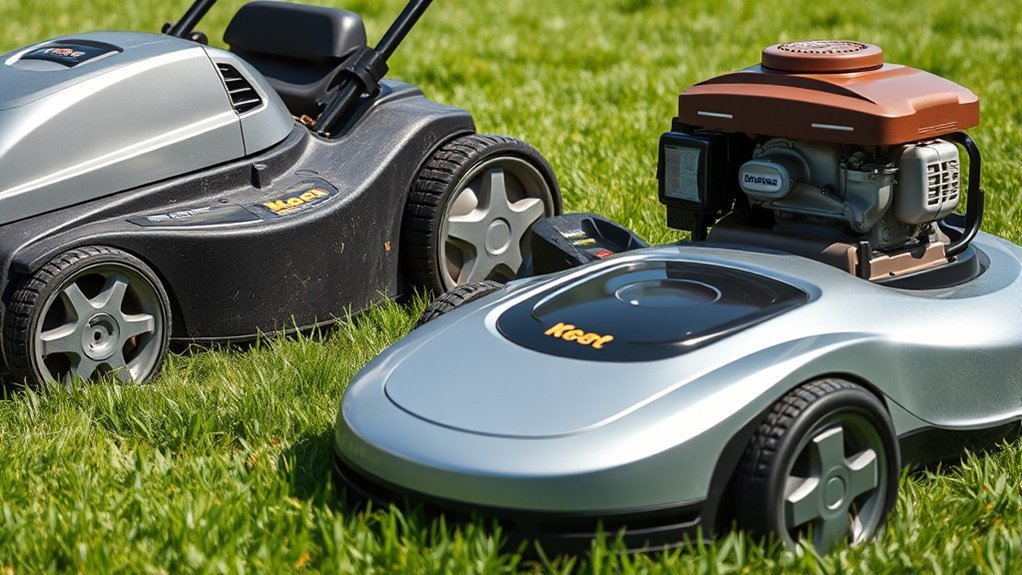
Operating costs for robot and traditional mowers differ markedly due to their distinct technologies and maintenance requirements. Robot mowers generally have higher upfront costs but lower ongoing expenses, partly because they feature rechargeable batteries with limited lifespan, necessitating eventual replacement. These batteries influence operating costs over time, especially if replacements are needed frequently. Traditional mowers, on the other hand, rely on gasoline or electricity, leading to recurring fuel or power expenses. Insurance premiums also tend to be lower for robot mowers, as their automated operation reduces the risk of accidents and damage. Conversely, traditional mowers may require higher premiums due to their manual operation and increased accident risk. Overall, the operating costs reflect these technological and risk factors, shaping long-term affordability for users.
Which Mower Offers Better Overall Value for Your Budget?
Evaluating overall worth requires examining both initial purchase costs and ongoing expenses, as each mower type offers distinct advantages. Robot mowers typically have higher upfront costs but provide significant user convenience through autonomous operation. Their battery life varies but generally supports extended mowing sessions, reducing the need for frequent recharging. Conventional mowers often have lower initial prices and require manual effort, which can be less convenient but more predictable in maintenance costs. When considering value, it is crucial to weigh the convenience and time savings of robot mowers against their higher upfront investment. Conversely, traditional mowers may be more economical initially but could incur higher labor or maintenance costs over time. Ultimately, the better value depends on individual priorities such as budget constraints, lawn size, and preference for automation.
Are There Hidden Costs or Savings With Robot Mowers Versus Conventional Mowers?
When comparing the costs associated with robot mowers and conventional mowers, it’s important to take into account not just the initial purchase price but also the hidden expenses and savings that may arise over time. Robot mowers often have lower ongoing fuel costs and require less maintenance, but factors like battery longevity can influence long-term expenses, as batteries may need replacing after several years. Additionally, robot mowers typically operate with lower noise levels, which can reduce disturbance-related costs or complaints. Conversely, conventional mowers might incur higher fuel and maintenance costs over time. While upfront costs may favor robot mowers, understanding these nuanced factors helps reveal potential hidden savings or expenses, making the true cost comparison more thorough and accurate.
Frequently Asked Questions
How Do the Environmental Impacts Compare Between Robot and Conventional Mowers?
We find that robot mowers, utilizing eco-friendly technology and producing less noise pollution, have a smaller environmental impact than conventional mowers, which often rely on gas, emit higher emissions, and generate more noise, affecting ecosystems and human health.
What Are the Insurance Considerations for Robot Versus Traditional Mowers?
We find that robot mower insurance often covers liability and theft protection, but it’s essential to compare policies carefully, as conventional mowers may require separate liability coverage; understanding these nuances helps us manage risks effectively.
Can Robot Mowers Handle All Types of Terrains and Grass Conditions?
Robot mowers excel in terrain adaptability and grass condition handling, but their effectiveness varies; they perform well on flat, even surfaces and manageable grass but may struggle with steep slopes, uneven terrain, or thick, dense grass conditions.
Do Robot Mowers Require Special Storage or Security Measures?
Robot mowers require proper storage security to prevent theft and damage, alongside battery maintenance to guarantee peak performance. We recommend storing them in secure, sheltered areas and regularly checking batteries to prolong lifespan and maintain efficiency.
How Does User Convenience Differ Between Robot and Conventional Mowers?
We find that user convenience with robot mowers simplifies operation, reduces maintenance challenges through automation, and offers remote control, whereas conventional mowers demand manual effort, routine upkeep, and physical presence, impacting overall user experience and convenience differently.
Conclusion
Ultimately, choosing between a robot mower and a conventional one is like selecting a steady stream versus a rushing river—each has its flow and rhythm. While the robot offers long-term savings and convenience, the traditional mower may seem less costly upfront. By analyzing initial costs, maintenance, and operational expenses, we can see that the right choice depends on your lawn size, budget, and value placed on ease versus economy. Both paths have their own predictable currents.