Ad Blocker Detected
Our website is made possible by displaying online advertisements to our visitors. Please consider supporting us by disabling your ad blocker.
Imagine a family’s dog suddenly darting toward a robot mower mid-operation, highlighting the potential risks involved in shared outdoor spaces. Ensuring the safety of dogs around autonomous mowers requires a strategic approach that balances effective yard management with animal wellbeing. As more pet owners adopt these devices, understanding how to prevent accidents and foster safe coexistence becomes increasingly important—yet many are unsure where to start or what safety measures are most effective.
Key Takeaways
- Use boundary wires, sensors, and physical barriers to create designated safe zones and restrict dog access during mowing.
- Gradually introduce the mower around dogs, rewarding calm behavior to reduce anxiety and reactive reactions.
- Regularly inspect and maintain safety features, including obstacle detection and sensors, to prevent accidents.
- Schedule mowing when dogs are indoors or away to minimize stress and potential conflicts.
- Seek professional advice for complex yard layouts or if pet safety concerns arise.
How Do Robot Mowers Work and Why Are They Safe for Dogs?
Robot mowers operate autonomously using a combination of boundary wires, sensors, and onboard navigation systems to precisely trim lawns without human intervention. This advanced robot mower technology guarantees efficient operation while minimizing risks. The sensors detect obstacles, including pets, and program the mower to avoid them, reducing potential harm. Additionally, the boundary wires define safe zones, keeping the mower within designated areas. When it comes to dog behavior, these mowers are designed to be safe around dogs because they typically operate quietly and unpredictably, which dogs often find non-threatening. Their programmed obstacle detection helps prevent accidents. Overall, the combination of sophisticated technology and understanding of dog behavior makes robot mowers a safe, low-risk option for households with dogs.
Recognizing Common Dog Behaviors Around Robot Mowers
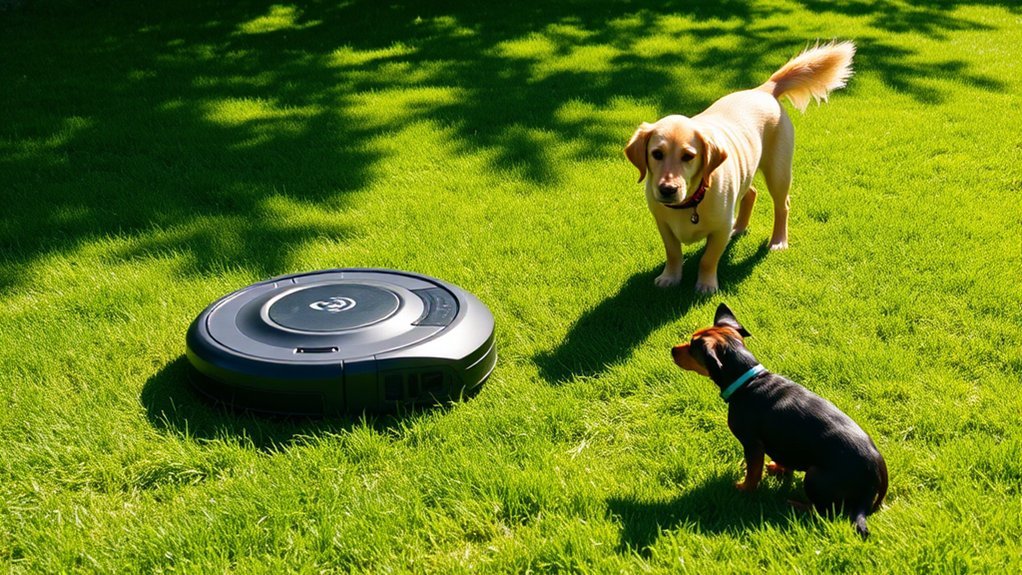
Understanding how dogs typically behave around robot mowers is essential for ensuring their safety and comfort. Recognizing dog body language helps identify their emotional state; signs like raised hackles, stiff posture, or direct eye contact can indicate alertness or agitation. These signals often precede more reactive behaviors, such as barking or approaching the mower cautiously. Barking triggers are usually linked to perceived threats or unfamiliar stimuli, and observing when your dog barks can provide insight into what prompts their reactions. By monitoring these behaviors, we can better predict and manage their responses, reducing stress for the dog and minimizing potential conflicts with the mower. Accurate interpretation of dog body language and barking triggers is key to fostering a safe environment around robotic lawn equipment.
Key Safety Features to Look for in Robot Mowers for Dog Owners
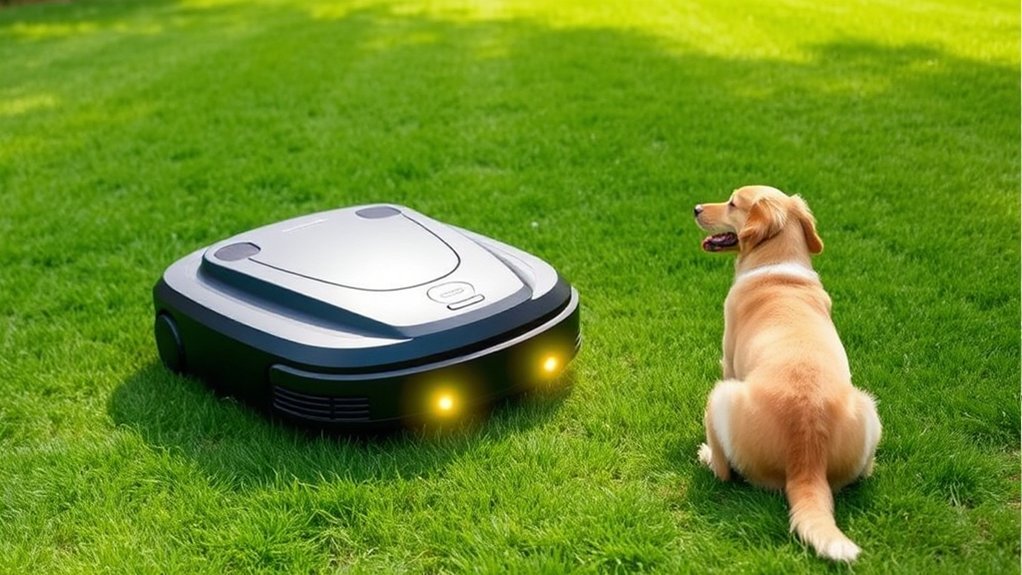
When selecting a robot mower suitable for households with dogs, it’s important to prioritize safety features that can prevent accidents and guarantee peace of mind. Advanced mower technology often includes obstacle detection and automatic stopping functions, reducing the risk of injury to dogs. Features like perimeter sensors and virtual boundaries help keep the mower confined to designated areas, preventing unexpected encounters. Additionally, some models incorporate dog training-compatible features, such as audible alerts or gentle deterrents, to discourage dogs from approaching the mower. These safety features not only minimize hazards but also foster a safer environment for pets. Ultimately, choosing a mower with robust safety technology guarantees that dog owners can maintain a well-manicured yard without compromising their pets’ safety or peace of mind.
Setting up Your Yard to Keep Dogs Safe From Robot Mowers
To effectively protect our dogs from potential accidents with robot mowers, we must carefully design and modify our yards to create clear boundaries and safe zones. Implementing effective yard fencing is essential to restrict the mower’s access to certain areas, especially where dogs tend to play or rest. Proper fencing not only prevents accidental encounters but also reduces the need for constant supervision. Additionally, integrating dog training techniques can reinforce boundaries and discourage dogs from approaching the mower’s operating area. Strategic placement of physical barriers combined with consistent training helps establish a safe environment. By thoughtfully configuring yard fencing and emphasizing dog training, we can minimize risks and promote a secure, harmonious outdoor space for both pets and robotic lawn care.
Training Your Dog to Coexist Safely With Robot Mowers
Training your dog to coexist safely with robot mowers requires consistent reinforcement of boundaries and calm responses to the mower’s presence. Understanding dog behavior and mower noise is essential; dogs may react unpredictably to unfamiliar sounds or movements. To foster positive associations, gradually introduce your dog to the mower at a distance, rewarding calm behavior. Reinforce boundaries by establishing clear, consistent commands to prevent encroachment. Use positive reinforcement techniques to encourage calmness around mower noise, gradually decreasing the distance over time.
| Dog Behavior | Mower Noise | Boundaries and Commands |
|---|---|---|
| Calm response to unfamiliar sounds | Gradual exposure to noise | Clear command signals |
| Avoidance or fear | Desensitization techniques | Consistent reinforcement |
| Curiosity or excitement | Positive reinforcement | Reinforce boundaries |
What to Do If Your Dog Gets Too Close to the Mower?
Despite our efforts to set clear boundaries and foster calm behavior around robot mowers, situations may arise where a dog gets too close during operation. When this occurs, understanding dog behavior and mower hazards is vital. Remaining calm, avoid sudden movements, and calmly call your dog away from the mower’s path. Do not attempt to manually intervene near the blades, as sudden movements can escalate the risk of injury. Instead, use a pre-established command or distraction to redirect your dog’s attention safely. Recognizing signs of anxiety or curiosity in your dog can help prevent future incidents. Immediate action minimizes potential harm and reinforces safety protocols. Consistent supervision and understanding dog behavior are essential to mitigate mower hazards and guarantee a safe environment for both your pet and your lawn.
How to Maintain Your Robot Mower for Safe Operation Around Dogs
Regular maintenance of your robot mower is essential to guarantee safe operation around dogs, as it helps identify and address potential hazards proactively. Consistent mower maintenance ensures that blades are sharp, sensors are clean, and safety features function correctly, reducing the risk of accidents. Proper upkeep minimizes unexpected malfunctions that could startle or injure a dog. Additionally, integrating dog training into your routine can reinforce boundaries, making your pet more comfortable and less likely to interfere with mowing. Regularly inspecting and maintaining the mower, combined with effective dog training, creates a safer environment. This dual approach helps prevent dangerous interactions and assures your robot mower operates efficiently while safeguarding your dog’s well-being.
Expert Tips for Preventing Dog-Related Accidents With Robot Mowers
To prevent dog-related accidents with robot mowers, we must implement strategic safety measures based on expert recommendations. First, establish a secure boundary around your yard, similar to a dog park, to prevent your pet from entering areas where the mower operates. Second, incorporate leash training to teach your dog to stay away from the mowing zone, reducing sudden confrontations. Third, schedule mowing sessions during times when your dog is less active or outside, minimizing the risk of unexpected encounters. These measures not only protect your pet but also guarantee safe and efficient lawn maintenance. Consistent boundaries and training are essential for creating a safe environment, especially when integrating technology like robot mowers into a household with dogs.
When to Seek Professional Advice About Robot Mower Safety and Dogs
Knowing when to seek professional guidance can significantly enhance the safety of both your dog and your robot mower. If your dog has pet allergies, consulting a veterinarian or animal behaviorist can help determine whether the mower’s operation might trigger allergic reactions or stress. Additionally, if your yard’s fencing isn’t sufficient or properly installed, a professional fence installation service can guarantee a secure boundary, preventing your dog from entering areas where the mower operates. Complex situations, such as integrating safety sensors or addressing unique yard layouts, also warrant expert advice. Recognizing these scenarios ensures that safety measures are thorough, reducing accidents and safeguarding your pet’s well-being. When in doubt, professional guidance is a critical step toward a safer environment for both dogs and automated lawn care.
Frequently Asked Questions
Can Robot Mowers Detect and Avoid Specific Dog Breeds?
Robot mowers generally lack breed recognition capabilities but excel at obstacle detection, allowing them to avoid dogs, regardless of breed. We recommend supervising initial uses and ensuring your dog’s safety with physical barriers if needed.
Are There Any Long-Term Health Effects on Dogs From Robot Mower Noise?
We’ve observed that prolonged exposure to robot mower noise may cause noise sensitivity and stress in dogs, potentially impacting their health over time. While definitive long-term effects remain uncertain, monitoring and minimizing exposure benefits dog welfare.
How Do Robot Mowers Handle Unexpected Dog Behaviors or Emergencies?
Robot mowers rely on sensor accuracy to detect unexpected dog behaviors or emergencies, triggering emergency protocols that halt operation immediately, ensuring safety. We design these systems to respond swiftly, minimizing risks and protecting both pets and equipment effectively.
Are There Recommended Age or Size Restrictions for Dogs Around Robot Mowers?
Studies show dogs under six months are 3x more prone to mower-related accidents; therefore, proper dog training and mower maintenance are essential. We recommend supervising or restricting interactions based on age and size for safety.
Can Robot Mowers Be Programmed to Recognize Individual Dogs?
We believe robot mowers can be programmed with advanced sensors and AI to recognize individual dogs, but combining dog training and safety barriers remains essential for ensuring ideal safety and avoiding false recognitions.
Conclusion
In summary, understanding how robot mowers operate and implementing safety measures can greatly reduce risks for dogs. Did you know that according to recent studies, over 60% of dog injuries occur due to improper yard setups or lack of safety features? By proactively training your dog, maintaining your mower, and designing a pet-friendly yard, you can guarantee a safe, peaceful environment. Our goal is to protect your furry friends while enjoying the benefits of automated lawn care.