Ad Blocker Detected
Our website is made possible by displaying online advertisements to our visitors. Please consider supporting us by disabling your ad blocker.
When comparing the mowing efficiency of robot mowers and ride-on models, it’s clear that speed plays a vital role, yet the actual time required depends on multiple factors. While ride-on mowers can cover large areas quickly thanks to their power and size, robot mowers offer consistent, low-disturbance operation ideal for smaller or complex terrains. Understanding how these differences translate to real-world performance can help you determine which option best suits your needs—and the factors that influence overall mowing time.
Key Takeaways
- Ride-on mowers mow faster due to powerful engines and larger decks, covering large areas quickly compared to slower robot mowers.
- Robot mowers operate at slower speeds but can run longer and more frequently, saving time over extended periods.
- Mowing duration depends heavily on lawn size, with small lawns taking under an hour and large lawns over three hours.
- Terrain complexity and obstacles can significantly increase mowing time for both mower types, especially on uneven or obstacle-rich sites.
- Overall, ride-on mowers are more time-efficient for large, open, or urgent jobs, while robot mowers excel in regular, long-term maintenance.
How Do Robot Mowers and Ride-On Mowers Compare in Mowing Speed?
While both robot mowers and ride-on mowers are designed to efficiently maintain lawns, their mowing speeds differ considerably, impacting overall productivity. Robot mowers typically operate at slower speeds, optimized for precision and battery life, which guarantees consistent coverage over extended periods. Their cutting height can be easily adjusted to suit various grass types, but the limited speed means they take longer to complete larger areas. Conversely, ride-on mowers achieve higher mowing speeds due to their powerful engines and larger cutting decks, enabling rapid coverage. However, their battery life is less relevant since they rely on gasoline or larger fuel tanks. Overall, ride-on mowers markedly outperform robot mowers in speed, although robot models offer benefits in precision and energy efficiency for smaller or intricate lawns.
Factors That Affect Mowing Time for Robot and Ride-On Mowers
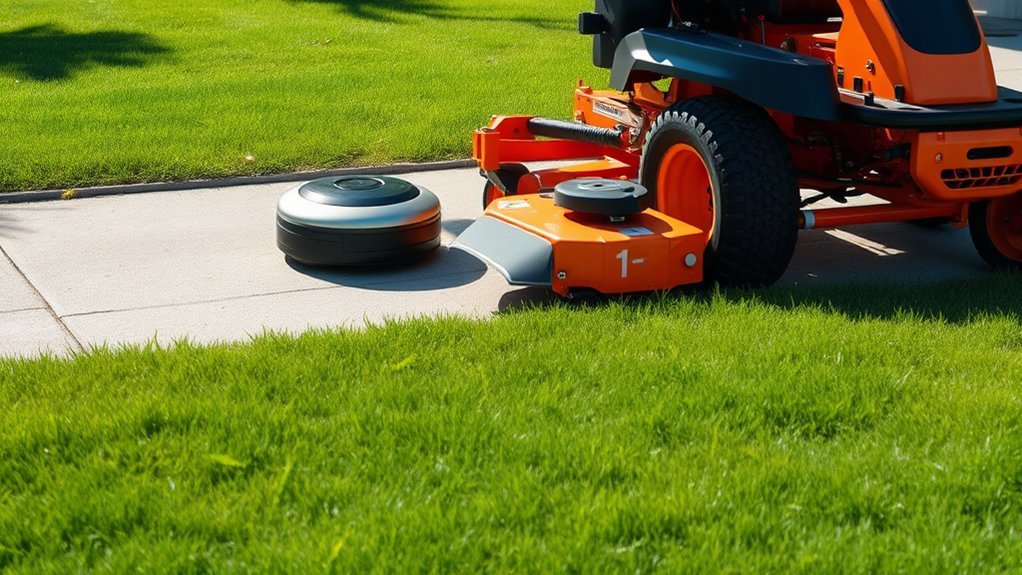
Several key factors influence the mowing time for both robot and ride-on mowers, with terrain and lawn size being among the most significant. These elements directly impact efficiency and operational duration. For robot mowers, battery life is critical; limited battery capacity can extend mowing time or require frequent recharging. Noise levels also play a role, as quieter models may allow for extended operation without disturbance, but could have trade-offs in power. Ride-on mowers are affected by terrain complexity—slopes and uneven surfaces slow progress—and by mower design, such as cutting width. Additional factors include grass density and moisture content, which can either hinder or facilitate cutting efficiency. Understanding these variables helps optimize mowing schedules and equipment choices for specific lawn conditions.
How Large Is Your Lawn? How Size Influences Mowing Duration
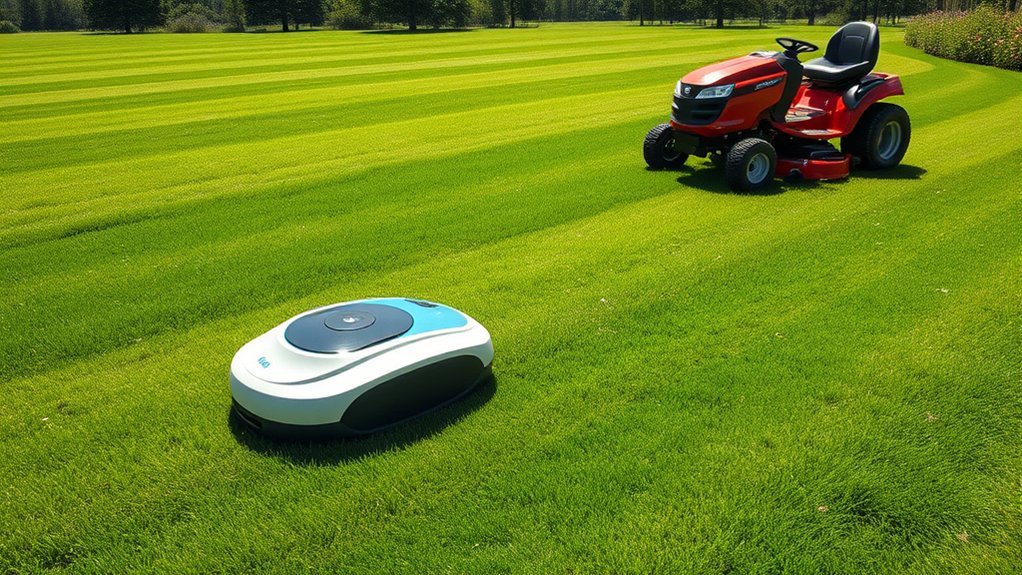
The size of your lawn directly determines the amount of time required for mowing, influencing both robot and ride-on mower efficiency. Larger lawns naturally demand more extensive coverage, impacting mowing duration, mower noise levels, and the ability to maintain lawn aesthetics. For example, a small lawn may take less than an hour with a ride-on mower, while a sizable area might require several hours, especially for robot mowers with limited battery capacity.
| Lawn Size | Estimated Mowing Time | Mower Type | Considerations |
|---|---|---|---|
| Small (up to 0.25 acres) | Under 1 hour | Both | Mower noise less impactful |
| Medium (0.25 – 1 acre) | 1-3 hours | Ride-on, robot | Lawn aesthetics maintained |
| Large (over 1 acre) | Over 3 hours | Ride-on preferred | Noise levels and efficiency |
| Very Large | Several hours | Ride-on or multiple robots | Mowing duration extends |
How Terrain and Obstacles Impact Mowing Time for Each Mower Type
Terrain and obstacles substantially influence the mowing time for both robot and ride-on mowers, often dictating the efficiency and effectiveness of each equipment type. Terrain challenges such as uneven surfaces, slopes, and narrow passages can considerably reduce mowing speed and increase overall duration. Obstacle navigation becomes critical, especially for robot mowers, which require clear paths and may need multiple passes to circumvent trees, flower beds, or garden furniture. For ride-on mowers, maneuvering around obstacles may extend mowing time due to careful navigation and turning. Both mower types experience delays when faced with complex terrain or dense obstacles, emphasizing the importance of site assessment before mowing. Effective planning can mitigate these impacts, ensuring ideal performance and reduced mowing durations.
Terrain and obstacles can significantly slow down mowing, highlighting the importance of site assessment and proper planning.
- Uneven surfaces requiring slow navigation
- Sloped terrain increasing operational complexity
- Narrow pathways limiting maneuverability
- Dense obstacles causing frequent stops
- Complex terrain prolonging coverage time
Maintenance and Setup Time: Does It Affect Overall Mowing Efficiency?
The time required for setup and routine maintenance can considerably influence the overall efficiency of both robot and ride-on mowers. Complex setup procedures or frequent maintenance needs may lead to increased downtime, reducing effective mowing periods. Understanding these factors is essential to accurately assess each mower’s contribution to mowing productivity.
Setup Complexity and Time
While both robot mowers and traditional ride-on machines aim to streamline the mowing process, their setup and maintenance requirements can markedly influence overall efficiency. Robot mowers typically involve initial programming, boundary wire installation, and calibration, which can be time-consuming but are generally straightforward. Ride-on machines require more extensive setup, such as engine checks and blade adjustments. Key factors affecting setup complexity include:
- Battery life management and charging procedures
- Noise levels during initial operation and setup
- Ease of configuring mowing patterns
- Compatibility with landscape features
- Required tools and technical expertise
While robot mowers often demand less physical setup time, their initial calibration impacts overall efficiency. Conversely, ride-on machines may take longer to set up but can be more straightforward to operate once configured.
Routine Maintenance Requirements
Routine maintenance plays a critical role in determining the overall efficiency of both robot mowers and ride-on machines, as it directly impacts their operational readiness and longevity. Regular upkeep, such as blade sharpening and battery checks, ensures consistent lawn color and uniform mowing patterns. Neglecting maintenance can lead to uneven cuts, affecting the aesthetic appeal and health of the grass. For robot mowers, routine cleaning of sensors and cutting decks is essential to maintain precise navigation and reliable operation. Ride-on mowers require periodic oil changes and belt inspections to prevent downtime. Overall, adhering to scheduled maintenance reduces setup time and minimizes disruptions, allowing each machine to perform at its best and produce a consistent, healthy lawn with even mowing patterns and vibrant color.
Impact on Mowing Efficiency
Maintenance and setup time considerably influence the overall mowing efficiency of both robot and ride-on mowers, as they directly affect operational readiness and the duration required to complete a lawn. Efficient setup guarantees minimal downtime and maximizes productivity. Key factors include battery life, which determines how long the mower can operate before recharging, and user comfort during maintenance procedures. For robot mowers, quick calibration and easy blade changes enhance efficiency, while ride-on mowers benefit from straightforward adjustments and refueling. Additionally, the time spent on initial setup can impact daily mowing schedules. Proper maintenance routines extend battery life and reduce unexpected breakdowns, ultimately improving mowing speed and consistency. Therefore, reducing setup and maintenance time is crucial for optimizing overall mowing efficiency.
Cost vs. Time Savings: Is a Faster Mower Worth the Investment?
When evaluating mower options, we consider both initial costs and potential long-term savings, as a faster mower may require a higher upfront investment. The efficiency gains from a quicker machine can reduce overall labor time, but we must also factor in ongoing maintenance expenses that could offset these benefits. Ultimately, determining whether the time savings justify the additional costs depends on a careful analysis of both short-term expenditure and long-term operational efficiency.
Upfront Costs and Savings
Investing in a faster mower, whether robotic or ride-on, requires careful consideration of upfront costs relative to potential time savings. Robotic mowers often have higher initial prices due to advanced battery life and sophisticated navigation systems, but they can reduce labor costs over time. Ride-on mowers typically have lower purchase costs but may entail higher maintenance expenses. When evaluating options, consider:
- Initial purchase price differences
- Long-term savings on labor and time
- Battery life efficiency and durability
- Noise levels impacting neighborhood acceptability
- Compatibility with your lawn’s terrain and size
While the upfront investment might be substantial, understanding these factors helps determine whether the faster mower justifies the expense through operational benefits and reduced mowing time.
Time Efficiency Benefits
Evaluating whether a faster mower provides enough time savings to justify its higher cost requires a careful analysis of operational efficiency versus initial investment. Modern robot mowers generally offer longer battery life, enabling extended mowing sessions that reduce overall time spent maintaining the lawn. This increased battery capacity enhances productivity, especially for larger properties. Additionally, robot mowers operate at markedly lower noise levels compared to ride-on mowers, allowing for early or late-day operation without disturbance. These factors contribute to notable time efficiencies, minimizing manual intervention and scheduling constraints. While the upfront cost may be higher, the combination of improved battery life and quieter operation can translate into substantial time savings, making faster, more advanced models a worthwhile investment for those prioritizing efficiency.
Long-Term Maintenance Expenses
While a faster mower may seem advantageous initially, understanding its long-term maintenance expenses is essential in determining whether it truly offers a cost-effective solution. The primary factors include battery life, which influences replacement frequency and costs, and the impact of various mowing patterns on wear and tear. Additionally, higher-speed models often require more frequent servicing due to increased mechanical stress.
- Increased battery replacement frequency due to higher usage demands
- More frequent servicing of mechanical components
- Potential for uneven wear based on mowing patterns
- Higher costs associated with advanced technology and sensors
- Possible need for specialized parts or repairs over time
Evaluating these expenses against time savings helps determine if investing in a faster mower aligns with long-term budget considerations.
Real-World Mowing Time Examples for Different Yard Sizes
Understanding the real-world mowing times for different yard sizes provides valuable insight into the efficiency of robot mowers versus ride-on machines. For small to medium-sized lawns, typically under half an acre, robot mowers can complete the job in approximately 1-2 hours daily, maintaining consistent lawn aesthetics with minimal effort. In contrast, ride-on mowers may take 1-3 hours depending on the terrain and grass density. Larger properties, exceeding an acre, often require several hours for ride-on mowers due to their capacity limitations, while robot mowers may need multiple days of mowing sessions. These examples highlight how garden design influences mowing efficiency, with complex landscapes potentially extending mowing times. Ultimately, understanding these real-world examples helps in selecting the most suitable equipment to optimize lawn aesthetics efficiently.
Tips to Optimize Mowing Time With Robot and Ride-On Mowers
To maximize the efficiency of your lawn maintenance, implementing strategic adjustments can substantially reduce mowing times for both robot and ride-on mowers. Prioritize setting appropriate mowing schedules aligned with your yard’s growth rate to prevent unnecessary overlaps. Regularly maintaining the mower’s blades ensures cleaner cuts, reducing overall mowing time. Enhance battery life by scheduling mowing sessions when the battery is fully charged and avoiding deep discharges, especially for robot mowers. Minimizing noise levels during operation can allow for earlier or later mowing times, avoiding peak hours. Additionally, clear obstacles and debris from the lawn to prevent interruptions.
- Schedule mowing during ideal weather conditions
- Regularly inspect and sharpen blades
- Clear the lawn of obstacles and debris
- Monitor and manage battery health proactively
- Adjust mowing patterns for maximum coverage
Which Mower Type Saves You More Time in the Long Run?
Selecting the most time-efficient mower type depends largely on the size and complexity of your lawn, as well as your maintenance preferences. Robot mowers generally save more time over the long term due to their autonomous operation and ability to mow frequently without supervision. Battery life is a critical factor; longer-lasting batteries enable continuous mowing sessions, reducing the need for recharging and ensuring consistent coverage. Conversely, ride-on mowers are advantageous for larger or more intricate terrains but can be more time-consuming to operate, especially if they are heavier, which can impact maneuverability. Ultimately, while robot mowers excel in reducing daily effort, ride-on mowers might be more suitable for extensive properties where a single session is necessary. The choice hinges on balancing battery performance and mower weight against lawn size and complexity.
Frequently Asked Questions
How Does Mower Battery Life Influence Total Mowing Time?
Battery capacity directly impacts total mowing time, as larger capacity allows longer operation per charge, while more charge cycles indicate the battery’s longevity, ensuring consistent performance and minimizing downtime during extensive mowing tasks.
Can Weather Conditions Significantly Extend Mowing Duration?
Weather variability can markedly extend mowing duration by disrupting schedules, as rain or wind delays work, requiring adjustments that accumulate over time, emphasizing the importance of flexible mowing plans to maintain efficiency regardless of weather conditions.
How Does Grass Height Affect Robot and Ride-On Mowing Speeds?
Grass height considerably impacts both robot and ride-on mowing speeds, as denser grass and steeper lawn slopes require slower, more cautious operation, leading to extended mowing times for both machines, especially under challenging conditions.
Are There Differences in Mowing Time for Irregularly Shaped Lawns?
When tackling irregularly shaped lawns, robot mowers often take longer due to intricate mowing patterns, whereas ride-on mowers adapt quickly. Lawn shape considerably influences mowing times, with complex contours demanding more meticulous, time-consuming trimming efforts from both mowing methods.
How Do Mower Features Impact Overall Efficiency and Time Savings?
We believe mower features considerably impact efficiency; high mowing precision guarantees consistent, thorough coverage, while low noise levels enable operation during more hours, ultimately reducing total mowing time and enhancing overall lawn maintenance effectiveness.
Conclusion
In the end, choosing between a robot mower and a ride-on depends on your lawn’s size, terrain, and your priorities. While robot mowers excel in maintaining smaller, intricate areas with minimal disturbance, ride-on mowers are better suited for large, open spaces requiring speed. Both have their merits, but understanding their differences helps you make an informed decision—because sometimes, it’s better to play your cards right than to rush in blindly.