Ad Blocker Detected
Our website is made possible by displaying online advertisements to our visitors. Please consider supporting us by disabling your ad blocker.
Many homeowners underestimate how profoundly storage needs differ between robotic and ride-on mowers, especially considering their size and maintenance requirements. Robotic mowers require minimal space and benefit from indoor protection to preserve batteries and prevent weather damage, while ride-on mowers demand large, weather-resistant enclosures and regular upkeep. Understanding these distinctions can influence not only your storage solution but also your long-term maintenance plan, making it essential to explore the key factors involved.
Key Takeaways
- Robotic mowers are compact, requiring minimal storage space and easier access for quick maintenance and deployment.
- Ride-on mowers are larger, needing more extensive storage solutions with weather-resistant covers and ample space.
- Indoor storage offers better protection from environmental elements for both mower types, but costs vary.
- Proper organization using racks, shelving, and labeled containers maximizes small space storage efficiency.
- Battery and fuel management are crucial; disconnect batteries or drain fuel before long-term storage to ensure safety and longevity.
How Do Robotic and Ride-On Mowers Differ in Storage Needs?
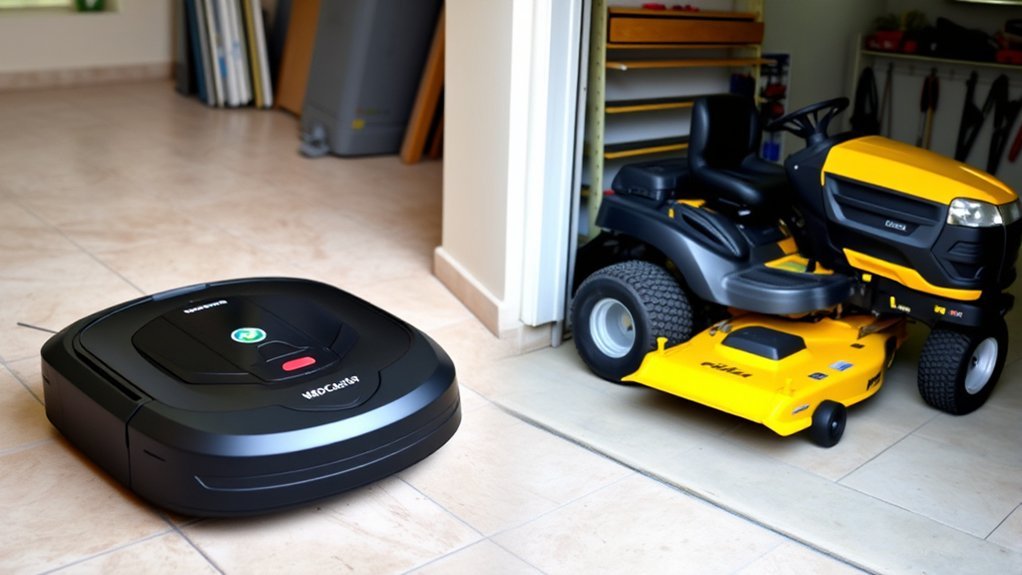
While both robotic and ride-on mowers serve the purpose of lawn maintenance, their storage requirements differ greatly due to their design and operational features. Robotic mowers are compact, with minimal storage needs, often requiring a dedicated charging station that protects the unit from environmental exposure. Their battery lifespan impacts storage considerations; batteries should be stored in a cool, dry environment to prevent degradation. Noise levels are low during operation, reducing concerns about soundproofing, but charging stations must be positioned to minimize noise disturbance. Ride-on mowers are larger, needing significant storage space to accommodate their chassis, blades, and fuel or batteries. Their more complex systems demand secure, ventilated storage, especially for batteries, which must be kept away from extreme temperatures to prolong lifespan and guarantee safety.
Why Size and Space Are Key Factors for Mower Storage
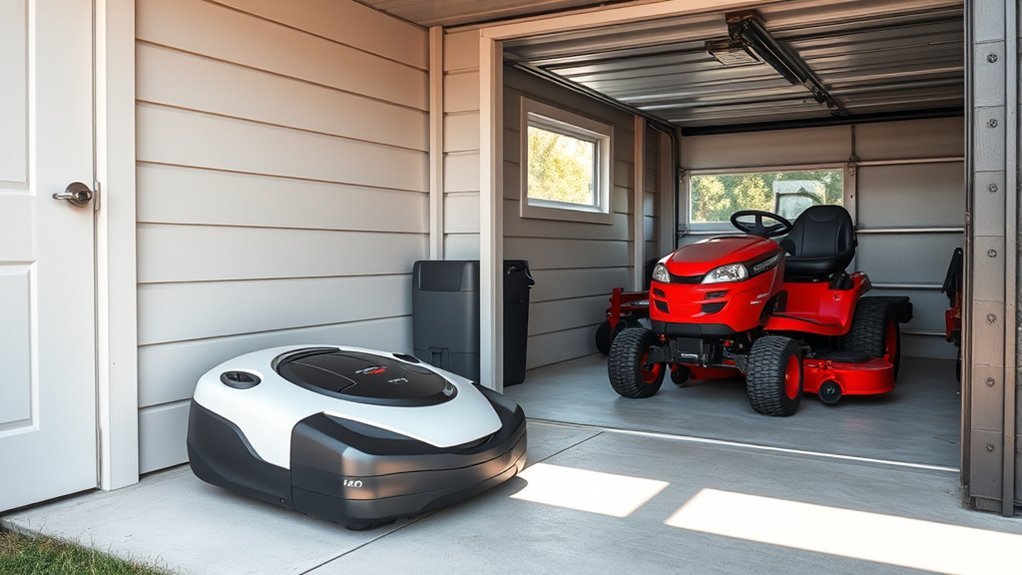
The storage requirements for robotic and ride-on mowers depend considerably on their physical dimensions and the available space. Larger mower models demand more room, affecting the design and placement of storage solutions. Understanding these size distinctions is essential for optimizing storage efficiency and ensuring proper equipment maintenance.
Space Requirements Vary
Understanding the space requirements for different types of mowers is essential because their physical dimensions directly influence storage needs and setup logistics. Robotic mowers are compact, often measuring less than 24 inches in width, which minimizes storage footprint and preserves garden aesthetics. Ride-on mowers, however, are larger, typically requiring at least 4 feet of space in length and width, demanding a dedicated storage area. The variation impacts not only size but also accessibility and organization. The table below summarizes key dimensions and considerations:
| Mower Type | Dimensions (Approx.) | Storage Space Needed | Additional Factors |
|---|---|---|---|
| Robotic Mower | <24" width, compact | Small, under 2 sq ft | Mower color options, quiet operation |
| Ride-On Mower | 4-6 ft length | Larger, 20+ sq ft | Garden aesthetics, maneuverability |
This variation underscores the importance of planning for space and aesthetic integration.
Mower Size Matters
Choosing the right mower often hinges on considering not only its cutting capabilities but also its physical dimensions, as size directly influences storage decisions. Larger mowers require more space, complicating storage for those with limited areas. Proper storage guarantees ideal battery maintenance, preventing deterioration of battery life in robotic mowers and preserving the mechanical integrity of ride-on models. Additionally, size impacts routine calibration and maintenance; smaller units are easier to access and service.
Key considerations include:
- Confirming sufficient space to accommodate mower dimensions without risking damage.
- Facilitating efficient battery maintenance by avoiding cramped storage environments.
- Allowing easy access for mower calibration, preventing operational issues and extending lifespan.
Accurate assessment of size helps maximize storage, ensuring reliable performance over time.
Protecting Your Mower From the Elements: Storage Solutions for Ride-On and Robotic Models
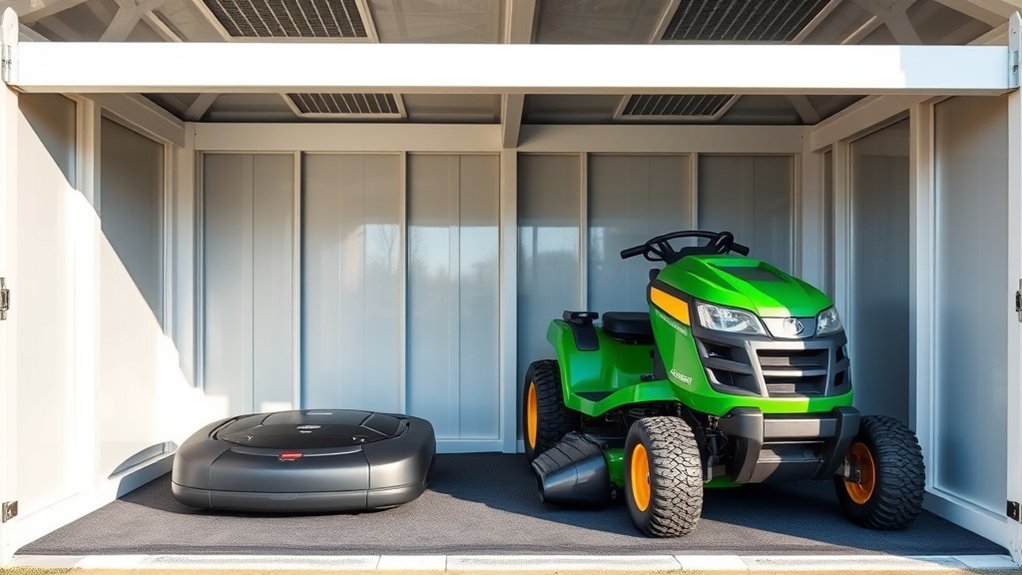
Since exposure to moisture and fluctuating temperatures can markedly accelerate corrosion and mechanical wear, implementing effective storage solutions is crucial for maintaining mower longevity. For both ride-on and robotic models, this involves protecting electrical components to guarantee ideal battery upkeep and reliable startup. Covering the mower with weather-resistant tarps or storing it in a dedicated shed minimizes moisture penetration. Elevated platforms prevent ground dampness, reducing rust risk. Proper ventilation is essential to prevent condensation buildup. Regularly inspecting and cleaning air filters and electrical contacts also supports lawn maintenance. For robotic mowers, removing or disconnecting batteries during extended storage reduces corrosion risk. Overall, tailored storage strategies that address the unique design elements of each mower type greatly extend their operational lifespan and performance.
Indoor vs. Outdoor Storage: Which Is Better for Your Mower Type?
When considering indoor versus outdoor storage, we evaluate environmental protection needs, such as exposure to moisture, temperature fluctuations, and UV radiation, which can accelerate wear and corrosion. Accessibility and convenience also influence the decision, as indoor storage typically offers easier access for maintenance and monitoring, while outdoor options may require additional security measures. Ultimately, selecting the most suitable storage method depends on the specific environmental risks and operational requirements of each mower type.
Environmental Protection Needs
Indoor storage generally offers superior protection for both robotic and ride-on mowers by shielding them from environmental elements such as moisture, temperature fluctuations, and UV exposure. This controlled environment markedly enhances battery longevity by preventing rapid deterioration caused by extreme temperatures. Additionally, indoor storage minimizes noise, reducing disturbance to neighbors and preserving a peaceful environment.
- Preserves battery health: Consistent, moderate temperatures slow chemical degradation, extending operational life.
- Reduces environmental wear: Shielding from moisture and UV exposure prevents rust, fading, and material fatigue.
- Minimizes noise pollution: Enclosed spaces dampen operational sounds, promoting community harmony.
Accessibility and Convenience
Accessibility and convenience are crucial factors when choosing storage solutions for both robotic and ride-on mowers, as these aspects directly impact ease of use, maintenance routines, and operational readiness. Indoor storage typically provides better control over environmental conditions, reducing exposure to moisture and temperature fluctuations, which benefits battery maintenance and prolongs component lifespan. This setup also facilitates easier mower calibration and routine inspections, as tools and replacement parts are readily accessible. Conversely, outdoor storage demands durable, weather-resistant enclosures to prevent corrosion and battery degradation, potentially complicating maintenance tasks. Accessibility is essential for quick deployment and routine checks, especially when scheduling regular calibration or battery servicing. Ultimately, indoor storage offers superior convenience for detailed maintenance, while outdoor options require strategic planning to ensure operational efficiency.
Storage Accessibility and Convenience: How Easy Is It to Access Your Mower?
Robotic mowers generally excel in storage accessibility due to their compact, lightweight design, which allows for straightforward placement in smaller or confined spaces. Their minimal footprint simplifies routine tasks like battery maintenance, requiring less effort to access charging docks or replace batteries. In contrast, ride-on mowers demand larger storage areas and involve more complex procedures for fuel storage, often necessitating secure, well-ventilated environments.
Robotic mowers offer easy storage and maintenance, unlike larger ride-on models requiring more space and complex fuel management.
- Ease of Access: Robotic mowers can be stored in tight spaces, facilitating quick retrieval and deployment.
- Maintenance Simplicity: Battery replacement and cleaning are more accessible without heavy lifting.
- Fuel and Battery Management: Ride-on mowers require dedicated fuel storage, adding safety considerations, whereas robotic mowers rely on rechargeable batteries, streamlining maintenance routines.
Cost and Investment in Storage Equipment for Different Mower Types
Investing in storage equipment for lawn mowers involves evaluating the initial costs and ongoing expenses associated with each type. For robotic mowers, the storage setup must accommodate their battery life and guarantee protection from environmental elements, which can increase initial investment. Maintenance costs are also a factor, as batteries degrade over time, requiring eventual replacement, adding to long-term expenses. Ride-on mowers, on the other hand, typically demand more substantial storage space and more robust protective covers, raising upfront costs. While their maintenance costs revolve around engine servicing and hydraulic systems, they generally have longer battery life if electric. Overall, robotic mower storage tends to be more cost-effective initially but may incur higher replacement costs, whereas ride-on mower storage demands larger investments upfront but lower ongoing replacement expenses.
Tips for Organizing and Maximizing Small Storage Spaces
Maximizing limited storage space requires strategic organization and efficient use of available resources. To optimize small storage areas for lawn maintenance tools, consider vertical stacking with wall-mounted racks for garden landscape equipment, freeing up floor space. Utilize modular shelving units to categorize mower accessories, batteries, and safety gear, guaranteeing quick access and reducing clutter. Implement clear, labeled containers for small parts, which prevents misplacement and streamlines maintenance routines.
- Install pegboards to hang essential tools, reducing drawer clutter and improving accessibility during lawn maintenance projects.
- Use multi-functional furniture, like storage benches, to store mower parts while providing seating.
- Employ slim, stackable bins for seasonal items, optimizing every inch of your compact storage area.
These strategies ensure your mower storage is both efficient and organized, supporting a well-maintained garden landscape.
How to Prepare Your Mower for Off-Season Storage
As the mowing season draws to a close, it’s vital to properly prepare your mower for off-season storage to prevent damage and guarantee peak performance when it’s time to mow again. Start by disconnecting the battery for maintenance; store it in a cool, dry place and perform a full charge to avoid sulfation. Next, sharpen the blades to confirm they’re ready for the next season, reducing strain on the engine and achieving a cleaner cut.
| Step | Action | Purpose |
|---|---|---|
| 1 | Disconnect battery | Prevent corrosion and battery drain |
| 2 | Sharpen blades | Maintain cutting efficiency |
| 3 | Clean and inspect | Remove debris, check for damage |
Proper storage safeguards your investment and prolongs mower lifespan.
Common Mistakes to Avoid When Storing Robotic and Ride-On Mowers
While proper storage is essential for maintaining mower longevity, many overlook critical mistakes that can cause long-term damage or reduce performance. First, neglecting battery maintenance can lead to sulfation or capacity loss; always fully charge batteries and disconnect them if storage exceeds a month. Second, ignoring safety precautions during storage can result in electrical hazards or fire risks—ensure the mower is in a well-ventilated, dry area away from flammable materials. Third, failing to prepare the mechanical components properly, such as not cleaning or lubricating moving parts, accelerates corrosion and wear. For robotic mowers, removing the blades is indispensable to prevent injury and damage. For ride-on models, draining fuel and checking tire pressure are essential steps. Avoid these mistakes to preserve your mower’s performance and safety during storage.
Frequently Asked Questions
What Are the Security Concerns for Storing Robotic Versus Ride-On Mowers?
We’re concerned about remote access vulnerabilities and theft prevention for both mower types. Robotic mowers, with their connectivity, face hacking risks, while ride-on mowers require secure storage to prevent theft. Proper security measures are essential.
How Does Weather Impact the Long-Term Storage of Each Mower Type?
Weather impacts storage durability differently: robotic mowers require climate considerations like moisture protection and temperature control to prevent electronics damage, while ride-on mowers need robust covers and sheltered spaces to avoid rust and corrosion during long-term storage.
Are There Specific Locks or Alarms Recommended for Mower Storage?
We recommend installing robust alarm systems and remote monitoring for mower storage, as they deter theft and provide real-time alerts. Combining high-quality locks with these tech features guarantees maximum security, giving you peace of mind whenever your mower’s stored.
Can Stored Mowers Be Easily Moved by One Person?
Stored mowers can often be moved by one person if they feature a portable design and are lightweight. We consider weight considerations essential, as lighter models with ergonomic handles facilitate easier, safer relocation without requiring additional assistance or specialized equipment.
What Maintenance Checks Should Be Performed Before Storage?
We check battery preservation and blade maintenance before storage, ironically ensuring sharp blades and full batteries to prevent rusting or degradation. We also clean and dry the mower thoroughly, avoiding costly repairs and ensuring the best performance later.
Conclusion
In the end, understanding the distinct storage needs of robotic versus ride-on mowers helps us optimize our space and protect our investment. Like a well-tuned engine, proper storage maintains performance and longevity, emphasizing that thoughtful organization isn’t just practical—it’s essential. By aligning our storage solutions with each mower’s requirements, we guarantee they serve us reliably, proving that in the world of equipment, foresight is the key to enduring efficiency and durability.