Ad Blocker Detected
Our website is made possible by displaying online advertisements to our visitors. Please consider supporting us by disabling your ad blocker.
While the initial costs of robot mowers and garden tractors can seem straightforward, the true financial implications extend far beyond upfront investment. Their long-term expenses, maintenance requirements, and feature sets vary considerably, influencing overall value. Understanding these nuances is essential for making an informed decision tailored to your lawn’s size and terrain. As we analyze the costs over time, you’ll discover factors that could tilt the balance in favor of one option—if you know where to look.
Key Takeaways
- Robot mowers generally have lower initial costs compared to garden tractors, especially for small to medium lawns.
- Garden tractors require higher upfront investment due to size, power, and added functionalities.
- Long-term maintenance and repair expenses are typically lower for robotic mowers, but parts can be more specialized and costly.
- Operating costs differ: robot mowers use rechargeable batteries, while garden tractors rely on fuel, affecting ongoing expenses.
- Total ownership costs depend on lawn size, terrain complexity, maintenance, and potential hidden fees, influencing overall affordability.
How Do Robot Mower and Garden Tractor Costs Compare Upfront?
When comparing the upfront costs of robot mowers and garden tractors, it becomes evident that robot mowers generally have a lower initial investment, though this varies based on features and brand. For smaller lawns, typically under half an acre, robot mowers offer a cost-effective solution, especially in moderate terrain. Larger lawn sizes or complex terrain difficulty *considerably* influence initial expenses; garden tractors tend to have a higher upfront cost due to their larger size and more powerful components. Conversely, robot mowers are designed for precision and automation, which keeps initial costs lower for simple, flat terrain. However, as terrain difficulty increases, some robot models may require additional features or more robust configurations, potentially raising initial costs. Overall, lawn size and terrain difficulty are critical factors in determining the initial financial outlay for each option.
What Are the Long-Term Maintenance Expenses for Each Option?
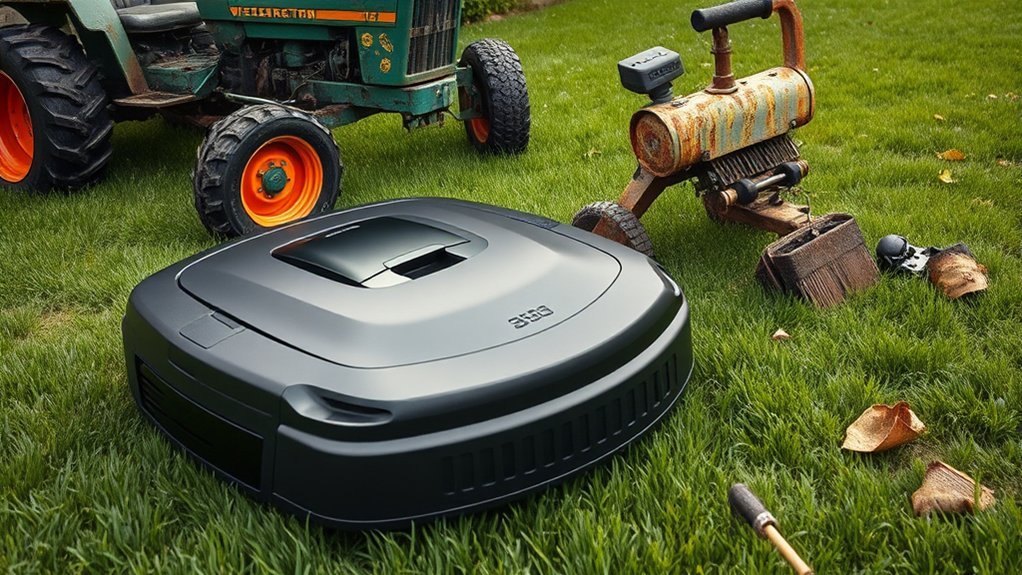
We need to take into account the ongoing maintenance costs, including routine servicing and component replacements, for both options. Robot mowers generally incur lower maintenance expenses but may require more frequent blade replacements, while garden tractors involve more complex parts that can increase repair costs over time. Analyzing these expenses helps determine the long-term financial viability of each choice.
Routine Maintenance Costs
Routine maintenance costs for robot mowers and garden tractors differ markedly over the long term due to their distinct mechanical and electronic components. Robot mowers generally require less frequent maintenance, primarily involving blade sharpening and periodic software updates, which are straightforward and often included in warranty services. In contrast, garden tractors demand more extensive upkeep, including engine oil changes, transmission checks, and belt replacements, leading to higher ongoing expenses. Design aesthetics influence ease of access to components, affecting maintenance efficiency, while brand reputation impacts the availability of genuine parts and service support. A well-regarded brand often offers more reliable, durable equipment, reducing long-term costs. Overall, robot mowers tend to have lower routine maintenance costs, but brand quality and design features substantially influence the total long-term expenses of each option.
Replacement and Repair Expenses
Long-term replacement and repair expenses considerably influence the overall cost-effectiveness of robot mowers and garden tractors. Robot mowers typically incur lower repair costs due to fewer moving parts and simpler mechanics, which can enhance lawn aesthetics by maintaining consistent cutting patterns. However, when repairs are necessary, replacement parts may be costly and require specialized service, impacting user experience. Garden tractors, on the other hand, often have more durable components but involve higher replacement costs for parts like blades and belts, especially with frequent use. Maintenance intervals are generally longer, but repairs can be more invasive and time-consuming, affecting overall lawn aesthetics and user satisfaction. Ultimately, the long-term expenses depend on durability, availability of parts, and the complexity of repairs, shaping the total cost over time.
Which Features Justify the Price Differences Between Robot Mowers and Garden Tractors?
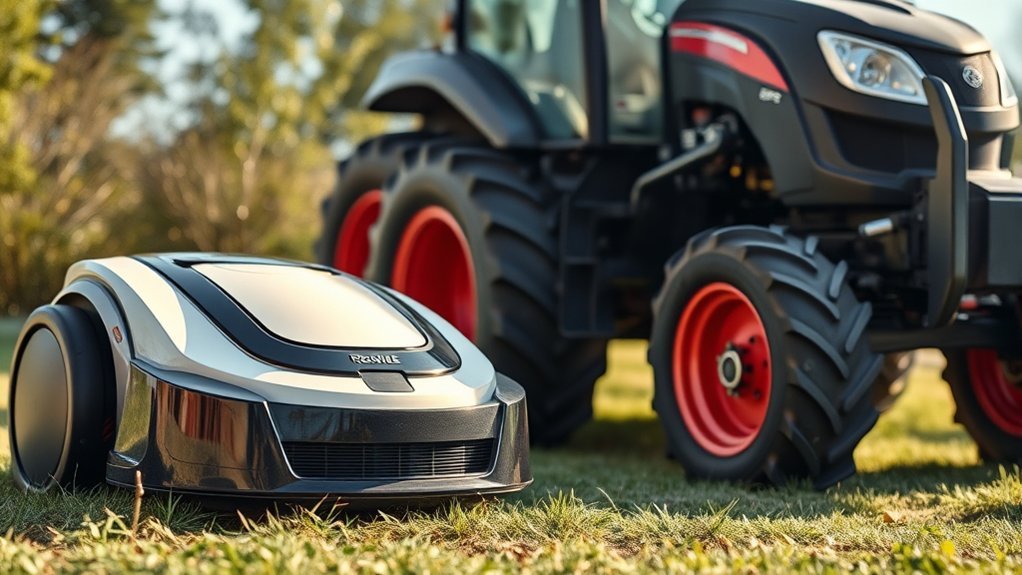
The significant price differences between robot mowers and garden tractors are primarily justified by their distinct technological features and functional capabilities. Robot mowers excel in handling smaller to moderate lawn sizes with consistent, autonomous operation, while garden tractors are better suited for larger, complex terrains requiring more power and manual control. Features such as advanced navigation, obstacle avoidance, and adaptive mowing patterns add to robot mower costs, especially for complex terrains. Conversely, garden tractors incorporate larger engines, attachments, and manual steering, justifying their higher price for extensive, challenging landscapes.
| Feature | Robot Mowers | Garden Tractors |
|---|---|---|
| Lawn size | Small to moderate | Large |
| Terrain complexity | Moderate, with obstacle avoidance | Complex, uneven, steep slopes |
| Navigation technology | GPS, sensors | Manual control, limited automation |
| Power and attachments | Limited, specialized | High, versatile for various tasks |
How Do Operating Costs Impact Your Budget Over Time?
Operating costs considerably influence long-term budgeting, especially when considering maintenance and energy use. Maintenance expenses can vary greatly between robot mowers and garden tractors, affecting overall affordability over time. Additionally, differences in energy consumption impact ongoing operational costs, making it essential to analyze these factors for accurate financial planning.
Maintenance Expenses Vary Widely
While initial purchase prices differ markedly, maintenance costs for robot mowers and garden tractors can vary widely depending on usage and design complexity. These expenses influence long-term budget, especially considering factors like lawn aesthetics and user convenience. Higher complexity models may require frequent part replacements or specialized service, impacting overall costs. To clarify, consider the following comparison:
| Maintenance Aspect | Robot Mower | Garden Tractor |
|---|---|---|
| Routine Maintenance | Battery replacements, blade sharpening | Oil changes, belt repairs |
| Repair Frequency | Less frequent, due to fewer moving parts | More frequent, due to engine wear |
| Cost Variability | Moderate, depending on usage | High, especially with heavy use |
Understanding these variables helps in making an informed decision aligned with budget priorities.
Energy Consumption Differences
Have you considered how energy consumption directly influences long-term operating costs for garden maintenance equipment? Power efficiency plays a vital role in this regard, as it determines how effectively a device converts energy into work. Robot mowers typically feature high power efficiency and utilize rechargeable batteries with extended battery life, reducing ongoing electricity and replacement costs. In contrast, garden tractors generally operate on fuel, which incurs fluctuating costs influenced by fuel prices and consumption rates. Over time, the energy efficiency of a robot mower can lead to significant savings, especially in areas with frequent mowing needs. Battery technology advancements continue to improve battery life, further decreasing the total cost of ownership. Ultimately, understanding these differences helps in accurately evaluating the long-term economic impact of each option.
Is Investing in a More Expensive Model Worth It for Your Lawn Needs?
Investing in a higher-priced robotic mower or garden tractor often promises enhanced features and longer-term durability, but its value depends on specific lawn requirements. More expensive models typically offer superior aesthetic appeal, resulting in a more uniform, attractive finish that elevates your yard’s visual impact. They also tend to have a stronger brand reputation, reflecting proven reliability and better customer support, which can justify the initial investment. However, the decision hinges on factors like lawn size, terrain complexity, and desired maintenance frequency. For large or intricate lawns, the durability and additional features of premium models can lead to long-term savings and convenience. Conversely, for smaller or straightforward lawns, the cost premium may outweigh the tangible benefits, making a lower-cost option more practical.
How Can You Assess Value Beyond Initial Cost When Choosing?
Evaluating the true value of a robotic mower or garden tractor requires looking beyond the initial purchase price to take into account long-term performance and overall costs. To do this effectively, consider these factors:
- Aesthetic appeal – Assess how the device integrates visually with your landscape, maintaining a neat appearance over time.
- Brand reputation – Research brands known for durability, customer support, and consistent quality, which influence long-term satisfaction.
- Operational costs – Factor in maintenance, energy consumption, and replacement parts, which impact total ownership costs.
What Are Hidden Costs to Consider Before Making Your Decision?
What hidden costs might influence your overall expenditure when choosing between a robot mower and a garden tractor? Hidden fees, such as ongoing maintenance, replacement parts, and software updates, can considerably impact total cost over time. Robot mowers often require periodic sensor or blade replacements, which may not be included in initial pricing, adding unexpected expenses. Warranty coverage is another critical factor; limited coverage or exclusions can lead to substantial out-of-pocket repairs. Conversely, garden tractors typically have more extensive warranties, but maintenance costs—such as engine repairs—can accumulate. Both options might incur hidden fees for accessories or upgrades. Evaluating these concealed costs ensures a more accurate comparison, preventing surprises that could inflate your long-term investment beyond initial estimates.
Frequently Asked Questions
How Do Size and Terrain Affect the Overall Cost of Each Mower Type?
Terrain complexity and mower size greatly influence costs; larger garden tractors handle complex terrains better but cost more, while smaller robot mowers excel on simple lawns, reducing expenses. We analyze these factors to optimize your mowing investment.
Are There Financing Options Available for Higher-End Robotic Mowers?
We find that financing options and flexible payment plans are often available for higher-end robotic mowers, enabling us to spread costs over time. This financial flexibility helps manage investment in advanced automation technology effectively.
What Warranties Typically Come With Robot Mowers Versus Garden Tractors?
Warranties are like safety nets—robot mowers often come with limited coverage on batteries and electronics, while garden tractors usually offer more extensive warranties, potentially reducing long-term maintenance costs and ensuring reliable performance over time.
How Does the Ease of Use Influence Long-Term Ownership Costs?
Ease of use impacts long-term costs markedly; simpler maintenance and a lower user learning curve reduce operational expenses, minimize errors, and extend equipment lifespan, making robot mowers more cost-effective over time despite initial investments.
Are There Government Rebates or Incentives for Purchasing Robotic Lawn Equipment?
We find that government grants and tax credits often support robotic lawn equipment purchases, reducing upfront costs. These incentives vary by region, so we recommend consulting local policies to maximize financial benefits when choosing automation technology.
Conclusion
Ultimately, choosing between a robot mower and a garden tractor is like deciding whether to invest in a sleek, high-tech spaceship or a rugged, dependable tank—each has its own cost universe. While robot mowers offer a futuristic, budget-friendly orbit for small lawns, garden tractors may require a financial rocket launch for maintenance and fuel. Weighing initial costs against long-term expenses helps us navigate this cost cosmos, ensuring our lawns stay pristine without bankrupting our galaxy.