Ad Blocker Detected
Our website is made possible by displaying online advertisements to our visitors. Please consider supporting us by disabling your ad blocker.
When comparing the safety of robot mowers and ride-on machines, we recognize that technology plays a vital role in hazard mitigation, yet risks remain if safety protocols aren’t properly followed. Robot mowers incorporate advanced sensors and automatic shutoff features, but understanding how these compare to the inherent dangers of ride-on mowers—such as rollovers and operator errors—requires a careful, detailed assessment of their safety mechanisms. Exploring these differences can help us determine which option truly offers a safer experience.
Key Takeaways
- Robot mowers feature advanced sensors and autonomous navigation to detect obstacles and prevent accidents, unlike ride-on mowers which rely on operator control.
- Ride-on mowers pose higher risks of entrapment, rollovers, and injuries due to their size, weight, and manual operation.
- Robot mowers often include safety features like obstacle detection, emergency shutdowns, and blade guards for enhanced safety.
- Proper training and hazard assessment are critical for ride-on mower safety, whereas robot mowers require regular calibration and maintenance.
- Automated safety systems in robot mowers reduce human error, while ride-on mowers rely heavily on operator vigilance and adherence to safety protocols.
How Do Robot Mowers Ensure Safety During Operation?
Although robot mowers are designed to operate autonomously, they incorporate multiple safety features to prevent accidents and guarantee safe operation. Central to this are advanced sensor technology and autonomous navigation systems. Sensor technology detects obstacles, humans, and pets in real-time, allowing the mower to stop or reroute immediately, reducing collision risks. Autonomous navigation algorithms map and monitor the lawn, ensuring precise movement and avoiding restricted zones. These sensors include infrared, ultrasonic, and boundary wire detection, providing layered safety. The combination of sensor technology and intelligent navigation allows the mower to adapt to changing environments, maintaining safety without human intervention. However, the effectiveness depends on proper setup and calibration, underscoring the importance of cautious operation and regular maintenance.
What Safety Risks Are Associated With Ride-On Mowers?
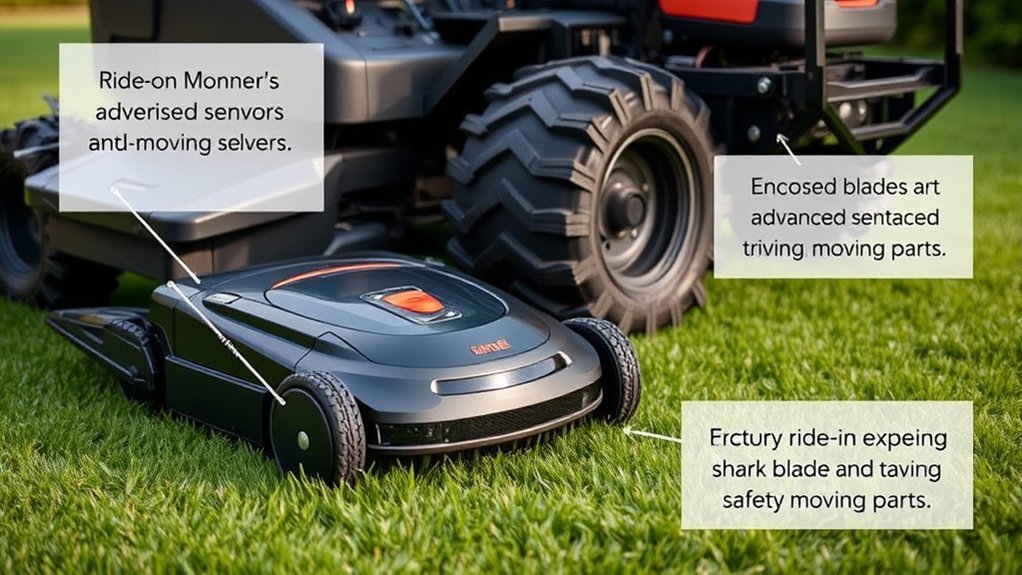
Ride-on mowers, while highly effective for large-scale lawn maintenance, pose several significant safety risks that users must carefully consider. Inadequate operator training can lead to improper use, increasing the likelihood of accidents such as tip-overs or cuts. Additionally, failure to establish and follow emergency protocols can escalate minor incidents into serious injuries. Common hazards include:
- Entrapment or crushing injuries from moving blades or wet grass
- Rollovers on uneven terrain causing severe trauma
- Fires from fuel leaks or overheating components
These risks highlight the importance of thorough operator training and clear emergency protocols. Proper education ensures operators understand safety procedures, while established emergency protocols provide guidance during accidents, ultimately reducing the potential for harm.
Key Safety Features to Look for in Robot Mowers and Ride-On Mowers
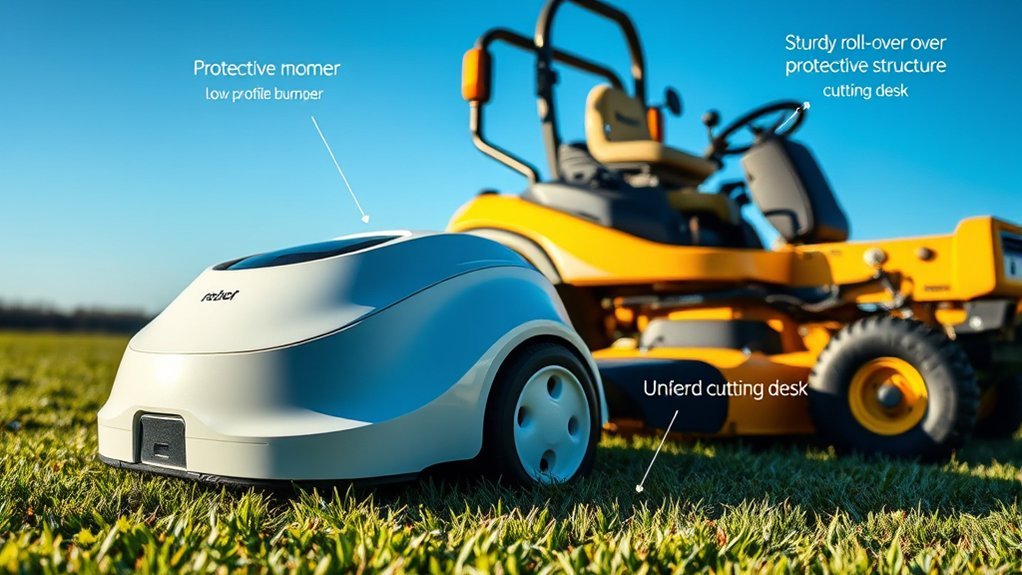
When selecting lawn maintenance equipment, it’s essential to prioritize safety features that mitigate the inherent risks associated with both robot and ride-on mowers. Key safety features include sensors that detect obstacles, automatic shutoff systems, and blade guards to prevent accidental contact. Additionally, battery longevity in robot mowers is crucial, ensuring consistent operation without frequent recharging that could lead to unsafe manual interventions. Noise levels also matter; quieter models reduce noise-induced hazards and improve overall safety for users and nearby pedestrians. For ride-on mowers, safety interlocks that disable blades when the operator leaves the seat are vital. Both types benefit from durable safety enclosures and emergency stop functions. Careful evaluation of these features enhances safety and minimizes potential accidents during lawn maintenance.
Best Practices for Safe Mowing With Robot and Ride-On Machines
To assure safe mowing with both robot and ride-on machines, it’s essential to follow a structured approach that emphasizes awareness and proactive safety measures. Proper adherence to user manual guidelines ensures operators understand machine capabilities and limitations. Autonomous navigation systems require regular calibration and obstacle detection checks to prevent accidents.
Follow safety protocols and regular maintenance to ensure secure, efficient mowing with robotic and ride-on machines.
Key practices include:
- Conducting thorough pre-mowing site assessments to identify hazards.
- Maintaining clear, obstacle-free zones to leverage autonomous navigation safely.
- Regularly reviewing user manual guidelines for updates on safety protocols and system updates.
Comparing Safety Maintenance and Accident Prevention for Both Mower Types
Maintaining safety and preventing accidents with both robot and ride-on mowers requires a disciplined approach to ongoing maintenance and vigilant monitoring. For robot mowers, ensuring proper calibration of autonomous navigation systems is critical, as misaligned sensors can lead to unintended collisions. Regularly inspecting blades and sensors minimizes malfunction risks. For ride-on mowers, checking safety features like emergency shutdown mechanisms and ensuring they function correctly is essential. Both mower types benefit from routine maintenance of electrical systems and safety guards. Incorporating automatic emergency shutdown features enhances accident prevention, especially if obstacles are detected or malfunctions occur. Consistent attention to these systems and proactive updates reduce hazards, fostering a safer environment regardless of mower type. Vigilant maintenance is key to minimizing risks and ensuring reliable operation.
Frequently Asked Questions
How Do Robot Mowers Detect Obstacles in Complex Terrains?
We use advanced sensor technology, including infrared and ultrasonic sensors, for obstacle detection in complex terrains. These sensors allow robot mowers to carefully identify and navigate around obstacles, ensuring safety and precision, especially in unpredictable environments.
What Training Is Required to Operate Ride-On Mowers Safely?
Like seasoned sailors, we undergo thorough operator training and use safety equipment to navigate ride-on mowers safely, understanding potential hazards, avoiding risks, and adhering to strict protocols to guarantee safety amid complex terrains.
How Do Weather Conditions Affect Mower Safety Performance?
Weather hazards and seasonal effects markedly impact mower safety; wet or icy conditions reduce traction, increase slipping risks, and impair visibility, so we always analyze weather forecasts carefully and adjust our mowing practices to guarantee safety.
Are There Age Restrictions for Operating Either Mower Type?
Age restrictions for operating these mowers vary, but generally, operator qualifications are essential. We urge caution, as younger operators may lack the maturity or skills needed, emphasizing the importance of adhering to safety guidelines and legal requirements.
What Are the Long-Term Safety Considerations for Mower Maintenance?
We prioritize preventive maintenance and strict safety protocols to guarantee long-term mower safety; regular inspections, sharp blades, and electrical checks prevent accidents, while training and adherence to guidelines minimize risks during ongoing maintenance.
Conclusion
In conclusion, while robot mowers incorporate advanced safety features like obstacle detection and automatic shutoff that significantly reduce accidents, ride-on mowers still pose notable risks, especially without proper training. Studies show that falls and rollovers account for roughly 60% of ride-on mower injuries, emphasizing the need for strict safety protocols. Careful maintenance, operator education, and choosing the right mower type are essential steps to ensure safer mowing experiences for everyone involved.