Ad Blocker Detected
Our website is made possible by displaying online advertisements to our visitors. Please consider supporting us by disabling your ad blocker.
Imagine a robot quietly trimming your lawn overnight, like a skilled technician performing precise, consistent cuts while you sleep. As we evaluate whether a robot lawn mower is a worthwhile investment, we consider its technical capabilities, long-term savings, and suitability for complex landscapes. But before making a decision, it’s crucial to understand how these devices operate, their benefits, limitations, and what factors influence their performance—topics that can greatly impact your landscape’s future.
Key Takeaways
- Robot mowers save time and effort by automating lawn care, providing a consistently neat appearance.
- They are cost-effective long-term, reducing labor, fuel, and maintenance expenses compared to traditional mowers.
- Suitable for lawns with complex landscapes, slopes, and obstacles due to advanced navigation and boundary features.
- Proper maintenance and calibration ensure durability, efficiency, and optimal performance over time.
- Initial investment can be higher, but long-term benefits often justify the cost for homeowners seeking convenience and quality.
How Do Robot Lawn Mowers Work and What Are Their Features?
Robot lawn mowers operate through a combination of embedded sensors, boundary wires, and intelligent navigation algorithms that enable autonomous operation within a designated area. These devices leverage advanced robotic engineering, integrating artificial intelligence to optimize mowing paths and adapt to changing terrain. Sensors detect obstacles, boundary limits, and grass height, allowing precise maneuvering while avoiding collisions. The boundary wire defines the mowing area, ensuring the mower stays within the designated perimeter. Artificial intelligence enhances the mower’s ability to learn from its environment, improving efficiency over time. The internal navigation algorithms continuously calculate the most effective route, reducing mowing time and energy consumption. Overall, the synergy of robotic engineering and AI makes these mowers highly capable, autonomous tools for maintaining lawns with minimal human intervention.
What Are the Main Benefits of Using a Robot Lawn Mower?
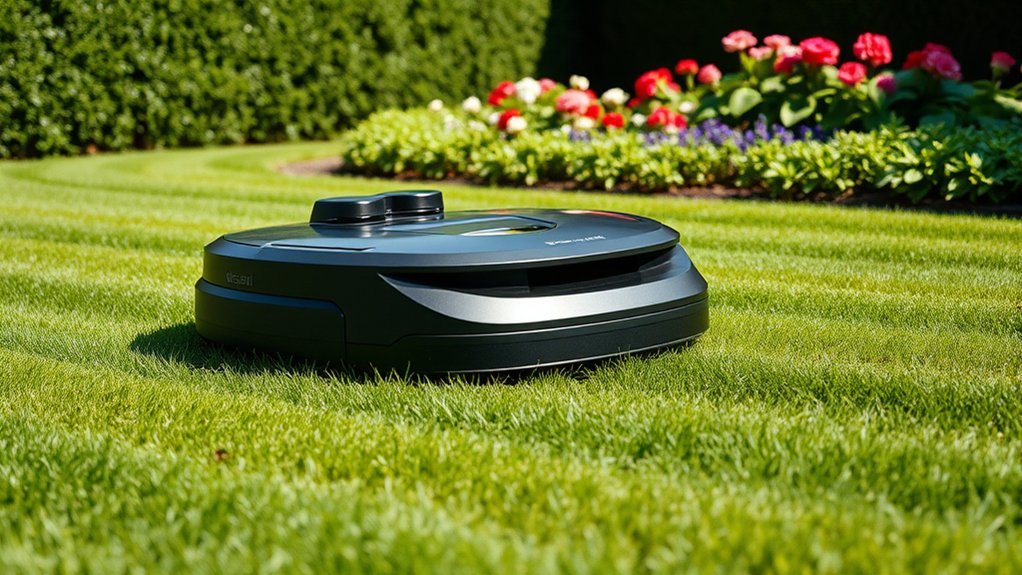
Using a robot lawn mower offers numerous tangible benefits that can considerably enhance lawn maintenance efficiency and quality. Its precision cutting system promotes uniform grass height, supporting ideal garden design by maintaining neat edges and consistent coverage. The mower’s adaptive navigation algorithms adjust to complex landscape features, reducing manual intervention and preserving the integrity of intricate garden layouts. Additionally, its ability to operate independently minimizes the impact of weather conditions; for example, it pauses during rain, preventing turf damage and ensuring consistent mowing schedules. This resilience to weather impact ensures a healthier, more resilient lawn over time. Overall, the automation of mowing tasks results in time savings and improved aesthetic appeal, making robotic mowers a practical solution for modern lawn care.
Are There Any Drawbacks or Limitations to Consider?
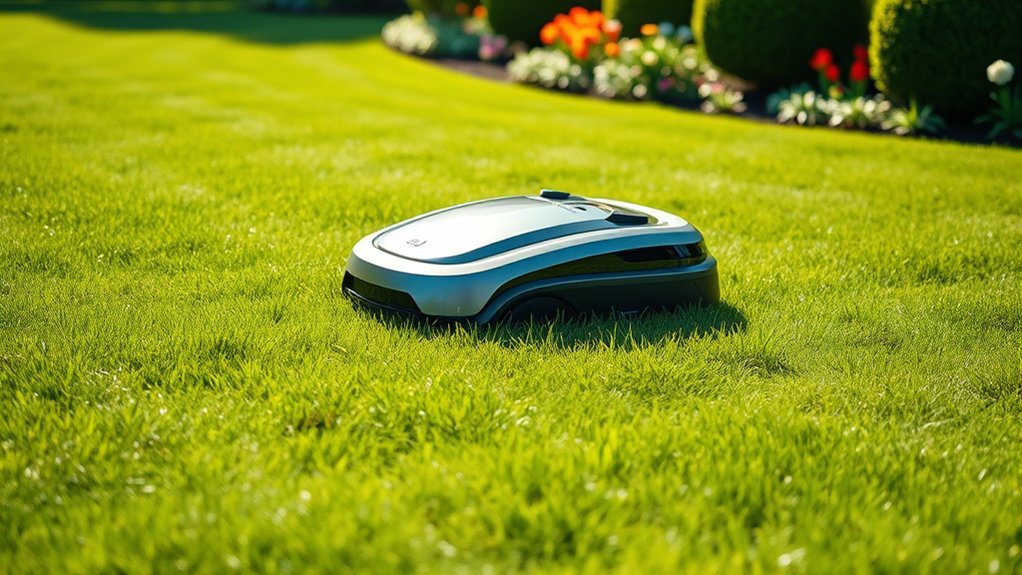
While robot lawn mowers offer automation, their limited battery capacity can restrict mowing sessions, requiring frequent recharges for larger lawns. Maneuvering complex terrain presents challenges due to sensor limitations, potentially leading to incomplete coverage or operational errors. Additionally, the higher upfront cost may outweigh savings in maintenance or time for some users, especially when considering long-term investment.
Limited Battery Life
Limited battery life is a significant consideration when evaluating robot lawn mowers, as it directly impacts their operational efficiency and coverage capacity. Shorter battery life restricts the mower’s ability to complete large or complex lawns in a single run, often necessitating multiple charging cycles. This interruption can reduce overall productivity and extend mowing time. Power efficiency plays a critical role here; models with optimized energy consumption typically feature advanced battery management systems that maximize runtime. However, even with improved power efficiency, the inherent limitations of current battery technology mean that large lawns may require multiple recharges, increasing maintenance and downtime. When assessing a robot mower, it’s essential to consider battery capacity relative to your lawn size, ensuring consistent performance without frequent interruptions.
Challenging Terrain Navigation
Challenging terrain presents a notable obstacle for robot lawn mowers, often limiting their effectiveness and requiring careful consideration before purchase. Terrain challenges such as uneven ground, steep slopes, and obstacles can hinder obstacle navigation, reducing coverage and increasing the risk of damage. To understand these limitations, consider:
- Slope tolerance – Many models struggle with inclines over 15-20 degrees, risking slippage or tipping.
- Obstacle detection – Smaller or irregularly shaped objects may evade sensors, causing potential collisions.
- Surface variability – Loose gravel, thick thatch, or dense debris can impede movement and mowing efficiency.
- Transition zones – Areas where terrain changes abruptly, such as from lawn to garden bed, often require manual intervention.
These factors highlight the importance of evaluating terrain conditions before investing in a robot mower.
Higher Initial Cost
Although robot lawn mowers can offer long-term savings through reduced labor and maintenance costs, their higher initial purchase price remains a significant consideration. The upfront cost is influenced by factors such as luxury features—including app connectivity, customizable mowing schedules, and advanced obstacle detection—that can substantially elevate prices. Additionally, brand reputation plays a vital role; well-established brands often command premium prices due to perceived reliability, superior build quality, and extensive customer support. While these features enhance functionality, they also contribute to the initial investment’s magnitude. This higher cost may deter budget-conscious homeowners, especially when comparing models with similar coverage but differing in luxury features or brand prestige. Consequently, evaluating whether these advanced features align with your specific needs is essential before committing financially.
How Do You Determine If Your Lawn Is Suitable for a Robot Mower?
To determine if your lawn is suitable for a robot mower, we first evaluate its size, ensuring it falls within the mower’s operational capacity. We then assess terrain and obstacles, such as slopes, trees, and garden features, which can impact navigation and safety. Additionally, grass type and density influence cutting efficiency, requiring consideration of the mower’s power and blade design.
Lawn Size Compatibility
Determining if your lawn is suitable for a robot mower hinges on accurately evaluating its size and shape relative to the mower’s capabilities. To assess compatibility, consider the following:
- Lawn Area: Match the mower’s maximum coverage area with your lawn’s size, as larger lawns require models with extended battery life and larger cutting capacity.
- Shape and Layout: Complex garden design, including irregular borders and narrow pathways, may challenge some models; select a mower that can efficiently navigate these configurations.
- Weather Resilience: Ensure the mower’s weatherproof features align with your climate, especially if frequent rain affects mowing schedules or terrain stability.
- Scalability: Confirm that the mower supports potential lawn expansion or modifications, maintaining efficiency over time.
Terrain and Obstacles
Evaluating whether your lawn’s terrain and obstacles are suitable for a robot mower requires a thorough assessment of surface uniformity, slope, and potential obstructions. Uneven terrain, steep inclines exceeding 20-30%, or irregular contours can hinder mower stability and cutting efficiency, impacting garden aesthetics. Obstacles such as trees, flower beds, garden furniture, or uneven rocks must be considered, as they require precise boundary mapping or additional fencing. A cluttered landscape may necessitate frequent adjustments to mowing schedules or limit the mower’s effectiveness. Flat, obstacle-free lawns promote consistent mowing and better aesthetic results, while complex terrains may demand manual intervention. Careful evaluation of surface features and obstacle density guarantees your lawn is compatible with robotic technology, optimizing both mowing schedules and overall garden appearance.
Grass Type Considerations
How can you assess if your grass type is compatible with a robot mower? First, evaluate grass health; healthy, dense turf allows for effective mowing, while patchy or uneven grass may cause issues. Second, consider mowing patterns; consistent, uniform growth supports the mower’s navigation and cut quality. Third, analyze grass height tolerance; some grass types, like Bermuda or Kentucky Bluegrass, tolerate frequent, low cuts better than taller, more delicate varieties. Fourth, examine root systems—deep-rooted grasses are more resilient to frequent mowing. These factors influence mower performance, especially on mixed grass types or uneven terrain. Understanding these details ensures your lawn’s grass type aligns with the robot mower’s capabilities, optimizing mowing efficiency and maintaining healthy, well-manicured grass.
What Factors Should You Consider When Choosing a Robot Lawn Mower?
When selecting a robot lawn mower, we need to carefully assess several critical factors to guarantee it meets our specific yard needs. First, consider the garden design—irregular shapes, slopes, and obstacles influence the mower’s navigation and cutting efficiency. A model with advanced sensors and customizable boundary wires can adapt to complex layouts. Seasonal planting also impacts mowing schedules; areas with dense or rapid-growing vegetation may require higher battery capacity or more frequent mowing cycles. Additionally, cutting width and height adjustments should match your grass type and desired aesthetics. Compatibility with smart home systems and safety features like obstacle detection are essential for seamless operation. Ultimately, evaluating these technical specifications ensures the mower aligns with your garden’s unique terrain and landscaping nuances.
Is Investing in a Robot Lawn Mower Cost-Effective Long-Term?
Investing in a robot lawn mower can be cost-effective over the long term when we consider the cumulative savings on labor, fuel, and maintenance associated with traditional gas-powered or manual mowing methods. Over time, reduced labor costs and lower fuel consumption translate into significant financial benefits. Additionally, these mowers promote consistent cutting, enhancing garden aesthetics and supporting cohesive landscape design.
Key factors include:
- Reduced labor costs due to autonomous operation.
- Lower fuel and energy expenses compared to gas-powered equipment.
- Minimized maintenance costs through fewer mechanical parts subject to wear.
- Improved lawn health via precise, regular mowing, reducing the need for extensive landscaping interventions.
Together, these elements demonstrate how a robot mower offers long-term financial and aesthetic advantages.
How Can You Maintain and Troubleshoot Your Robot Lawn Mower?
Maintaining and troubleshooting your robot lawn mower involves a systematic approach to guarantee peak performance and longevity. Regular maintenance tips include inspecting cutting blades for wear, sharpening or replacing them as needed, and cleaning debris from the undercarriage to prevent obstruction. Confirm the charging contacts are free of dirt and corrosion and verify the battery connections periodically. Troubleshooting techniques involve checking for error codes displayed on the mower’s interface, which can indicate issues such as navigation errors or motor faults. Additionally, examine boundary wires for breaks or loose connections and recalibrate the mower’s sensors if necessary. Consistent inspection and timely intervention help prevent major malfunctions, ensuring ideal operation and extending the lifespan of your robotic mower.
Frequently Asked Questions
Can Robot Lawn Mowers Handle Uneven or Hilly Terrain Effectively?
Robot lawn mowers can handle uneven terrain effectively, thanks to advanced terrain adaptability and hill navigation features. They utilize sensors and adaptive algorithms to maintain consistent cutting height and stability on slopes up to specific inclines.
How Secure Are Robot Lawn Mowers Against Theft or Vandalism?
Robot lawn mowers are surprisingly vulnerable to theft and vandalism, making security concerns real. Advanced features like PIN codes, GPS tracking, and alarm systems help with theft prevention, but no device is entirely foolproof against determined intruders.
Are Robot Lawn Mowers Environmentally Friendly Compared to Traditional Mowers?
Robot lawn mowers are environmentally friendly due to their eco-conscious design, using less energy and emitting fewer pollutants. Additionally, they considerably reduce noise pollution, making them a sustainable and quieter alternative to traditional gas-powered mowers.
What Safety Features Do Robot Lawn Mowers Include to Prevent Accidents?
Think of robot lawn mowers as vigilant guardians; they include child safety features, like sensor detection preventing operation near kids, and emergency shutdown systems that instantly halt blades if anomalies are detected, ensuring safe operation for all.
How Does Weather Affect the Operation and Durability of Robot Lawn Mowers?
Weather resilience varies; heavy rain can cause electrical issues, while extreme temperatures may reduce battery life. Regular maintenance challenges include cleaning debris, ensuring waterproof seals, and inspecting blades to sustain ideal operation and prolong mower durability.
Conclusion
In conclusion, investing in a robot lawn mower can be a smart decision for those seeking efficient, uniform lawn care, especially when considering long-term savings and convenience. While initial costs and terrain compatibility are factors to evaluate, proper maintenance ensures optimal performance. As the saying goes, “A stitch in time saves nine,” emphasizing that careful planning and upkeep can maximize your mower’s lifespan and benefits, making it a valuable addition to your landscape management.