Ad Blocker Detected
Our website is made possible by displaying online advertisements to our visitors. Please consider supporting us by disabling your ad blocker.
Imagine a homeowner with a complex lawn featuring varied terrain and multiple landscaping elements, seeking an efficient mowing solution. Choosing the right robot lawn mower requires understanding how different models navigate obstacles, handle terrain, and meet specific yard dimensions. These factors directly impact performance and longevity. To make an informed decision that balances functionality, safety, and cost, we need to explore key features and considerations that align with your unique outdoor space.
Key Takeaways
- Assess your lawn size, terrain complexity, and obstacles to select a mower with appropriate capacity and navigation features.
- Consider battery life, charging time, and power management to ensure continuous operation for your lawn’s size.
- Choose a model with safety sensors, obstacle detection, and emergency shutoff for secure and reliable use.
- Check for customizable mowing schedules, adjustable cutting heights, and pattern options to promote healthy, even turf.
- Ensure maintenance accessibility, availability of accessories, and firmware updates for long-term performance and durability.
How Do Robot Lawn Mowers Work?
Although robot lawn mowers may seem complex, they operate based on a combination of advanced sensors, boundary wires, and intelligent navigation systems. These mowers utilize sensors to detect obstacles, gradients, and boundary markers, guaranteeing precise navigation. Boundary wires create a virtual perimeter, preventing the mower from leaving the designated area. The onboard navigation algorithms optimize coverage, enabling efficient, systematic mowing patterns. Regular robot mower maintenance is essential to guarantee sensors remain accurate and the cutting system functions properly. Additionally, lawn mower accessories like replacement blades, charging stations, and safety sensors enhance performance and longevity. The integration of these components allows robot mowers to operate autonomously with minimal human intervention, providing consistent lawn care while reducing the need for manual maintenance and oversight.
What Size Lawn Is Best for a Robot Mower?
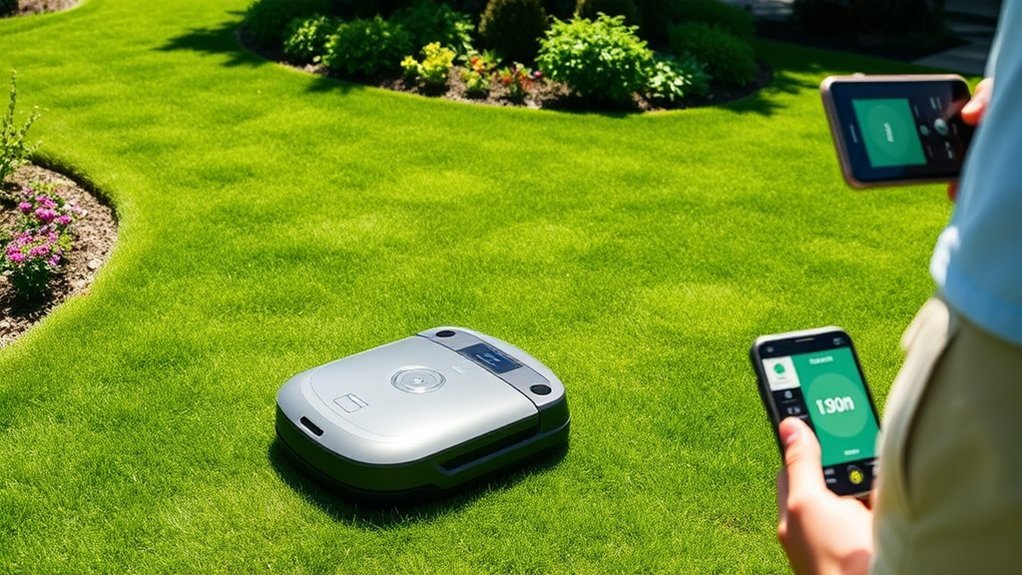
The size of your lawn considerably influences the suitability and efficiency of a robot mower. Smaller lawns, typically under 0.25 acres, benefit from compact models with limited runtime, ensuring consistent coverage. Larger lawns, exceeding 0.5 acres, require higher-capacity mowers with extended battery life and multiple zones. Consider how a lawn sprinkler system intersects with mower operation, especially in zones with garden furniture or obstacles. Properly mapping mowing areas ensures the robot navigates efficiently without interference.
| Lawn Size | Recommended Robot Mower Features |
|---|---|
| Small | Compact, short battery life, simple navigation |
| Medium | Moderate battery, adjustable cutting schedules |
| Large | High-capacity, multi-zone capabilities |
How to Assess Your Yard’s Terrain and Obstacles
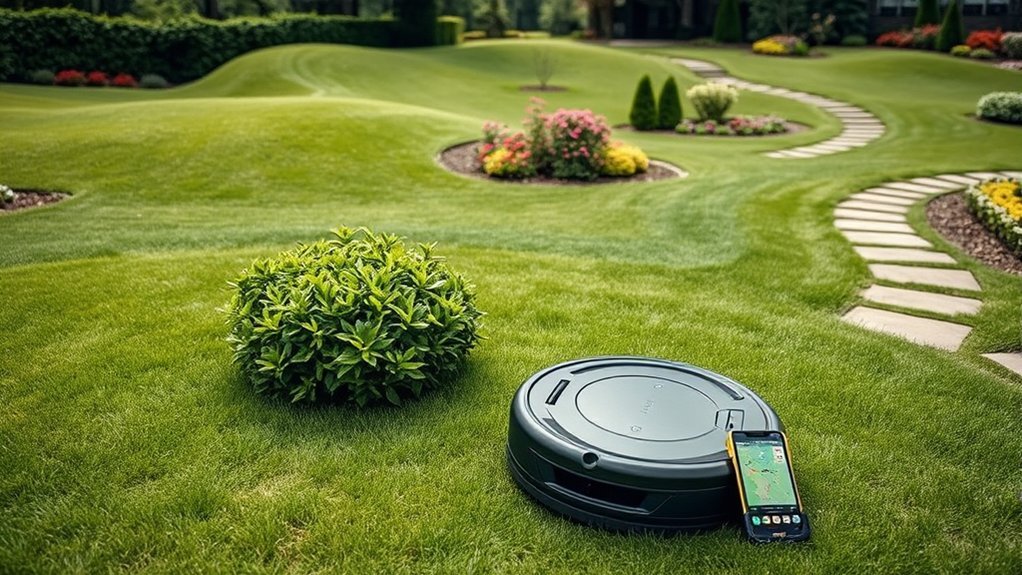
To accurately select a robot mower, we must analyze the yard’s size, shape, and boundary features to determine coverage requirements. Identifying obstacles such as trees, flower beds, and fixed structures guarantees the mower’s navigation system is appropriate. Additionally, evaluating terrain variations and slopes allows us to determine the machine’s capabilities for handling inclines and uneven surfaces effectively.
Yard Size and Shape
How can you accurately evaluate your yard’s terrain and obstacles before selecting a robot lawn mower? Begin by mapping your yard’s dimensions, noting the overall size and shape, whether it’s rectangular, irregular, or segmented. Consider the complexity of the garden design, including slope gradients and uneven surfaces that influence mobility. Assess how plant selection impacts navigability; densely planted areas or thick shrubbery may hinder mower movement. Measure the total mowing area to determine if a model with increased battery capacity and larger cutting width is necessary. For irregular shapes or narrow passages, choose a mower with precise boundary controls. This detailed evaluation guarantees compatibility between your yard’s size, shape, and terrain characteristics and the mower’s technical capabilities, optimizing performance and efficiency.
Obstacle Identification
Evaluating the obstacles in your yard requires a systematic approach to guarantee your robot mower can navigate efficiently. Accurate obstacle detection is essential for identifying static and dynamic objects that could impede operation. Assess the size, shape, and placement of obstacles such as trees, flower beds, and furniture. Consider how the mower’s obstacle avoidance system will respond—whether through sensors, cameras, or a combination—to prevent collisions and ensure continuous coverage. Evaluate the density and distribution of obstacles to determine if additional boundary wires or virtual fences are necessary. Precise obstacle identification enables the mower to adjust its path proactively, minimizing downtime and damage. This assessment ensures compatibility between your yard’s specific obstacles and the mower’s obstacle detection capabilities.
Terrain Variations and Slopes
Evaluating your yard’s terrain and slopes requires a detailed examination of elevation changes, surface types, and potential obstacles that could challenge your robot mower’s navigation. Steep inclines exceeding 20-30 degrees may require specialized models with enhanced traction and stability. Variations in surface type—such as compacted soil, grass, or gravel—affect mowing efficiency and safety. Consider the placement of garden irrigation, guaranteeing it doesn’t interfere with the mower’s path or cause slipping hazards on slopes. Wildlife considerations are also essential; natural habitats or burrows might necessitate protective zones or specific mower settings to prevent disturbance. Accurate assessment of these factors ensures the mower can operate reliably across diverse terrain while maintaining safety and minimizing environmental impact.
Key Features to Look for in a Robot Lawn Mower
When selecting a robot lawn mower, it’s vital to focus on key features that guarantee ideal performance and durability. Essential features include precise cutting algorithms that enhance gardening aesthetics by ensuring an even, clean cut across varied terrain. Advanced sensors improve navigation, especially on complex landscapes, while robust build quality extends device longevity. Look for models with customizable mowing schedules to optimize lawn fertilization, promoting healthier grass growth. Integrated mulching systems can further improve soil health by returning organic matter. Compatibility with boundary wires or GPS mapping ensures thorough coverage and minimizes missed patches. Additionally, noise reduction features enhance user experience without disturbing your outdoor environment. Prioritizing these technical specifications guarantees your mower performs reliably, maintains aesthetic appeal, and contributes to a healthier, well-fertilized lawn.
How Much Should You Budget for a Robot Mower?
Understanding the appropriate budget for a robot mower depends on evaluating the features and performance levels you require. Higher-end models often integrate seamlessly with sophisticated garden design, enabling precise navigation across complex terrains and guaranteeing consistent cut quality. They may include advanced sensors for obstacle detection, enhanced lawn irrigation compatibility, and customizable mowing schedules. Budget considerations should also account for the mower’s cutting width, terrain adaptability, and smart features such as app control. Entry-level models are suitable for simple lawns, but larger or more intricate landscapes justify investment in premium options to optimize efficiency and lawn health. Ultimately, aligning your budget with the complexity of your garden design and irrigation system ensures long-term value and effective maintenance.
Which Battery Life and Charging Options Matter?
Understanding the battery life of a robot mower is essential to guarantee continuous operation during mowing cycles. We should consider charging speed and frequency to minimize downtime and evaluate battery compatibility for easy replacements. These factors directly influence the mower’s efficiency and long-term maintenance costs.
Battery Duration Expectations
How long a robot lawn mower’s battery lasts during each session considerably impacts its overall performance and convenience. Battery capacity, measured in milliamp-hours (mAh) or watt-hours (Wh), determines the mower’s runtime before needing a recharge. A higher capacity generally equates to longer mowing periods per session. It’s essential to take into account the placement and accessibility of charging stations, as they influence how quickly and efficiently the mower can recharge when necessary. Reliable charging stations should support automatic docking and have consistent power delivery to restore battery levels without manual intervention. We should evaluate the mower’s battery life relative to the size of the lawn and the frequency of mowing required, ensuring that the combination of battery capacity and charging station compatibility aligns with our specific landscape needs.
Charging Speed and Frequency
What factors influence the charging speed and how often a robot lawn mower needs to recharge? Primarily, battery capacity, charger power output, and the efficiency of the charging station determine recharge time. Higher wattage chargers reduce charging duration, while larger batteries extend runtime, increasing recharge frequency. Power indicators on the charging station provide real-time status, ensuring ideal charging cycles.
| Factor | Impact on Charging Speed | Effect on Frequency |
|---|---|---|
| Battery Capacity | Longer recharge times | More frequent charging needed |
| Charger Power | Faster charge rate | Less frequent recharges |
| Power Indicators | Accurate status updates | Better scheduling |
Battery Compatibility and Replacement
Have you considered how battery compatibility impacts your robot lawn mower’s performance and longevity? Ensuring compatibility requires understanding different battery types, such as lithium-ion or NiMH, and selecting units designed for your mower model. Proper replacement procedures are critical; incorrect handling can damage the device or reduce battery life. Always verify that replacement batteries match the specified voltage, capacity, and connector type outlined in the manufacturer’s guidelines. Regularly inspecting and maintaining the battery connection points helps prevent performance issues. When replacing, power down the mower, carefully disconnect the old battery, and follow the device-specific instructions to install the new one securely. These practices optimize operational efficiency, extend battery lifespan, and maintain consistent mowing performance over time.
How to Choose the Right Cutting Height and Pattern
Selecting the appropriate cutting height and pattern is essential for maintaining a healthy, aesthetically pleasing lawn. Proper cutting height adjustments promote root development, drought resistance, and overall turf health. Typically, a mowing height of 2.5 to 3 inches is ideal for most grass types; consult your grass-specific guidelines for best results. When choosing a mowing pattern, consider options such as straight, spiral, or zigzag patterns, which can reduce soil compaction and wear. Consistency in pattern rotation prevents ruts and promotes even growth. Adjust the cutting height based on seasonal changes and grass conditions, ensuring the mower’s settings are precise. By carefully selecting the right height and pattern, you enhance turf health and achieve a uniform, professional appearance.
What Safety Features Are Important for Your Robot Mower?
Ensuring your robot mower is equipped with essential safety features is crucial for preventing accidents and protecting both users and bystanders. Safety sensors are critical; they detect obstacles, pedestrians, or pets, prompting the mower to stop or navigate around hazards. These sensors enhance operational safety and reduce collision risks. An emergency shutoff feature is equally important, allowing immediate deactivation of the mower in urgent situations, such as entanglement or malfunction. This function guarantees quick response times to prevent injuries or damage. Combining advanced safety sensors with a reliable emergency shutoff system creates a robust safety framework. These features are fundamental in guaranteeing safe operation, especially in environments with children, pets, or frequent foot traffic. Prioritizing these safety mechanisms is essential when selecting a robot lawn mower.
How to Maintain and Troubleshoot Your Robot Lawn Mower
Regular maintenance and troubleshooting are essential to keep your robot lawn mower operating efficiently and to prevent unexpected failures. Consistent cleaning of the cutting blades and underside components reduces debris buildup, ensuring peak cutting performance. Monitoring battery health and charging cycles prolong device lifespan, while inspecting sensors and boundary wires guarantees proper navigation. Proper garden landscaping, including clearing obstacles and maintaining even terrain, minimizes operational disruptions. Lawn aeration around the mowing area promotes healthy grass growth and reduces soil compaction, which can improve mower efficiency. If the mower stalls or exhibits uneven cutting, troubleshooting involves checking blade sharpness, recalibrating sensors, and inspecting electrical connections. Regularly updating firmware and consulting the manufacturer’s troubleshooting guide will further enhance reliability and address potential issues proactively.
Frequently Asked Questions
Can Robot Mowers Handle Uneven or Hilly Terrains Effectively?
Robot mowers with advanced terrain adaptability and hill navigation features can effectively handle uneven or hilly terrains, maintaining consistent mowing performance by adjusting to slopes and obstacles, ensuring thorough coverage and safety across diverse landscape conditions.
Are Robot Lawn Mowers Suitable for Thick or Tall Grass?
Robot lawn mowers tackle grass heights up to 4-6 inches, with powerful mower blades designed for dense or tall grass. They cut efficiently, but extremely thick or tall grass may require multiple passes or manual pre-cutting.
How Do I Prevent My Robot Mower From Damaging Flower Beds?
We prevent damage by implementing flower bed protection with physical barriers and setting precise mower boundaries. Proper boundary setup guarantees the mower recognizes restricted zones, avoiding flower beds and maintaining garden integrity efficiently and safely.
What Are the Best Security Features to Prevent Theft?
Sure, theft prevention is effortless with advanced security features like remote monitoring and alarm systems. These enable real-time tracking and instant alerts, ensuring your robot mower remains secure, even when you’re away, providing peace of mind and technical assurance.
How Do Weather Conditions Affect Robot Mower Operation?
Weather conditions considerably impact robot mower operation; weather resilience varies, requiring seasonal adjustments such as rain sensors or protective covers, to maintain ideal performance and prevent damage during extreme conditions like heavy rain, frost, or high humidity.
Conclusion
In conclusion, choosing the perfect robot lawn mower requires careful consideration of size, terrain, features, and safety. By balancing budget with build quality and battery capabilities, we ensure efficient, effective lawn care. Thoughtful selection of cutting patterns and maintenance minimizes mishaps and maximizes longevity. Ultimately, a well-chosen mower melds meticulous measurement with modern technology, making maintenance manageable and mowing a manageable, masterful task. Proper planning produces pristine, problem-free lawns and peace of mind.