Ad Blocker Detected
Our website is made possible by displaying online advertisements to our visitors. Please consider supporting us by disabling your ad blocker.
As technology advances, robotic lawn mowers are becoming a practical solution for maintaining outdoor spaces with minimal effort. They offer the promise of a consistently tidy lawn, but choosing the right model requires careful consideration of features, terrain compatibility, and durability. Understanding these factors is essential for making an informed investment that balances convenience with long-term performance—something worth exploring if you’re aiming for a reliable, efficient mowing solution.
Key Takeaways
- Assess yard size, terrain, and obstacles to select a model with appropriate battery life and durability features.
- Prioritize advanced navigation, obstacle detection, and mapping capabilities for thorough and efficient mowing.
- Choose reputable brands with good customer support, software updates, and reliable performance.
- Consider blade quality, motor power, and cutting performance for a healthy, well-manicured lawn.
- Regular maintenance, including blade sharpening and sensor calibration, ensures optimal operation and longevity.
What Are Robot Lawn Mowers and How Do They Work?
Have you ever wondered how robot lawn mowers operate autonomously to maintain your yard? Robot mower technology combines sensors, boundary wires, and intelligent navigation systems to achieve precise, hands-free lawn care. These devices follow predefined paths, detecting obstacles and adjusting their routes accordingly. The evolution of lawn mowing history shows a shift from manual push mowers to automated solutions, driven by advancements in robotics and automation. Modern robot mowers use GPS, boundary markers, or even vision-based systems to map and cover your yard efficiently. They operate quietly, with minimal human intervention, enabling consistent mowing schedules. Understanding how these systems function highlights their efficiency and reliability, making them a compelling choice for maintaining lawns without the need for traditional mowing methods.
Key Features to Consider When Buying a Robot Lawn Mower
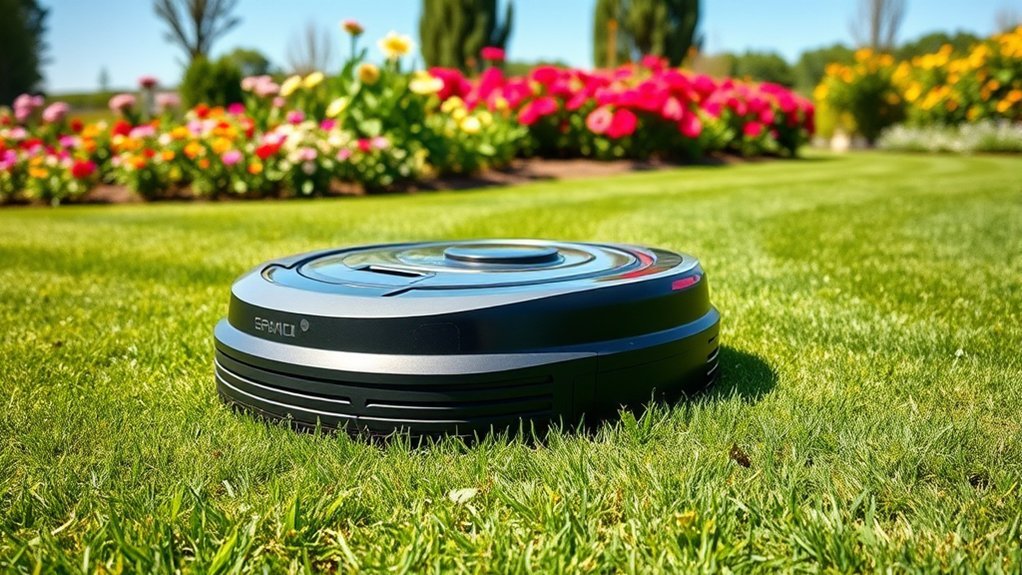
When selecting a robot lawn mower, understanding its key features is essential to guarantee it meets your specific yard needs. Critical considerations include:
- Cutting Performance: Confirm the mower provides a consistent cut to enhance lawn aesthetics and promote healthy growth.
- Battery Life and Charging: Longer battery life allows for larger areas, while fast charging minimizes downtime.
- Navigation and Mapping: Advanced navigation ensures thorough coverage and avoids obstacles, leading to a more uniform appearance.
- Brand Reputation and Support: Reputable mower branding often correlates with reliability, customer service, and available updates.
Focusing on these features helps optimize mower performance, ensuring your yard looks pristine. The right choice balances functionality and durability, aligning with your lawn aesthetics and long-term satisfaction.
How to Choose the Right Robot Mower for Your Yard Size and Terrain
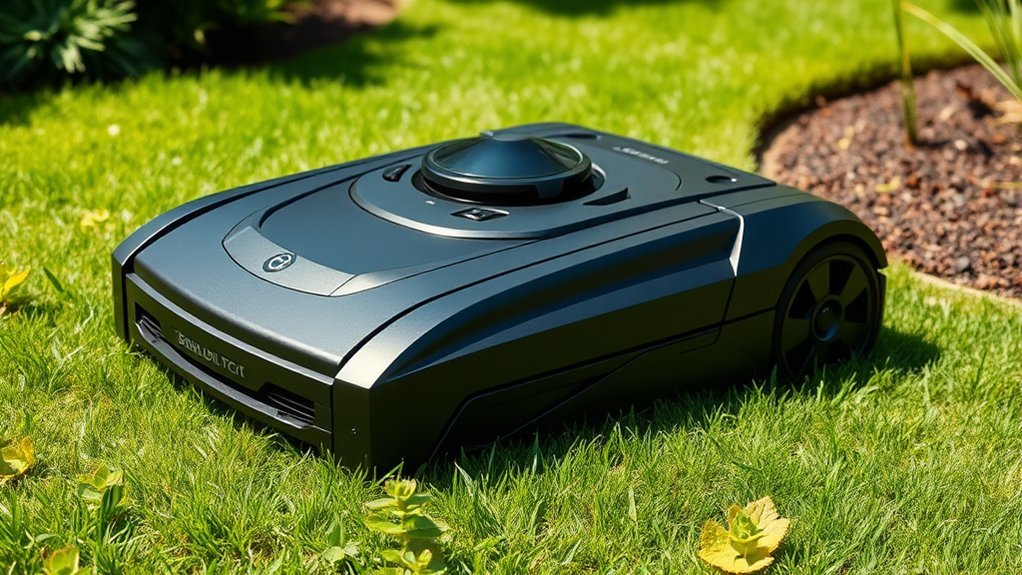
Choosing the right robot mower depends largely on your yard’s size and terrain, as these factors directly influence its performance and efficiency. For large lawns, opt for models with extended battery life and larger cutting areas. Hilly or uneven terrain requires mowers with robust wheels and adjustable cutting heights to navigate obstacles and avoid turf damage. For smaller or landscaped gardens, compact models with precise boundary controls work well. Proper lawn watering enhances the mowing process and overall garden health, especially in varied terrain. Consider the following factors:
| Yard Size | Terrain Type |
|---|---|
| Large, open areas | Flat or gently rolling surfaces |
| Medium-sized yards | Slight slopes or uneven ground |
| Small gardens | Landscaping features, flower beds |
Comparing Top Robot Lawn Mower Models: Pros and Cons
With the increasing variety of robot lawn mowers available on the market, comparing top models requires careful consideration of their respective advantages and disadvantages.
- Smart navigation varies considerably; some models use advanced algorithms for efficient coverage, while others rely on basic boundary systems.
- Battery longevity impacts mowing time; higher capacity batteries enable longer operation and reduce recharge frequency.
- Cutting performance depends on blade design and motor power, influencing grass health and cut quality.
- Additional features like app control or obstacle detection enhance user experience but may increase cost or complexity.
Evaluating these factors helps identify models that balance smart navigation capabilities and battery longevity, ensuring ideal performance tailored to specific yard needs.
Tips for Maintaining and Troubleshooting Your Robot Mower
Maintaining your robot mower involves consistent cleaning to prevent debris buildup that can impair performance. Addressing common issues promptly can minimize downtime and extend the mower’s lifespan. We’ll explore essential cleaning procedures and practical solutions for typical problems to keep your mower operating smoothly.
Regular Cleaning Procedures
Regular cleaning is essential for guaranteeing your robot mower operates efficiently and has a long service life. Proper maintenance directly impacts garden aesthetics and supports effective lawn fertilization by preventing debris buildup that can hinder grass health. To maintain peak performance, we recommend:
- Removing grass clippings and dirt from blades and undercarriage regularly.
- Inspecting and cleaning sensors to ensure accurate navigation.
- Checking wheels and brushes for debris or wear, replacing as necessary.
- Wiping down the body and blades with a damp cloth to prevent buildup that could affect cutting efficiency.
Consistent cleaning helps avoid operational issues and prolongs the device’s lifespan. It also ensures the mower maintains a clean cut, supporting overall lawn health and aesthetics while facilitating better lawn fertilization.
Common Issue Solutions
Have you ever wondered why your robot mower isn’t performing at its best? Common issues often stem from inadequate garden landscaping or improper lawn fertilization, which can hinder the mower’s efficiency. For example, uneven terrain or thick grass may cause the mower to get stuck or miss areas. Regularly checking for obstructions and ensuring the blades are sharp can prevent cutting issues. Additionally, calibration errors or sensor misalignments may require recalibration. Battery performance can decline over time, affecting runtime, so monitoring and replacing batteries when needed is crucial. Maintaining a clear, level area and managing lawn growth through proper fertilization guarantees peak operation. Troubleshooting these issues systematically can prolong your mower’s lifespan and improve overall lawn health.
How to Ensure Safe and Efficient Operation of Your Robot Lawn Mower
To guarantee safe and efficient operation, we need to focus on regular maintenance checks to keep the mower functioning properly and prevent potential issues. Proper boundary setup is essential to prevent the mower from entering restricted areas and to optimize coverage. By adhering to these practices, we can maximize safety and performance during mowing sessions.
Regular Maintenance Checks
Making certain the safe and efficient operation of your robot lawn mower requires consistent maintenance checks, as neglecting these can lead to malfunctions or safety hazards. Regular inspections help maintain a well-organized garden layout and optimize battery lifespan. Key checks include:
- Examining the blades for sharpness and damage to ensure efficient cutting.
- Clearing debris and grass clippings from sensors and wheels to prevent operational errors.
- Inspecting the battery connections and overall health to extend battery life.
- Verifying the integrity of the charging station and boundary wires for proper navigation.
Proper Boundary Setup
Proper boundary setup is essential for the safe and efficient operation of your robot lawn mower, as it defines the mowing area and prevents the mower from wandering into restricted zones. The foundation of this setup involves installing perimeter wires around the designated area, creating an invisible boundary that guides the mower. Boundary markers can be used in conjunction with perimeter wires to reinforce zones where the mower should or shouldn’t go. Accurate installation of perimeter wires, ensuring secure connections and proper tension, minimizes the risk of navigation errors. It’s also important to test the system thoroughly before regular operation. A well-defined boundary setup not only ensures safety but also maximizes mowing efficiency by maintaining a consistent, predictable mowing pattern within the designated area.
Frequently Asked Questions
What Is the Typical Lifespan of a Robot Lawn Mower?
Typically, robot lawn mowers last 5-8 years with proper maintenance, including timely battery replacement, and adherence to a consistent mowing schedule, which helps prolong their operational lifespan and guarantees ideal performance over time.
Can Robot Mowers Handle Steep Slopes or Uneven Terrain?
Steep slopes challenge robot mowers, but with skilled slope navigation and terrain adaptability, many models can handle inclines up to 20-30 degrees. We analyze specific features to determine ideal options for uneven terrain.
How Do I Update or Upgrade My Robot Mower’s Software?
We recommend checking your robot mower’s manufacturer website regularly for software updates and firmware upgrades, then following their instructions for installation. Keeping software current guarantees ideal performance, security, and compatibility with the latest features.
Are There Eco-Friendly or Energy-Efficient Robot Mower Options?
We believe eco-friendly robot mowers are game-changers, utilizing solar charging and biodegradable blades for sustainability. These energy-efficient options reduce environmental impact, offering a greener, smarter way to maintain your lawn without sacrificing performance or convenience.
What Are the Best Practices for Storing My Robot Mower During Winter?
For winter storage, we recommend cleaning your robot mower thoroughly, removing the battery for separate storage, and keeping it in a cool, dry place. Regular battery maintenance guarantees longevity and peak performance for the next mowing season.
Conclusion
In conclusion, choosing the right robot lawn mower involves analyzing your yard’s size, terrain, and features like navigation and battery life. By carefully comparing models and considering maintenance needs, we can guarantee efficient, safe operation—much like a well-placed knight protecting a castle. Making an informed decision helps us achieve a pristine lawn with minimal effort, blending modern technology with practical durability, and transforming yard work into a more manageable, satisfying task.