Ad Blocker Detected
Our website is made possible by displaying online advertisements to our visitors. Please consider supporting us by disabling your ad blocker.
It’s no coincidence that many homeowners find themselves weighing the convenience of robot mowers against traditional ride-on models. Both offer distinct advantages, but understanding how they operate and suit different lawn sizes can substantially impact your outdoor experience. As we explore these options, you’ll discover which mower aligns best with your needs, whether it’s effortless automation or flexible manual control—yet, making the right choice involves more than just size.
Key Takeaways
- Robot mowers offer autonomous operation, reducing manual effort, while ride-on mowers require active steering and control.
- Robot mowers are ideal for small to medium lawns with easy scheduling, whereas ride-on mowers handle large areas quickly.
- Robot mowers have lower maintenance costs and simpler storage, enhancing long-term convenience.
- Smart features like remote monitoring and automated scheduling improve reliability and reduce oversight.
- Battery life, noise levels, and user-friendly controls are key factors ensuring overall mowing convenience.
How Do Robot Mowers and Ride-On Mowers Differ in Operation?
While both robot mowers and ride-on mowers serve the same fundamental purpose of cutting grass, they operate in distinctly different ways that impact user experience and convenience. Robot mowers run autonomously, relying on programmed routes and sensors to navigate your lawn, which minimizes manual operation. They automatically handle mowing tasks, freeing you from physical involvement and reducing effort. In contrast, ride-on mowers require manual operation, where you sit and steer, directly controlling the mowing process. Safety features are integral to both types—robot mowers include obstacle detection and anti-theft systems, while ride-on mowers often have emergency shut-offs and seat sensors. These safety features guarantee user protection; however, robot mowers are designed to operate safely with minimal user intervention, enhancing overall convenience.
Which Mower Is Better Suited for Different Lawn Sizes?
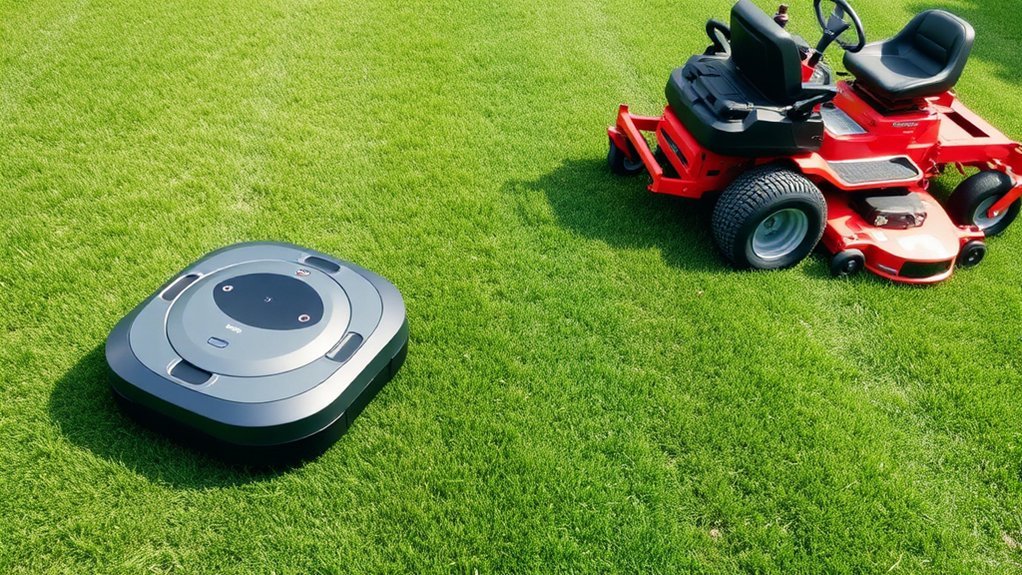
Choosing the right mower depends heavily on your lawn’s size and the effort you’re willing to invest in maintenance. Robot mowers excel on smaller to medium areas, offering convenience with minimal upkeep, while ride-on mowers handle larger areas more efficiently. Understanding these differences helps you select the best tool to keep your lawn well-maintained without unnecessary hassle.
Optimal Lawn Area
Have you ever wondered which mower is best suited for different lawn sizes? For smaller gardens, robot mowers excel by maintaining a neat, uniform cut that enhances garden aesthetics without disturbing wildlife. Their quiet operation minimizes wildlife impact, allowing natural habitats to thrive. Conversely, ride-on mowers are more efficient for large lawns, covering extensive areas quickly and evenly. Their power and size make them ideal for expansive spaces, but they can be disruptive to local wildlife and may affect the visual harmony of smaller, delicate landscapes. Ultimately, the choice depends on your lawn’s size and your priorities: a pristine look and wildlife preservation for smaller yards, or efficient large-area coverage for bigger properties. Each mower has its strengths tailored to specific lawn areas.
Maintenance Effort
When considering maintenance effort, the size of your lawn plays a vital role in determining which mower suits you best. Robot mowers excel with smaller to medium lawns due to their low noise levels, minimal maintenance, and long battery life, which reduces the need for frequent charging. Ride-on mowers, however, are better suited for large lawns, as they handle extensive areas quickly but require more upkeep, including oil changes and blade sharpening.
| Lawn Size | Robot Mower | Ride-On Mower |
|---|---|---|
| Small to Medium | Low maintenance, quiet, long battery life | Moderate maintenance, louder, quick for large areas |
| Large | Limited due to battery life and navigation | High efficiency, more upkeep but suitable for vast lawns |
How Do Convenience and Ease of Use Compare?
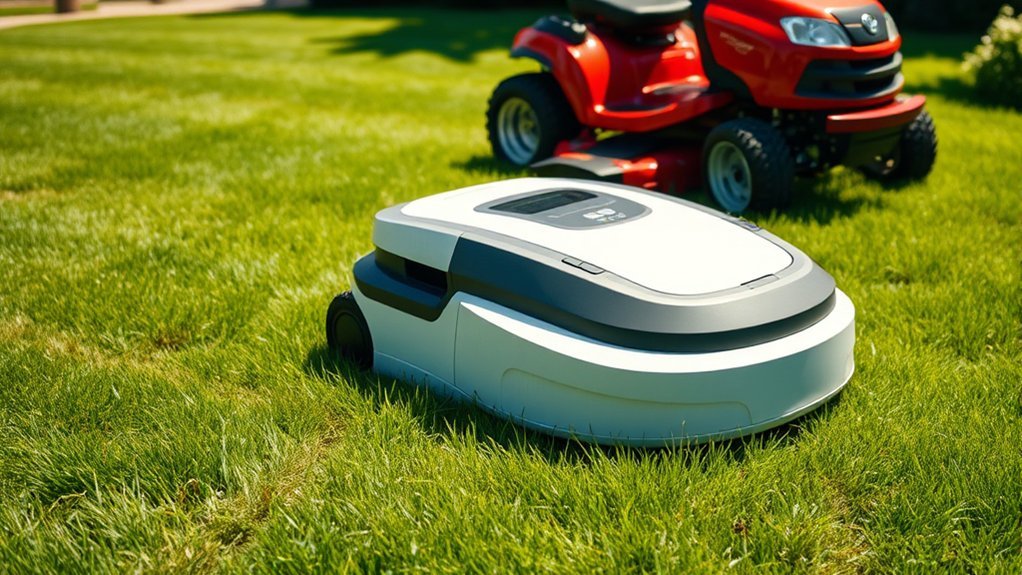
While both robot mowers and ride-on mowers aim to simplify lawn maintenance, they differ particularly in convenience and ease of use. Robot mowers excel in minimal effort—once programmed, they operate autonomously, maintaining garden aesthetics with little intervention. They also operate quietly, reducing noise levels that can disturb household activities or neighbors. Conversely, ride-on mowers require more user involvement, such as steering and maneuvering, which can be time-consuming but offers more control over the mowing process. To compare convenience:
- Robot mowers offer hands-free operation, ideal for busy schedules.
- Ride-on mowers demand manual effort but provide greater control over mowing precision.
- Noise levels favor robot mowers, making them more suitable for maintaining serenity in your outdoor space.
What Are the Cost and Maintenance Implications?
Although robot mowers typically require a higher upfront investment, their ongoing maintenance costs tend to be lower compared to ride-on mowers. The cost comparison reveals that robot mowers generally need less frequent servicing and fewer parts replacements, thanks to their simpler design and fewer moving components. Maintenance requirements for robot mowers involve regular blade sharpening, battery care, and software updates, which are straightforward and less costly. Conversely, ride-on mowers often demand more extensive maintenance, including engine tune-ups, oil changes, and tire replacements, all of which add to long-term expenses. While the initial purchase might seem steep for robot mowers, their lower maintenance needs translate into significant savings over time. This makes them a more economical choice for those seeking long-term cost efficiency.
How Do Smart Technology Features Influence Convenience?
Smart technology features considerably boost convenience by allowing us to set automated schedules that fit our routines, reducing manual effort. Remote monitoring enables us to oversee mower performance and adjust settings from anywhere, ensuring ideal operation without hassle. These innovations make maintaining a well-kept lawn easier and more efficient than ever before.
Automated Scheduling Benefits
Automated scheduling features considerably enhance the convenience of modern robotic and ride-on mowers by allowing users to set precise mowing times without manual intervention. Smart scheduling guarantees the mower operates during suitable periods, reducing manual oversight. This feature offers significant benefits:
- Consistent lawn care, regardless of user presence, maintaining a uniform appearance.
- Improved battery efficiency, as the mower can plan its route and charging needs effectively.
- Flexibility to customize mowing routines, adapting to changing weather or seasonal needs.
Remote Monitoring Advantages
Remote monitoring capabilities considerably boost the convenience of modern mower systems by allowing users to oversee and manage their equipment from anywhere, at any time. With remote alerts, you receive instant notifications about issues like low battery status or maintenance needs, preventing unexpected downtime. This real-time insight means you don’t have to constantly check on your mower physically, saving time and effort. Monitoring battery status remotely helps you plan charging schedules efficiently, ensuring your mower is always ready when needed. These smart technology features eliminate guesswork, increase reliability, and enhance control, making lawn maintenance simpler and more efficient. Overall, remote monitoring turns a passive chore into a streamlined, stress-free experience, giving you peace of mind knowing your mower is always under supervision.
Which Mower Offers More Flexibility and Customization?
When comparing the flexibility and customization options of robot mowers and ride-on mowers, it’s clear each has strengths suited to different users. Robot mowers excel in their intuitive user interface, allowing easy programming and adjustments. They typically offer:
- Adjustable mowing schedules tailored to your lawn’s needs
- Zone-specific settings for precise coverage
- Remote control features for manual overrides
In contrast, ride-on mowers often provide extensive customization options through physical attachments, cutting height adjustments, and variable speeds. While they lack the digital simplicity of robot mowers, they give users direct control over the mowing process. Overall, robot mowers prioritize user-friendly customization via tech, whereas ride-on mowers focus on manual flexibility with hardware adjustments.
What Factors Should You Consider When Choosing the Most Convenient Mower?
Choosing the right mower depends on several key factors that influence how convenient and effective it will be for your needs. Two critical considerations are battery life and noise levels. A mower with a long-lasting battery guarantees consistent operation without frequent recharging, saving you time and effort. This is especially important for larger lawns or regular maintenance. Additionally, noise levels greatly impact convenience—mowers that operate quietly allow you to work early mornings or late evenings without disturbing neighbors. Beyond these, consider ease of operation, maintenance requirements, and storage needs. By focusing on these factors, you can select a mower that simplifies your lawn care routine, making mowing less of a chore and more of a seamless part of your outdoor experience.
Frequently Asked Questions
How Long Does It Take for a Robot Mower to Complete a Lawn?
Typically, a robot mower completes a lawn in 1 to 3 hours, depending on battery life and mowing speed. We find they’re efficient for small to medium yards, saving time and effort compared to traditional ride-on mowers.
Can Robot Mowers Handle Complex or Uneven Terrains?
Can robot mowers handle complex or uneven terrains? Absolutely, thanks to advanced terrain adaptability and obstacle navigation features, making them reliable for challenging lawns; they efficiently trim even tricky, irregular, or hilly landscapes with precision and ease.
Are Ride-On Mowers Suitable for Small or Narrow Gardens?
Ride-on mowers are generally unsuitable for small or narrow gardens because their size and maneuverability are better suited for larger spaces. For small gardens, a compact mower type or a robot mower offers more precision and ease.
What Safety Features Are Included in Modern Robot Mowers?
Modern robot mowers include safety sensors that detect obstacles and prevent accidents, along with emergency stop features for instant shutdown, ensuring safe operation around children and pets, and giving you peace of mind while maintaining your lawn effortlessly.
How Does Weather Affect Mower Operation and Convenience?
Weather affects mower operation and convenience by challenging weather resilience, causing delays or malfunctions. Regular mower maintenance guarantees peak performance during adverse conditions, making your lawn care more reliable and less stressful, no matter the weather.
Conclusion
Ultimately, choosing between a robot mower and a ride-on comes down to balancing convenience with control. Think of the robot mower as a silent partner, tirelessly tending your lawn like a gentle breeze—effortless and unobtrusive. The ride-on, meanwhile, is a trusty steed, offering power and flexibility for larger terrains. Whichever path you choose, prioritize your lifestyle and lawn needs—because the right mower can transform yard work from a chore into a true outdoor harmony.