Ad Blocker Detected
Our website is made possible by displaying online advertisements to our visitors. Please consider supporting us by disabling your ad blocker.
Like a vigilant guard patrolling unseen boundaries, a robotic mower alarm system offers a sophisticated layer of security for outdoor equipment. These systems leverage advanced sensors, GPS tracking, and communication modules to detect unauthorized activity, making them crucial in safeguarding valuable machinery. Understanding how these systems operate and how to optimize their setup can greatly impact your lawn’s security. We’ll explore the key features and practical considerations essential for effective protection.
Key Takeaways
- Robotic mower alarm systems use sensors and communication modules to detect tampering and unauthorized movement.
- Key features include motion detection, GPS tracking, tamper alerts, and customizable sensitivity settings.
- Proper installation involves calibrating sensors, placing them strategically, and testing alarm responsiveness.
- Regular maintenance includes software updates, sensor inspection, cleaning, and system testing for reliability.
- Combining alarms with physical deterrents and GPS tracking enhances overall security against theft and vandalism.
How Do Robotic Mower Alarm Systems Work?
Robotic mower alarm systems operate by integrating sensors and communication modules that detect unauthorized movement or tampering. These systems monitor robot navigation pathways, quickly identifying deviations caused by theft or interference. The sensors analyze movement patterns and vibrations, triggering alarms when irregular activity is detected. Communication modules transmit alerts to a connected device, enabling rapid response. Additionally, these systems are designed to maximize battery lifespan by managing power consumption during active monitoring. Alarm activation not only deters theft but also ensures that the mower’s operational efficiency remains unaffected, preserving battery health for extended use. Overall, the combination of sensor accuracy and efficient communication forms a robust security framework, safeguarding the mower while maintaining excellent robot navigation and battery longevity.
Key Features to Look for in a Robotic Mower Alarm System
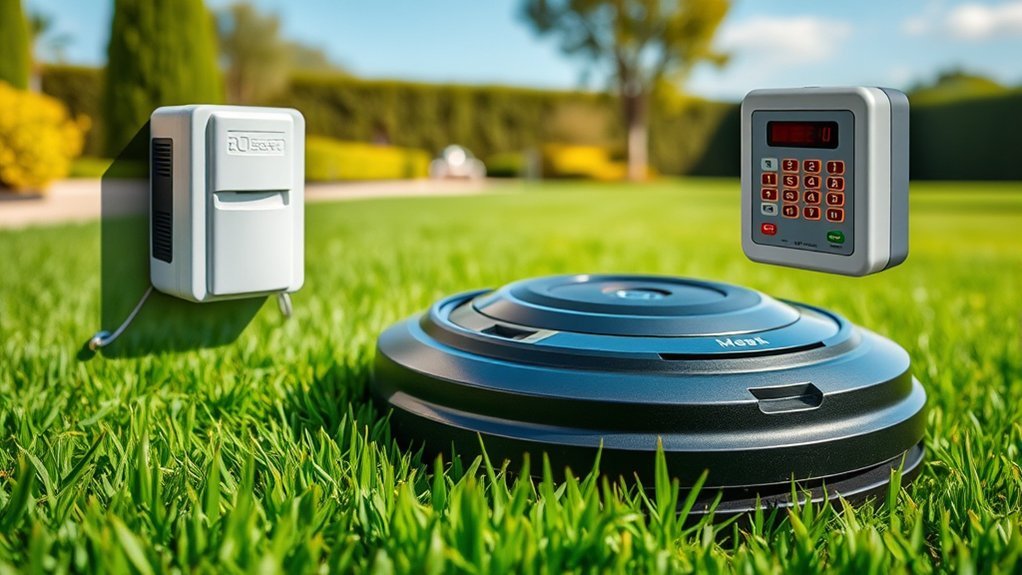
When selecting a robotic mower alarm system, it’s essential to focus on key features that guarantee reliable security without compromising functionality. Look for advanced motion sensors capable of distinguishing between human activity and garden design elements, reducing false alarms. Integration with GPS tracking enhances theft prevention and allows for precise lawn care techniques, assuring the mower stays within designated boundaries. A robust alarm system should offer customizable sensitivity levels, enabling adaptation to different garden layouts and terrain. Battery life and quick recharging are critical for uninterrupted lawn care routines. Additionally, tamper alerts and remote monitoring add layers of security, essential for maintaining overall system integrity. These features collectively guarantee the alarm system aligns with sophisticated lawn care techniques while safeguarding your investment.
Installing and Setting Up Your Robotic Mower Alarm
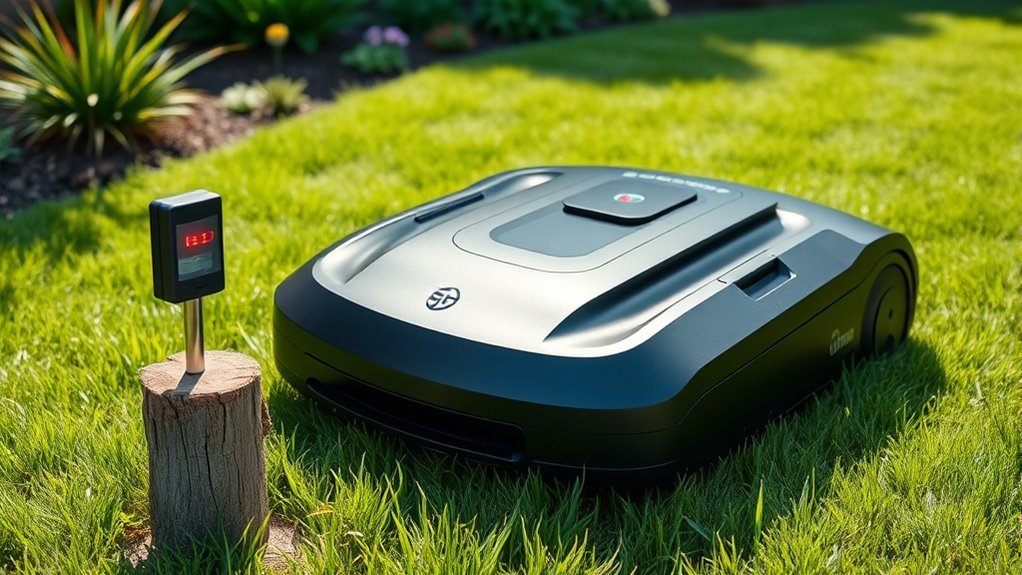
Installing and setting up your robotic mower alarm requires careful attention to technical compatibility and calibration procedures to guarantee peak performance. We start by verifying that the alarm system integrates seamlessly with your mower’s control unit and sensors, ensuring it does not interfere with garden landscaping or lawn maintenance operations. Calibration involves configuring the alarm’s sensitivity settings to accurately detect unauthorized access without false triggers. Proper placement of sensors around key perimeter points is essential for reliable coverage, especially in irregularly landscaped areas. Once installed, testing the alarm’s response in various conditions confirms calibration accuracy. This systematic approach minimizes false alarms and enhances security, ultimately protecting your lawn while maintaining efficient garden landscaping practices.
How to Choose the Best Alarm System for Your Lawn
When selecting an alarm system, ensuring compatibility with your mower’s make and model is essential to guarantee proper integration and functionality. We also evaluate specific alarm features such as motion detection, remote alerts, and power management to enhance security. This focused approach helps optimize protection while maintaining system reliability.
Compatibility With Mower
Selecting a compatible alarm system requires careful consideration of your mower’s specific model and its electrical or sensor interfaces. Compatibility often hinges on the mower’s control system, especially how it manages the mower blade and grass detection sensors. An effective alarm must integrate seamlessly with these components to accurately detect unauthorized movement or tampering. For instance, systems that leverage grass detection signals can trigger alarms when abnormal activity is detected, but only if they align with the mower’s sensor protocols. Similarly, alarm wiring and power supply should match the mower’s specifications to guarantee reliable operation and avoid false alarms. Thoroughly reviewing your mower’s technical documentation helps identify compatible alarm systems, ensuring precise synchronization with its safety and operational mechanisms.
Alarm System Features
How can we determine which alarm system features are essential for effectively safeguarding your lawn? First, prioritize real-time alerts that notify you immediately of unauthorized access, crucial for protecting garden landscaping investments. Second, consider sensors that detect tampering or movement, guaranteeing the mower responds swiftly to potential theft or vandalism. Third, evaluate the alarm’s integration with security systems or mobile apps for remote monitoring, enhancing overall lawn maintenance security. Finally, durability against weather conditions is essential, as outdoor environments demand resilient components. These features enable precise, responsive protection tailored to your lawn’s needs, minimizing theft risks, and maintaining aesthetic integrity. Selecting an alarm system with these core features ensures comprehensive security, blending technological robustness with practical lawn and garden management.
Troubleshooting Common Issues With Robotic Mower Alarms
Understanding the root causes of alarm activation is essential for effective troubleshooting, whether it’s due to sensor faults or wiring issues. False triggers often stem from environmental interference or calibration errors, which can compromise system reliability. Proper resetting procedures are critical to restoring accurate alarm functionality and ensuring continuous protection.
Alarm Activation Causes
What typically triggers a robotic mower alarm? Several factors can activate it, often related to issues in garden design or lawn care techniques. First, an obstacle detection system might trigger if the mower encounters unexpected objects or uneven terrain, prompting safety protocols. Second, improper boundary wire installation can cause false signals, leading to alarm activation. Third, mechanical failures, such as blade jams or battery issues, also set off alarms. Finally, external interferences like strong electromagnetic signals or power surges can disrupt the mower’s sensors. These causes highlight how precise garden design and adherence to lawn care techniques are essential for ideal operation. Understanding these triggers helps in diagnosing alarm causes, ensuring smoother functionality and more effective troubleshooting.
False Alarm Triggers
False alarms in robotic mower systems often stem from issues unrelated to actual hazards, but still cause the alarm to activate unexpectedly. These false alarm triggers are frequently linked to sensor sensitivity settings, which may be too high, causing the sensors to interpret benign objects or environmental factors as threats. Overly sensitive sensors can mistake debris, tall grass, or even shadows for obstacles or intrusions, leading to unwarranted alarms. Precise calibration of sensor sensitivity is critical to minimize these false triggers without compromising safety. By adjusting the sensitivity levels appropriately, we can reduce the likelihood of false alarms caused by minor environmental variations. Proper sensor calibration ensures the alarm system responds accurately to genuine hazards while ignoring harmless stimuli.
Resetting Procedures
Have you ever encountered a robotic mower alarm that persists despite no apparent hazards? Resetting procedures are essential for resolving such issues, especially when alarms interfere with lawn maintenance or garden design. To effectively troubleshoot, we recommend:
- Powering down the mower completely and disconnecting the charging station to reset system components.
- Inspecting sensors and alarm indicators for dirt or obstructions, then cleaning as needed.
- Resetting the mower’s memory via the control panel or app, which recalibrates navigation and alarm parameters.
- Rebooting the system after a brief wait, allowing internal diagnostics to clear false alarms. These steps ensure the mower resumes peak operation, minimizing disruptions in lawn maintenance and supporting precise garden design. Proper resetting procedures are critical for maintaining system reliability and performance.
Enhancing Security: Additional Measures to Protect Your Mower
To effectively safeguard your robotic mower from theft or vandalism, implementing supplementary security measures is vital beyond the standard alarm system. Additional strategies can include physical deterrents, integrated tracking, and environmental modifications to secure the garden landscape. These measures enhance the overall security framework, reducing vulnerability during lawn maintenance activities. Consider the following options:
| Security Measure | Description | Effectiveness |
|---|---|---|
| Locking Mechanisms | Physical locks on mower or charging station | Deterrent to theft |
| GPS Tracking | Real-time location monitoring | Rapid recovery |
| Surveillance Cameras | Visible cameras around the mowing area | Vandalism prevention |
Combining these ensures a robust security environment tailored to protect your investment.
Real-Life Examples of Robotic Mower Alarm Effectiveness
Real-life cases demonstrate that robotic mower alarms can considerably enhance security when properly integrated with additional deterrents. These alarms effectively prevent theft and vandalism, maintaining garden aesthetics and reducing mower maintenance costs. For example:
- Urban gardens saw a decrease in theft incidents after alarm installation, preserving landscape integrity.
- Commercial properties reported fewer vandalism cases, ensuring consistent mower operation and minimal downtime.
- Private homeowners noted quicker response times to alarm triggers, deterring intruders before damage occurs.
- Community parks experienced improved security, allowing for uninterrupted maintenance routines.
These examples highlight how alarm systems act as a critical component of a thorough security strategy, safeguarding investment and ensuring the mower’s ideal performance without compromising garden aesthetics.
Comparing Different Robotic Mower Alarm Brands and Models
With the proven effectiveness of robotic mower alarms in enhancing security, selecting the right brand and model is vital for maximum protection. Key differences include sensor sensitivity, which affects alarm responsiveness to disturbances, and mower battery compatibility, influencing power management. Some brands prioritize high sensor sensitivity for quick detection, while others optimize battery life for longer operation.
| Brand/Model | Sensor Sensitivity | Mower Battery Compatibility | Notable Feature |
|---|---|---|---|
| AlphaGuard | High | Universal | Advanced detection |
| SafeMow | Moderate | Proprietary | Extended battery life |
| SecureBot | Adjustable | Compatible with multiple | Customizable alerts |
| VigilantX | High | Long-lasting | Rapid alarm response |
Tips to Maintain Your Alarm System and Ensure Long-Term Security
Regular maintenance is essential to guarantee your robotic mower alarm system continues functioning effectively over time. Proper upkeep ensures the security of your garden landscape and supports consistent lawn maintenance. To maximize long-term security, consider these steps:
- Regularly update firmware and software to patch vulnerabilities and improve alarm responsiveness.
- Inspect sensors and wiring for damage or corrosion, ensuring reliable detection of unauthorized access.
- Clean the alarm components to prevent dust and debris buildup, which can impair system performance.
- Test alarm activation periodically to verify it triggers correctly under different scenarios, maintaining alert accuracy.
These measures help sustain the alarm system’s integrity, safeguarding your lawn and landscape investments from potential threats. Consistent, technical oversight ensures reliable security and peak lawn maintenance over time.
Frequently Asked Questions
Can Robotic Mower Alarms Be Integrated With Home Security Systems?
Yes, robotic mower alarms can be integrated with smart home security systems, enabling remote monitoring and control. This integration enhances security through centralized management, allowing us to respond swiftly to alerts and maintain thorough oversight of our property.
Are Robotic Mower Alarms Effective Against All Types of Theft?
Robotic mower alarms, enhanced by artificial intelligence and advanced security features, aren’t foolproof against all theft types. They excel at detection but can be bypassed by sophisticated intruders, highlighting the need for thorough security strategies.
What Is the Average Lifespan of a Robotic Mower Alarm Battery?
The average lifespan of a robotic mower alarm battery is around 1 to 3 years, depending on battery maintenance and alarm durability. Regular charging, avoiding extreme temperatures, and timely replacements help optimize battery performance and system reliability.
Do Robotic Mower Alarms Require Professional Installation?
Robotic mower alarms generally don’t require professional installation; however, proper mower maintenance and alarm troubleshooting benefit from technical expertise. We recommend consulting the user manual or a technician to guarantee system setup and troubleshooting are correctly performed, preventing future issues.
How Often Should the Alarm System Be Tested for Optimal Performance?
Like tuning a finely calibrated instrument, we test our alarm systems monthly, adjusting sensor calibration and alarm sensitivity to guarantee ideal performance, catching potential issues early, and maintaining the robotic mower’s security with precision and reliability.
Conclusion
In summary, a robotic mower alarm system acts like a vigilant sentinel, continuously monitoring and protecting your equipment. By understanding its core functions, key features, and proper installation, we can optimize security and prevent theft or damage. Regular maintenance and supplementary measures further strengthen defenses. Just as a well-calibrated sensor ensures precision, an all-encompassing approach guarantees long-term security—making your investment as reliable as a finely tuned machine, safeguarding your outdoor space effectively.