Ad Blocker Detected
Our website is made possible by displaying online advertisements to our visitors. Please consider supporting us by disabling your ad blocker.
Did you know that robotic mowers can pose hidden hazards beyond simple mechanical failures? While they offer convenience, they also introduce risks like battery fires, theft, and malfunctions that could cause injury or property damage. Understanding these dangers is essential for safe operation, yet many users overlook necessary precautions. To guarantee you protect your family, pets, and investment, it’s important to address these issues thoroughly, starting with effective safety measures and proper maintenance.
Key Takeaways
- Regularly inspect and maintain batteries, blades, and sensors to prevent malfunctions and safety hazards.
- Use physical barriers and safety sensors to keep children and pets away during mowing.
- Mark boundaries clearly and ensure proper lighting for obstacle detection and boundary visibility.
- Schedule mowing when children and pets are absent to minimize accident risks.
- Stay vigilant during operation, regularly checking for issues and ensuring safety features are functional.
What Are the Common Risks of Robotic Mowers?
While robotic mowers offer convenience, they also pose several inherent risks that users must recognize. Battery hazards are a primary concern, as these devices rely on lithium-ion batteries that can overheat, leak, or catch fire if damaged or improperly handled. Proper maintenance and safe charging procedures are essential to mitigate these risks. Additionally, theft prevention is critical, as robotic mowers are valuable and portable, making them attractive targets. Ensuring secure storage and utilizing built-in security features like alarms or GPS tracking can help prevent unauthorized removal. Overall, understanding these risks enables users to implement effective safety measures, reducing potential hazards associated with battery malfunctions and theft, ensuring safer operation and longer device lifespan.
How Can You Prevent Children and Pets From Accidents?

To prevent children and pets from accidents around robotic mowers, we must implement strict safety measures that limit their access during operation. Child safety and pet protection are paramount, requiring physical barriers such as fencing or enclosure systems that prevent unauthorized entry. Additionally, utilizing safety sensors that detect motion or objects can deactivate the mower if children or pets approach. Scheduling mowing sessions during times when children and pets are absent reduces risk. Clear signage and user education further enhance safety awareness. It is crucial to regularly verify that safety features are functioning correctly and that gates or barriers remain secure. By combining physical safeguards, technological sensors, and responsible scheduling, we can considerably mitigate the risk of accidents involving children and pets around robotic mowers.
Tips for Proper Maintenance and Safe Operation of Robotic Mowers
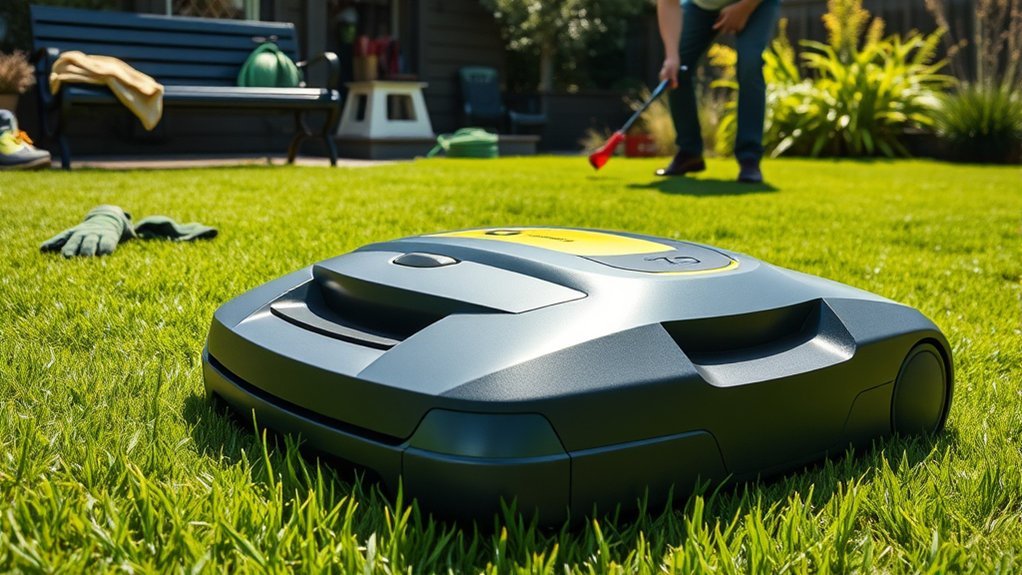
Proper maintenance and safe operation are essential for ensuring robotic mowers perform effectively and minimize risks. Regularly inspecting the battery for signs of wear helps maintain excellent battery longevity, preventing potential malfunctions or safety hazards. It’s important to follow manufacturer guidelines for charging cycles, avoiding overcharging or complete discharges that could shorten battery life. Additionally, blade sharpening is critical; dull blades can impair cutting efficiency and strain the motor, increasing the risk of damage or accidents. We recommend routinely checking and maintaining blades with appropriate tools, ensuring they are securely attached. Adhering to these practices not only extends the mower’s lifespan but also promotes safe, reliable operation, reducing the likelihood of mechanical failure or safety incidents.
Understanding Navigation and Boundary Challenges
Controlling complex and uneven terrains presents significant challenges for robotic mowers, making precise boundary detection and obstacle avoidance critical for safe operation. Navigation algorithms must interpret data from boundary sensors accurately, ensuring the mower remains within designated areas and avoids hazards. Variations in terrain, such as slopes or irregular ground, can impair sensor performance, leading to boundary breaches or missed obstacles. Additionally, environmental factors like tall grass or debris may interfere with sensor signals, complicating navigation. It’s essential to understand these limitations when deploying robotic mowers in challenging landscapes. To mitigate risks, regular calibration of boundary sensors and updates to navigation algorithms are necessary. Recognizing these challenges helps optimize mower performance while maintaining safety and boundary integrity.
Recognizing Signs of Malfunction or Damage
Unusual noises or vibrations and inconsistent cutting patterns can indicate potential malfunctions or damage in your robotic mower. We should regularly monitor these signs to prevent further issues and guarantee safe operation. Recognizing early warning signs helps maintain the mower’s performance and prolongs its lifespan.
Unusual Noises or Vibrations
When a robotic mower produces unexpected noises or vibrations, it often signals an underlying issue that requires immediate attention. Unusual noises and vibrations concerns should never be overlooked, as they can indicate mechanical failure or damage. These symptoms may result from:
- Debris caught in blades or wheels, causing imbalance
- Worn or loose drive components leading to abnormal vibrations
- Motor or gear malfunctions producing irregular sounds
Detecting these signs early can prevent further damage and ensure safe operation. Pay close attention to the type and intensity of noises or vibrations, noting any changes from normal function. Addressing these issues promptly reduces the risk of costly repairs and potential safety hazards, emphasizing the importance of cautious inspection when troubleshooting unusual noises or vibrations concerns.
Inconsistent Cutting Patterns
Irregularities in the mowing pattern often indicate that something isn’t functioning properly within the robotic mower’s system. Such inconsistent cutting patterns can diminish lawn aesthetics and reduce mowing efficiency. These irregularities may result from blade damage, sensor malfunctions, or navigation issues caused by obstacles or uneven terrain. Recognizing these signs early is essential to prevent further damage and maintain a uniform, healthy lawn. If the mower leaves uncut patches or overlaps excessively, it suggests malfunction or damage that needs immediate inspection. Regularly monitoring the mower’s operation helps identify these signs promptly. Addressing the root cause—whether cleaning sensors, replacing blades, or recalibrating navigation—ensures maximum performance and preserves the mower’s ability to deliver consistent, high-quality mowing results.
Best Practices for Yard Preparation and Obstacle Removal
Proper yard preparation is essential to guarantee safe and efficient robotic mower operation. Clear pathways, remove debris, and address uneven terrain to prevent accidents. Prioritize lawn aeration to improve soil drainage and reduce compaction, which can hinder mower movement. Confirm garden soil is level and free of roots or rocks that could obstruct blades or damage the mower. Regularly inspect the yard for obstacles such as garden tools or low-hanging branches, removing or securing them. Additionally, trimming tall grass near boundaries minimizes the risk of entanglement.
Ensure yard safety by clearing obstacles, leveling ground, and trimming grass for smooth robotic mower operation.
- Conduct lawn aeration to improve soil health and mower mobility
- Remove or secure all garden tools and debris
- Level uneven ground and trim overgrown vegetation
How to Create a Safe Environment for Robotic Mower Use
To guarantee safe robotic mower operation, we must systematically eliminate potential hazards, such as obstructions and restricted zones. Consistent marking of areas the mower should avoid and maintaining adequate lighting are critical steps. These precautions help minimize risks and enable precise, controlled mowing.
Clear Obstructions Regularly
How often should we check for obstacles in the mowing area? Regular inspections are essential for maintaining safety and ensuring ideal mower performance. Clear pathways prevent potential damage, preserve garden aesthetics, and support mower customization efforts. Obstacles like sticks, toys, or fallen branches can cause malfunctions or pose safety hazards. To minimize risks, we recommend:
- Removing debris after storms or high winds
- Monitoring for new objects during routine garden maintenance
- Ensuring that plants and shrubs don’t encroach on the mower’s path
Consistent obstacle management helps sustain a safe environment, reduces downtime, and maintains the mower’s efficiency. Staying vigilant in obstacle clearance is a critical step toward safe, effective, and aesthetically pleasing robotic mowing.
Mark Restricted Areas
Creating a designated boundary for the robotic mower is essential to prevent it from entering restricted or unsafe areas. To achieve this, we must mark restricted areas clearly using boundary markers or physical barriers. Properly marking these zones guarantees the mower recognizes boundaries accurately and avoids potential hazards such as flower beds, ponds, or pathways. When setting boundary markers, choose durable, visible materials that withstand weather conditions and do not interfere with mower sensors. Consistently check and maintain these markers to guarantee they remain effective. Accurate marking minimizes the risk of accidental entry into unsafe zones, safeguarding both the mower and surrounding objects. Establishing and clearly defining restricted areas is a fundamental step in creating a safe, efficient robotic mowing environment.
Maintain Proper Lighting
Ensuring proper lighting in the mowing area is essential for the safe operation of robotic mowers, especially during low-light conditions or at dusk. Poor lighting can exacerbate visibility issues, increasing the risk of accidents or missed obstacles. To mitigate these risks, we recommend:
- Installing sufficient outdoor lighting along the mowing perimeter to improve overall visibility.
- Ensuring pathways and boundaries are well-lit and clearly marked to prevent the mower from straying.
- Regularly inspecting lighting systems for functionality and addressing any outages promptly.
Adequate lighting conditions are critical for maintaining a safe environment, reducing the likelihood of collisions, and enabling the mower’s sensors to operate effectively. Vigilance in managing lighting conditions directly enhances operational safety.
Frequently Asked Questions
Are Robotic Mowers Suitable for All Types of Lawns?
Robotic mowers aren’t suitable for all lawns; we advise considering garden aesthetics and lawn customization. They work best on flat, even terrains, but uneven or intricate landscapes may require manual mowing for ideal results and safety.
How Long Do Robotic Mowers Typically Last?
Robotic mowers typically last 5-8 years, but it’s a tightrope walk; battery lifespan and blade durability influence longevity, so regular maintenance is vital to guarantee they run smoothly and avoid costly replacements down the line.
Can Robotic Mowers Be Used in Rainy or Wet Conditions?
Robotic mowers are generally not designed for rainy weather or wet conditions, as moisture can damage internal components and reduce safety. We recommend avoiding operation in such conditions and consulting the manufacturer’s guidelines for waterproofing or weather-resistant features.
What Are the Costs Associated With Maintenance and Repairs?
Ever wondered about the costs? We typically budget for battery replacements and blade sharpening, as these are essential for peak performance. Maintenance and repairs can be cautious investments, ensuring longevity and safety of your robotic mower.
Do Robotic Mowers Pose Privacy Concerns With Their Cameras?
Robotic mowers can raise camera privacy concerns, as cameras may collect images or data, potentially risking data security. We recommend reviewing privacy policies and securing network connections to mitigate camera privacy issues and protect sensitive information.
Conclusion
By following these safety guidelines, we can keep our robotic mowers operating smoothly and our loved ones protected. Regular inspections, proper boundary marking, and vigilant supervision are essential to prevent accidents and malfunctions. It’s better to be safe than sorry, so we must stay proactive in maintaining equipment and securing the yard. Only through careful planning and consistent oversight can we truly harness the benefits of robotic mowing while minimizing risks.