Ad Blocker Detected
Our website is made possible by displaying online advertisements to our visitors. Please consider supporting us by disabling your ad blocker.
Imagine a neighborhood where multiple robotic lawn mowers operate simultaneously, each equipped with advanced sensors and safety features. While these devices are designed to minimize risks, questions about their overall safety remain, especially around children and pets. Understanding the mechanisms behind their safety protocols and potential vulnerabilities is essential before we can fully assess their reliability and suitability for everyday use. Let’s explore the technological safeguards and ongoing innovations shaping their safety profiles.
Key Takeaways
- Modern robot lawn mowers include obstacle detection, boundary sensors, and safety features like lift and tilt sensors to prevent injuries.
- They are designed to operate safely around children, pets, and household objects with automatic shutoff and obstacle avoidance.
- Proper setup, regular maintenance, and calibration are essential to ensure safe and efficient operation.
- Risks include malfunctions from environmental interference, blade hazards, and potential damage to underground utilities.
- Future safety innovations involve advanced sensors, AI, and machine learning for smarter navigation and enhanced security.
How Do Robot Lawn Mowers Ensure Safety for Users and Pets
Although robot lawn mowers are designed to operate autonomously, they incorporate multiple safety features to protect users and pets. These devices prioritize lawn aesthetics by ensuring precise cutting patterns while minimizing hazards. Advanced sensors detect obstacles, including humans and animals, halting operation immediately upon contact or proximity. Edge sensors prevent accidental falls or boundary breaches, maintaining safe operation boundaries. Battery life management is also a safety consideration; a well-designed mower monitors battery status to prevent abrupt shutdowns mid-operation, reducing risks associated with power loss. Additionally, many models feature PIN codes or app controls to restrict unauthorized use. Overall, these integrated safety measures enable reliable, safe operation, ensuring both lawn quality and protection for household members.
What Are the Common Safety Features in Robotic Lawn Mowers
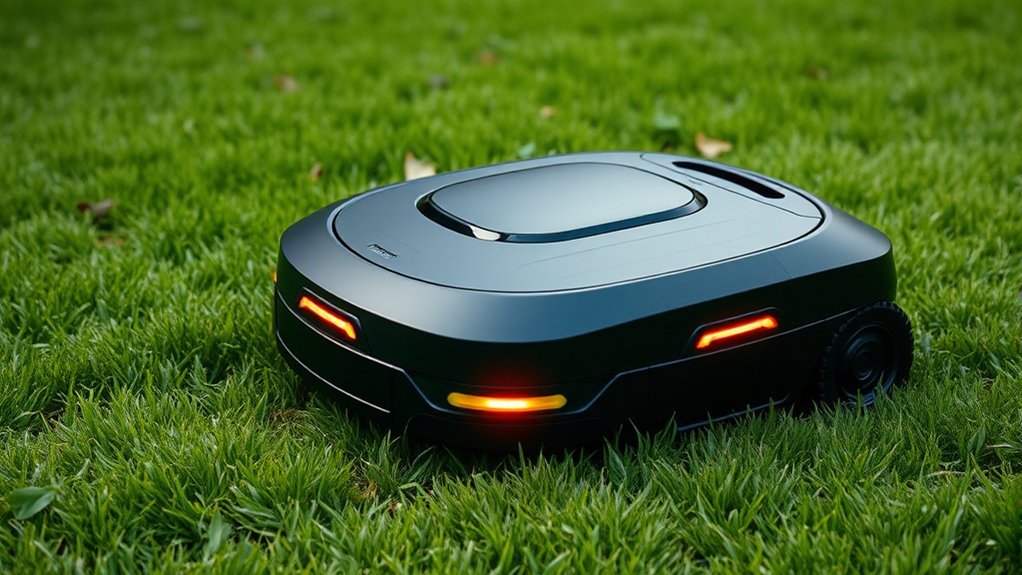
Robotic lawn mowers incorporate a variety of safety features designed to prevent accidents and guarantee reliable operation. These features are essential for maintaining safety during garden landscaping and routine lawn maintenance. Key safety mechanisms include obstacle detection sensors that stop the mower upon contact, ensuring it avoids furniture or pets. Boundary wire systems precisely define mowing areas, preventing unintended exits. Lift and tilt sensors automatically shut down the blades if the mower is lifted or tilted, reducing injury risk. Additionally, collision sensors enable the mower to navigate around objects efficiently. Together, these safety features enhance operational reliability, reduce hazards, and make robotic lawn mowers a safer choice for maintaining aesthetically pleasing and well-kept lawns.
Are Robot Mowers Safe to Use Around Children and Pets?

Are robotic lawn mowers safe to operate around children and pets? These devices are designed with safety features like obstacle detection and automatic shutoff, reducing risks. However, concerns remain regarding accidental contact, especially given their active mowing efficiency. When considering lawn aesthetics, robotic mowers can maintain a well-manicured appearance without human intervention, but their proximity to children and pets requires careful assessment. Modern models often include sensors to pause operation if movement is detected nearby, yet unpredictable behavior from children or curious pets can still pose hazards. While overall safety has improved, responsible usage and supervision are essential to guarantee that the mowers serve their purpose without jeopardizing safety. Proper design and monitoring are key to integrating robotic mowers safely into a household environment.
How Can You Properly Set Up Your Robot Lawn Mower to Prevent Accidents
To minimize the risk of accidents, proper setup of your robot lawn mower is essential from the outset. Correct positioning guarantees safety while maintaining lawn mower aesthetics and supporting effective garden landscaping. Start by defining clear boundaries with boundary wires to confine the mower’s operation area, preventing it from venturing into unsafe zones. Regularly calibrate sensors to detect obstacles and avoid collisions. Guarantee the charging station is placed on a flat, stable surface away from high-traffic or delicate landscape features. Additionally, remove any debris or obstacles that could interfere with the mower’s navigation. Properly configuring these elements helps optimize performance, safeguards users, and preserves the visual appeal of your lawn. Effective setup is a foundational step toward safe, efficient robotic lawn care.
What Are the Potential Risks of Using a Robot Lawn Mower?
While robot lawn mowers offer significant convenience, they also present specific risks that users must consider. One primary concern involves interference with garden landscaping features, which may cause the mower to malfunction or become damaged, especially around uneven terrain or fragile plantings. Additionally, the mower’s blades can pose safety hazards if not properly shielded, risking injury during maintenance or accidental contact. Another consideration is the impact on lawn fertilization; uneven lawn coverage or missed patches may result if the mower’s navigation is compromised. Furthermore, robotic mowers could inadvertently disturb underground irrigation systems or buried utilities, creating hazards or service disruptions. These risks highlight the importance of thorough setup and ongoing monitoring to ensure safe, effective operation within diverse landscaping environments.
How Do Manufacturers Test and Certify Robot Mower Safety
Manufacturers rigorously evaluate robot mower safety through a thorough series of standardized tests designed to guarantee compliance with international safety regulations. These assessments focus on multiple aspects, including obstacle detection, blade safety mechanisms, and electrical safety. They also verify that the mower’s sensors reliably prevent collisions, protecting both users and bystanders. Additionally, testing evaluates how well the mower maintains consistent lawn aesthetics without damaging the grass, and how effectively it supports mower customization for specific yard features. Certification bodies review test results to confirm adherence to safety standards, ensuring the product is safe for widespread use. This rigorous process guarantees that consumers receive reliable equipment, reducing risk and enhancing user confidence in robotic lawn care technology.
Best Practices for Maintaining and Operating Your Robot Mower Safely
Regular maintenance and vigilant operation are essential to guarantee your robot mower functions safely and efficiently over time. Consistent checks of blades, sensors, and charging components prevent malfunctions that could cause safety hazards. Properly managing garden decor, like removing obstacles and loose objects, minimizes interference with the mower’s navigation system. Assuring the mowing area is clear before operation reduces the risk of accidents. Additionally, scheduling lawn watering appropriately helps prevent grass from becoming overly dry or lush, which can impair mower performance and safety. Regularly updating software and calibrating sensors maintain precise operation. Adhering to these best practices ensures safe, effective lawn care, reduces potential hazards, and prolongs your robot mower’s lifespan, making it a reliable addition to your outdoor maintenance routine.
How to Recognize and Address Safety Concerns With Your Robot Lawn Mower
To guarantee safe operation, we need to systematically identify potential hazards that could compromise both the mower and users. Implementing effective safety features and maintaining proper usage protocols are essential to mitigate these risks. Addressing safety concerns promptly relies on continuous monitoring and adherence to best practices.
Identifying Potential Hazards
Identifying potential hazards associated with robot lawn mowers requires a systematic approach to recognize safety concerns before they lead to accidents. We must analyze factors that compromise lawn aesthetics and energy efficiency, ensuring safe operation. Key hazards include:
- Obstacles and debris: Unrecognized objects can cause collisions or entanglement.
- Inclines and uneven terrain: Slopes may lead to tipping or loss of control.
- Sensor malfunctions: Faulty sensors can fail to detect humans or pets.
- Battery and electrical issues: Overheating or short circuits pose fire risks or operational failures.
Implementing Safety Features
Implementing effective safety features requires a proactive approach to recognizing and addressing potential concerns before they result in accidents or equipment damage. To maintain ideal lawn aesthetics, safety systems should include obstacle detection sensors, automatic shutoff mechanisms, and boundary recognition. These features prevent the mower from colliding with objects, humans, or pets, reducing injury risk. Addressing safety concerns also involves integrating features that adapt to mowing schedules, ensuring the mower operates only during designated times, reducing the chance of unexpected encounters. Regular software updates and sensor calibration further enhance safety, ensuring the mower responds accurately to its environment. By systematically implementing and maintaining these safety features, we can maximize both safety and lawn quality, minimizing hazards while preserving the desired mowing schedule and aesthetics.
Maintaining Proper Usage
Maintaining proper usage of your robot lawn mower is essential for guaranteeing safety and peak performance. Regularly monitoring remote operation controls helps prevent accidental activation or unauthorized use, reducing safety risks. Effective battery management, including timely charging and avoiding deep discharges, prolongs battery life and maintains consistent mowing power. Additionally, inspecting safety sensors and boundary wires ensures the mower recognizes obstacles and restricted zones, preventing accidents. Proper storage and adherence to manufacturer guidelines minimize malfunction risks.
- Regularly update firmware and safety features
- Guarantee remote operation is secure and restricted to authorized users
- Check and clean sensors and boundary wires routinely
- Schedule maintenance for battery health and overall system integrity
Are There Specific Situations Where Robot Mowers Might Be Unsafe?
While robot lawn mowers are generally designed with safety features, certain situations can increase the risk of accidents or malfunctions. Remote operation, for example, can pose safety concerns if signals are disrupted or intercepted, potentially allowing unauthorized control or interference. Additionally, battery safety remains critical; lithium-ion batteries, if damaged or improperly handled, can overheat, leak, or even ignite, especially in extreme conditions. Environmental factors such as uneven terrain or obstacles may also lead to malfunctions or unsafe behavior if sensors fail to detect hazards accurately. These scenarios highlight the importance of robust system design and vigilant monitoring during operation. Recognizing these situations helps users mitigate risks, ensuring safer and more reliable use of robot lawn mowers.
What Future Innovations Are Improving Robot Lawn Mower Safety
Advancements in obstacle detection, such as lidar and ultrasonic sensors, are markedly enhancing a mower’s ability to identify and respond to its environment. Improved boundary sensors provide more reliable perimeter recognition, reducing accidental intrusions. Additionally, integrating AI technologies allows for smarter navigation and adaptive safety responses, promising a considerable reduction in accidents and malfunctions.
Advanced Obstacle Detection
Recent innovations in obstacle detection technology are markedly enhancing the safety of robot lawn mowers. These advancements leverage improved sensor accuracy and real-time processing, reducing collision risks and enabling more precise navigation. Enhanced obstacle detection not only minimizes accidents but also conserves battery longevity by preventing unnecessary maneuvers. Additionally, integrating quieter sensors and algorithms results in noise reduction, making operation less disruptive. Future innovations include:
- Multi-sensor arrays combining ultrasonic, infrared, and visual data for robust obstacle recognition
- Machine learning algorithms that improve detection accuracy over time
- Faster response times to dynamic obstacles, such as pets or children
- Adaptive obstacle avoidance that optimizes mower paths while preserving battery life and reducing noise
These developments collectively bolster safety, efficiency, and user confidence in autonomous lawn care.
Enhanced Boundary Sensors
How can future innovations in boundary sensing technology further enhance the safety of robot lawn mowers? Advances in boundary detection rely on more precise sensor calibration, ensuring accurate delineation of restricted areas. Future boundary sensors may incorporate multi-modal detection methods, such as combining ultrasonic, infrared, and magnetic sensors, to improve reliability in various environmental conditions. Enhanced sensor calibration algorithms can adapt dynamically, reducing false boundary triggers and improving overall safety. These innovations will minimize the risk of accidental boundary breaches, especially in complex yard layouts. By refining boundary detection accuracy, future systems can better prevent mowers from crossing into unsafe zones, thereby increasing safety for users, pets, and property. Ultimately, these technological improvements will make robot lawn mowers safer and more dependable.
Integration of AI Technology
As artificial intelligence continues to evolve, its integration into robot lawn mowers promises significant safety enhancements by enabling more adaptive and intelligent decision-making. AI-driven systems analyze real-time data to optimize mowing paths, improving mowing efficiency while maintaining ideal lawn aesthetics. These innovations reduce collision risks by predicting obstacles and adjusting operations accordingly. Additionally, AI algorithms enhance boundary recognition, preventing accidental boundary breaches. Future AI integrations may also incorporate machine learning to adapt to changing yard conditions, ensuring consistent safety and performance.
- Real-time obstacle detection and avoidance
- Adaptive path planning for complex terrains
- Enhanced boundary recognition through pattern analysis
- Continuous learning for improved lawn aesthetics and efficiency
Frequently Asked Questions
Can Robot Lawn Mowers Handle Steep or Uneven Terrain Safely?
Robot lawn mowers can handle steep or uneven terrain safely if equipped with robust batteries, ensuring consistent power, and advanced sensors to navigate complex surfaces, all while maintaining low noise levels for nearby residents.
How Do Robot Mowers Detect and Avoid Obstacles Effectively?
Like vigilant sentinels, our robot mowers use advanced sensors to detect obstacles with high accuracy, swiftly reacting to prevent collisions. This precise obstacle detection guarantees safe operation, blending technology and safety seamlessly in your lawn care routine.
Are There Any Health Risks From Prolonged Exposure to Robot Mower Emissions?
We believe long-term exposure to robot mower emissions, particularly chemical emissions, may pose health risks due to airborne particles and volatile compounds. Ongoing research is essential to understand potential impacts of prolonged exposure and guarantee safety standards.
What Should I Do if My Robot Mower Malfunctions During Operation?
Like a well-oiled machine, we suggest stopping the mower, inspecting for damage, and disconnecting the battery. Then, perform software updates and check battery maintenance to troubleshoot malfunctions effectively and guarantee safe operation before resuming use.
How Do Weather Conditions Impact the Safety of Robot Lawn Mower Use?
Weather hazards can directly impact mower safety, as rain, fog, or snow reduce visibility and cause slippery conditions, increasing the risk of malfunctions or accidents. We recommend monitoring weather forecasts for ideal, safe mowing conditions.
Conclusion
In steering the landscape of robot lawn mower safety, we see it as a carefully woven tapestry—each safety feature a essential thread contributing to overall security. While technological advances strengthen this fabric, responsible supervision and proper setup are the loom’s guiding hands. By understanding these elements, we guarantee our robotic allies operate as intended, transforming our lawns into well-guarded fields of innovation. Ultimately, safety remains a dynamic dialogue between human vigilance and technological progress.