Ad Blocker Detected
Our website is made possible by displaying online advertisements to our visitors. Please consider supporting us by disabling your ad blocker.
Have we ever wished our lawn could take care of itself while we relax, work, or spend time with family?

Why We Might Want a Robot Lawn Mower
Many of us love a beautiful lawn, but not the time, effort, and noise that come with traditional mowing. Between busy schedules, hot weather, and uneven terrain, keeping grass neatly trimmed can feel like a chore we never quite keep up with.
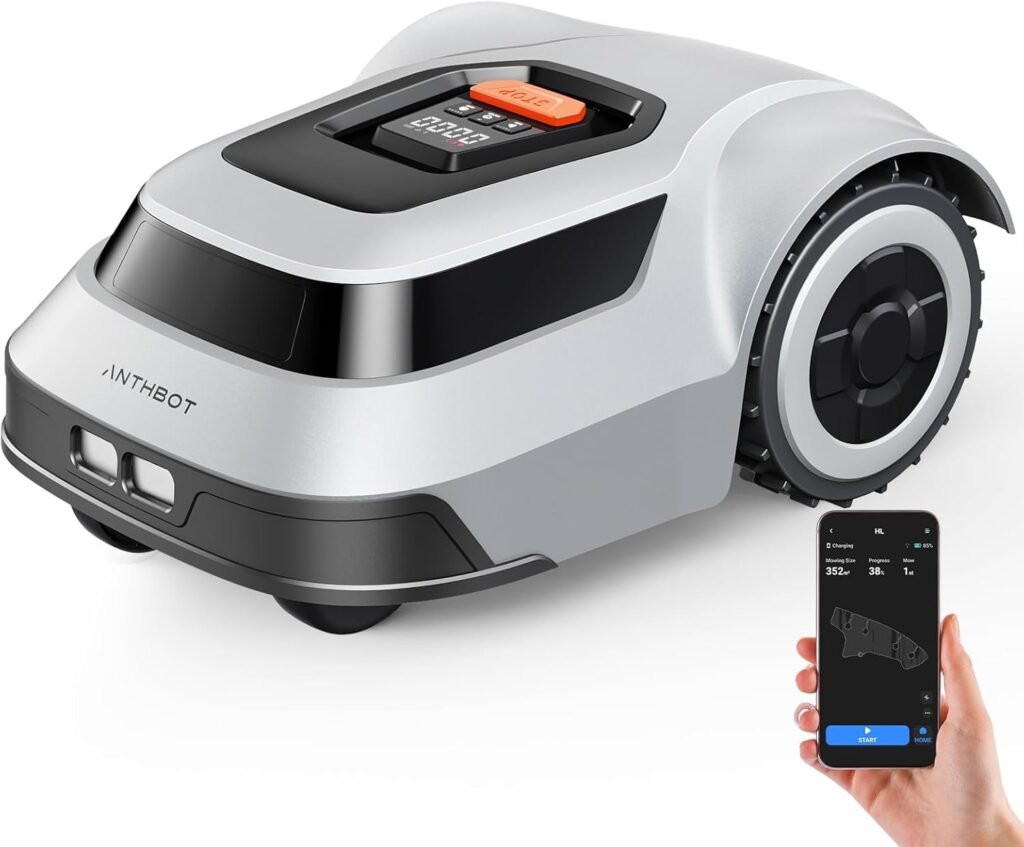
That is where the ANTHBOT Robot Lawn Mower with Max 180m Stable Boundary Wire steps in. It promises smart navigation, efficient mowing, and very little input from us once everything is set up. Let’s walk through what this mower actually offers and how it might fit into our yard and daily life.
Key Features at a Glance
Before we go deeper into individual aspects, it helps to have a quick snapshot of what the ANTHBOT mower brings to the table. We can think of it as a compact, quiet assistant that patrols the lawn on our behalf.
Here’s a summary of the main specifications and features:
| Feature Category | Details |
|---|---|
| Recommended Lawn Size | 550㎡ (up to 900㎡ max under ideal conditions) |
| Boundary Wire Length | Max 180m stable boundary wire |
| Mowing Path Style | Grid-shaped, planned path (not random) |
| Efficiency Claim | Up to 300% more efficient vs random-path boundary wire mowers |
| Cutting Width | 20 cm |
| Cutting Height Range | 3–7 cm (1.18″–2.76″), automatic adjustment |
| Slope Handling | Up to 45% (24°) |
| Battery Runtime | About 70 minutes per charge |
| Charging Behavior | Auto return at 15% battery, resume at 90% |
| Waterproof Rating | IPX6 (can handle light rain and hose cleaning) |
| Navigation Technology | CABLE-TOF with coded sine wave signals for precise positioning |
| Boundary Wire Break Detection | Automatic detection via app when connected to charging station |
| Control | App-based: scheduling, tracking, alerts, real-time location |
| Special Mode | Fast mode for very small areas (~7㎡) |
This gives us a solid foundation for understanding what to expect in daily use.
Coverage Area: What Lawn Size Suits This Mower Best?
The manufacturer states that the ANTHBOT Robot Lawn Mower can cover up to 900㎡, but also clearly recommends 550㎡ for the best performance. That distinction matters for planning.
Recommended vs Maximum Coverage
We should think of 550㎡ as the comfort zone, where the mower has enough time and battery to maintain the lawn nicely, even with obstacles, corners, and slopes. Up to 900㎡, it can still work, but we may need to be more strategic.
For larger lawns closer to that 900㎡ limit, the brand suggests adding an extra charging station and additional boundary wire. That way, the mower does not waste time traveling long distances just to recharge and return. Instead, it can operate more like a zoned system.
How This Translates to Real Yards
In practical terms:
- Small to medium suburban yards: Usually fall well within the 550㎡ recommendation.
- Larger properties: We may approach or surpass the 900㎡ maximum and might either need multiple stations or consider multiple mowers.
If our yard is around the recommended area, we can expect the mower to maintain the grass with minimal stress, without constantly running at its limits.

Mowing Efficiency and Grid-Shaped Path
One of the standout claims is that this mower is 300% more efficient than standard boundary wire mowers that move randomly. That is a bold statement, and it comes down to how it navigates.
Planned Grid Path Instead of Random Motion
Many older or simpler robot mowers rely on bump sensors and random routing. They bounce around until, eventually, they cover the whole lawn. It works, but it is not the most efficient approach.
The ANTHBOT mower uses CABLE-TOF global positioning along with coded sine wave signals in the boundary wire to get a precise sense of where it is on the lawn. This allows for:
- Grid-shaped mowing patterns: Instead of wandering, it follows an organized route.
- Fewer overlaps: It wastes less time passing over the same area repeatedly.
- More complete coverage: Less risk of missing patches in corners or awkward shapes.
In daily use, this translates into a more predictable mowing pattern and faster coverage, especially if our lawn has a regular or semi-regular layout.
What 300% Higher Efficiency Means for Us
We should interpret “300% more efficient” as much faster and more systematic rather than a literal universal measurement for all yards. On a typical lawn:
- The mower should spend less total time running to achieve the same level of cut.
- The battery is used more productively, which matters when we have limited mowing windows.
- The lawn tends to look more evenly cut because the pattern is planned instead of random.
For those of us who care about both results and time, this efficiency claim is one of the key reasons to consider this model.
Boundary Wire and Precise Positioning
Boundary wires can feel like a hassle, but they also allow for well-defined working zones and very accurate control. With the ANTHBOT mower, the wire does more than just mark edges.
180m Stable Boundary Wire and Signal Quality
The included 180m stable boundary wire and the CABLE-TOF system deliver coded sine wave signals the mower uses for positioning. The benefit for us:
- Stable, lossless signal transmission leads to better navigation.
- The mower knows precisely when it approaches the edge of the mowing area.
- The mower can plan routes within the boundary with more intelligence.
Instead of just acting as a “virtual fence,” the boundary system becomes a key part of how the mower thinks and moves.
More Accurate Than Simple Perimeter Detection
Because the mower reads not only the presence of a boundary but also a coded signal, it can:
- Recognize distinct zones or areas if the system supports more advanced layouts.
- Maintain position data as it moves (instead of only reacting when it hits a boundary).
In practice, this makes the mowing path tidier and allows the unit to use that grid-shaped approach rather than wandering.
Automatic Boundary Wire Break Detection
One of the most frustrating parts of boundary wire systems is trying to locate a break when the wire gets damaged. Pets, wildlife, gardening tools, or even accidental digging can cause hidden breaks.
How Break Detection Works
The ANTHBOT mower includes automatic cable break detection. When something is wrong with the boundary:
- We bring the mower back to the charging station.
- The app can identify the approximate location of the damage.
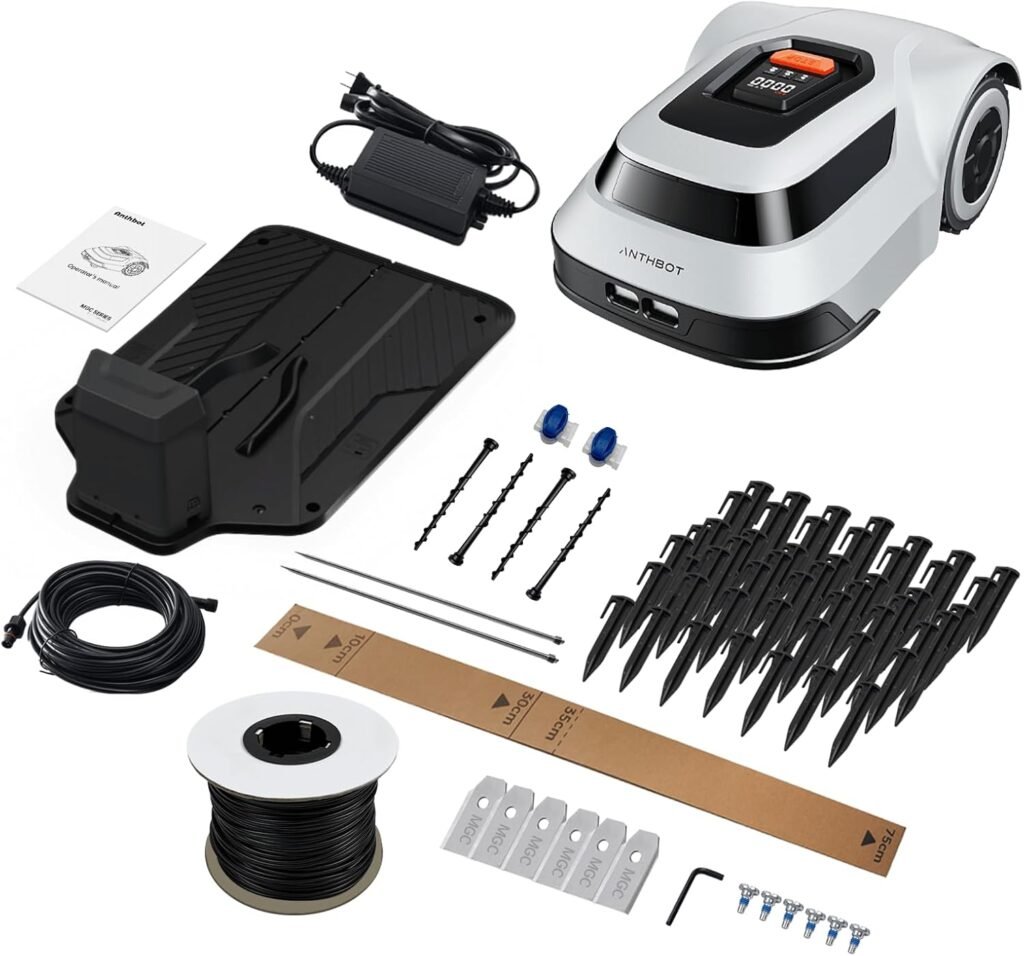
- We then use the included cable connectors to repair the break.
This means we do not have to walk the entire perimeter with testers, guess where the issue is, or start digging randomly.
Why This Matters in Real Life
If our yard has:
- Pets that like to chew.
- Wildlife that passes through.
- Garden tools that occasionally snag the wire.
Then this feature can save time, frustration, and extra cost on dedicated wire detectors. We still need to do the physical repair, but the hardest part—finding the break—is guided by the system.
Cutting System: Width, Height, and Intelligent Blade Control
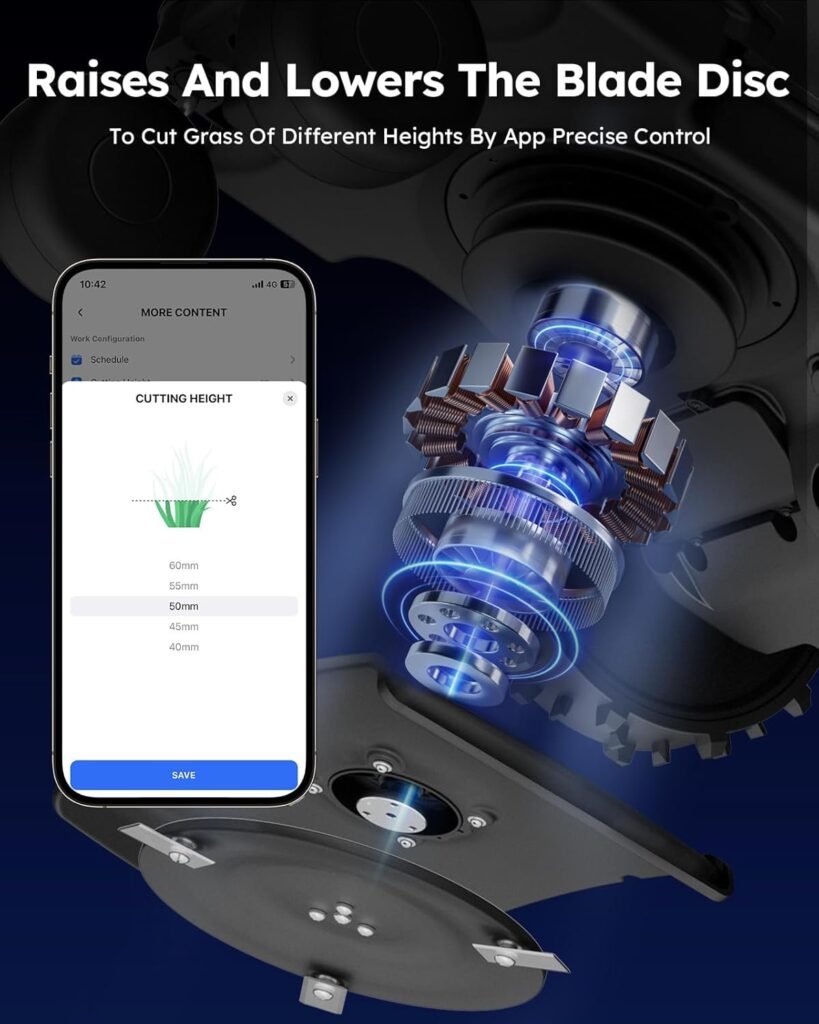
The ANTHBOT robot lawn mower combines a 20 cm cutting width with an automatic cutting height adjustment from 3 to 7 cm (1.18″ to 2.76″). The idea is to give us flexibility without constant manual tweaking.
Automatic Adjustable Blade Deck
We do not need to manually turn knobs or tools to change the cutting height. Instead, the mower’s blade deck adjusts automatically within the given range. This is especially convenient if:
- We prefer shorter grass on most of the lawn but slightly taller grass in certain areas.
- The lawn conditions change throughout the season (e.g., drought vs rainy periods).
- We do not want to deal with mechanical settings each week.
The mower dynamically changes blade height when necessary, so it can handle tall or dense grass more effectively.
Intelligent Response to Thick or Tall Grass
When the mower encounters patches of thicker or taller growth:
- The smart blades adjust their behavior to prioritize completing the job.
- It can vary speed and cutting behavior to handle more demanding spots.
This helps reduce the chance of the mower getting bogged down or leaving untidy clumps behind. We still get the best results if we allow it to mow regularly, but this flexibility makes it more forgiving if we skip sessions.
Increased Cutting Area Efficiency
With a 20 cm cutting width, the mower offers about a 56% increase in cutting area coverage compared to narrower competitors. Combined with its efficient path planning:
- It can cover the recommended 550㎡ area in reasonable cycles.
- We may not need the mower to run constantly; it can maintain the lawn with scheduled sessions.
For many of us, this means less visible mowing time and a more consistent appearance across the week.
Slope Handling and Obstacle Management
Not all lawns are flat. If we have hills, uneven spots, or small slopes, we need a mower that can handle them without stopping or tipping.
Capability on Slopes up to 45% (24°)
The ANTHBOT mower can climb slopes up to 45% (about 24 degrees). That is quite steep for a residential robot mower and covers most common yard inclines. This allows us to:
- Use it confidently on sloping lawns, not just flat patches.
- Avoid manual mowing on awkward hillsides that might be uncomfortable with a traditional mower.
Of course, extremely rough or rocky terrain can still be a problem; this is still a wheeled device that needs traction.
Obstacle Detection and Lawn Protection
Collision sensors help the mower:
- Detect obstacles such as trees, furniture, or toys.
- Adjust direction to avoid damage to both the mower and the object.
- Reduce the chance of marking up the lawn surface through repetitive collisions.
While we should still keep the lawn reasonably tidy (removing small objects, ropes, hoses), these sensors add a layer of safety and convenience. They also help the mower maintain an efficient route, not constantly bouncing off solid obstacles.
Fast Mode for Small Areas
Not all mowing tasks are equal. Sometimes we need a quick trim for a small section instead of a full-lawn session.
What the Fast Mode Offers
The mower includes a fast mode, ideal for small lawn sections around 7㎡, such as:
- A small courtyard.
- A side strip.
- A compact front patch.
When we activate this mode, the mower works quickly on a limited area, helping to tidy up spots that may need extra attention. It is a useful feature if our property has mixed spaces of varying sizes.
Practical Uses of Fast Mode
We might use fast mode when:
- Guests are coming over, and we want a visible area neat in a short time.
- One section grows faster due to watering patterns or shading.
- We are testing a new zone or boundary configuration.
It gives us more control, especially when combined with the main scheduled mowing routines.
Waterproof Design and Cleaning
Weather and dirt are unavoidable factors for any outdoor tool. The ANTHBOT mower is designed with IPX6 waterproofing, which makes it relatively robust against the elements.
Using the Mower in Wet Conditions
With an IPX6 rating, the mower can:
- Be used in light rain and wet conditions.
- Handle splashes and sprays from a garden hose.
This means the mower does not need to be sheltered every time a drizzle appears. However, while the hardware tolerates moisture, cutting wet grass is not always best for the lawn’s health, which is why the app lets us manage mowing around rain (more on that below).
Easy Cleaning with a Hose
After several mowing sessions, grass clippings, dust, and dirt can accumulate on the mower’s body and underside. Thanks to its waterproof rating:
- We can rinse it gently with a garden hose.
- Regular cleaning keeps the sensors, wheels, and blades in better shape.
We still want to avoid extremely high-pressure jets directly on sensitive areas, but standard hose cleaning is supported and convenient.
Battery Life, Charging, and Automatic Return
Battery behavior is one of the core aspects of any robot mower. We want enough runtime to cover the lawn effectively, paired with reliable recharge habits.
Runtime Per Charge
The ANTHBOT mower provides about 70 minutes of efficient cutting time per charge. Actual performance can vary depending on:
- Grass height and density.
- Slope and terrain.
- Weather and ground moisture.
For the recommended lawn size, this runtime is generally sufficient to cycle through the yard over scheduled sessions.
Automatic Return at Low Battery
Once the battery level drops below 15%, the mower:
- Automatically returns to the charging station.
- Begins recharging until it reaches about 90% battery.
- Resumes mowing from where it left off.
This behavior helps minimize downtime. We do not need to manually monitor charge levels or restart the mower; it manages the cycle on our behalf.
Rainy-Day Behavior and App Delay
On rainy days, the mower will also automatically return to the charging station. Through the app, we can:
- Delay mowing until the rain stops.
- Wait until the lawn is dry enough for better cutting quality.
This ensures we are not forced to mow in conditions that could damage the lawn or cause messy clippings. We keep control over timing, even if we are away from home.
App Control and Real-Time Tracking
One of the biggest advantages of modern robot mowers is the app-based control. The ANTHBOT mower includes a user-friendly app that helps us manage almost every aspect of operation.
Monitoring and Scheduling from Anywhere
Through the app, we can:
- Monitor mowing progress in real time.
- Schedule mowing times to fit our daily routines.
- Receive start and end-of-mowing alerts.
This means if we are at work, traveling, or simply inside the house, we can still keep track of what is happening in the yard. It helps avoid those “Is it stuck somewhere?” questions.
Real-Time Position and Coverage Map
The app shows:
- The mower’s real-time position on the lawn.
- The coverage area it has already mowed.
For us, this makes a big difference:
- We can visually confirm that all corners are being covered over time.
- We can detect if the mower is repeatedly stuck in one region or missing areas.
- We eliminate guesswork, making it easier to trust the mower to do its job.
If we like seeing data and maps, this part will probably be satisfying. It turns lawn care into something we can manage with the same ease as a smart thermostat or home camera.
Setup and Installation Considerations
While the product details focus on operation, it is worth thinking about the setup process, especially around the boundary wire and charging station placement.
Placing the Charging Station
We will want:
- A flat, accessible spot near a power outlet.
- Enough space in front and to the sides for the mower to dock and leave.
- A location that is sheltered from extreme conditions, if possible.
The charging station is the home base and the reference point for navigation and cable break diagnostics, so choosing a sensible location helps everything work better.
Laying the Boundary Wire
When we lay the 180m boundary wire, we should:
- Define the full mowing area, including edges and around flowerbeds or obstacles.
- Keep the wire at a consistent distance from surfaces we do not want the mower to hit, such as walls or fences.
- Secure it with pegs initially, and optionally bury it shallowly later for a cleaner look.
Once the wire is laid and connected to the charging station, the CABLE-TOF system can use it for navigation and for cable break detection. The initial setup may take a few hours, but once it is done, the mower should need minimal intervention.
Day-to-Day Use and Maintenance
After the initial setup, most of our interaction with the mower is monitoring, cleaning, and occasional adjustments.
Routine Maintenance
For good long-term performance, we should:
- Clean the mower regularly with a hose (avoiding too much pressure).
- Check and replace blades as needed, depending on usage intensity.
- Inspect the wheels and sensors for dirt buildup.
- Make sure the boundary wire connections are secure, especially after storms or yard work.
These tasks are not frequent, but they keep the mower reliable and efficient.
Seasonal Adjustments
As seasons change:
- We can adjust cutting height (the mower can do this automatically, but we can choose preferences).
- Modify schedules to match grass growth speed (more frequent in spring, less in drought periods).
- Consider temporarily pausing if the lawn goes dormant.
The app makes these seasonal changes simple and remote-friendly.
Advantages and Limitations
Every product has strengths and trade-offs. Summarizing both helps us decide if this specific mower is right for our lawn and lifestyle.
Main Advantages
- Efficient, grid-shaped mowing path for up to 300% better coverage vs random movement.
- Recommended coverage of 550㎡ with the ability to stretch to 900㎡ under good conditions.
- Automatic adjustable blade deck (3–7 cm height) for flexible and convenient mowing.
- Precise boundary wire break detection, reducing frustration when wires are damaged.
- Strong slope handling up to 45% (24°).
- IPX6 waterproof, usable in light rain and easy to clean with a hose.
- Smart app control with real-time tracking, alerts, and scheduling.
- Automatic charging and resume makes it highly autonomous after setup.
Potential Limitations
- Initial boundary wire setup takes effort and planning, especially on complex lawns.
- While 900㎡ is the upper limit, optimal performance is geared toward 550㎡, so very large properties may need extra equipment or multiple zones.
- We still need to perform regular maintenance on blades and periodically check the lawn for items that could obstruct the mower.
- Grass performance can still be affected by mowing wet surfaces, even though the mower itself is waterproof.
If we accept these trade-offs, the benefits—especially the time saved and the steady lawn quality—can easily outweigh the limitations.
Who This Mower Is Best For
Considering the feature set and constraints, the ANTHBOT Robot Lawn Mower is especially well suited for:
- Homeowners with small to medium-sized lawns up to about 550㎡ who want consistent, low-effort lawn care.
- Users who appreciate smart home tools, remote monitoring, and app-based control.
- Yards with slopes and mixed terrain, where traditional mowing may be tiring or time-consuming.
- People who want a mower that actively helps with troubleshooting, such as the built-in boundary wire break detection.
If our yard is much larger than 900㎡, we may need to think about multiple zones and charging stations or look to a different scale of solution. But for many suburban and semi-urban yards, this mower hits a sweet spot.
Our Overall Impression
The ANTHBOT Robot Lawn Mower with Max 180m Stable Boundary Wire presents itself as a thoughtful combination of precise navigation, strong mowing performance, and user-friendly smart features. The highlights for us are:
- The grid-shaped mowing path, which makes much better use of every minute of runtime.
- The genuinely useful boundary wire break detection, which addresses one of the biggest headaches of wired systems.
- The flexible and automatic cutting height adjustment, allowing the mower to adapt to tall or dense grass.
- Solid slope handling and IPX6 waterproofing, which expand where and when we can rely on it.
- A well-designed app experience that keeps us informed and in control, even at a distance.
We still need to invest time in the initial setup and occasional maintenance, but once that is in place, the mower largely runs itself. For those of us who want a well-kept lawn without constant effort, the ANTHBOT model offers a strong, intelligent option that turns lawn care into a mostly hands-off, scheduled, and trackable routine.
Disclosure: As an Amazon Associate, I earn from qualifying purchases.