Ad Blocker Detected
Our website is made possible by displaying online advertisements to our visitors. Please consider supporting us by disabling your ad blocker.
Have we ever looked at our lawn and wished it could just take care of itself?

Our Overall Take on the Redkey MGC500 Robot Lawn Mower
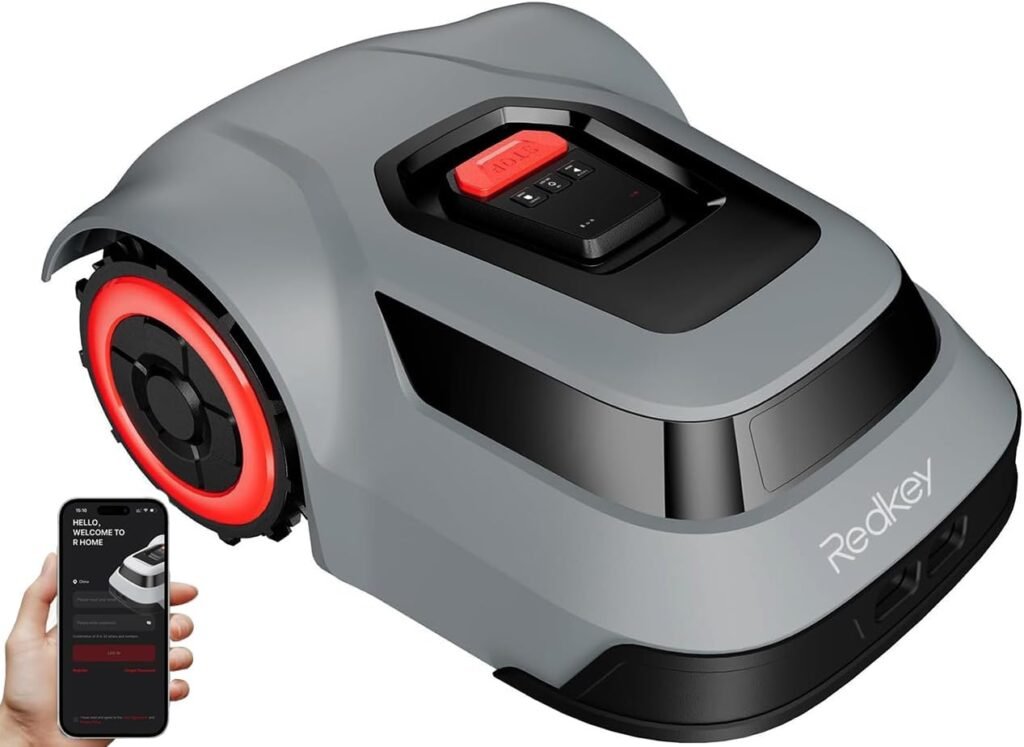
We see the Redkey MGC500 Robot Lawn Mower as a smart solution for small yards where we want a neat lawn without spending every weekend pushing a mower. It combines boundary wire guidance, automatic charging, and smart navigation so we can mostly “set it and forget it” once everything is installed.
This model is clearly designed for homeowners with modest-sized lawns, some slopes, and a strong interest in automation. It is not a toy gadget; it’s a practical yard tool that can actually replace our traditional mower for up to 0.12 acres.
Key Features at a Glance
We find it helpful to break the basics into a quick reference so we can see whether this mower fits our yard and expectations. The Redkey MGC500 combines runtime, slope handling, and smart sensing to give us continuous lawn maintenance rather than infrequent, heavy cuts.
Here is a simple breakdown of the core specs and what they mean for us:
| Feature | What It Is | What It Means for Us |
|---|---|---|
| Boundary Wire Length | 393 ft (approx. 120 m) | Enough to outline up to 0.12 acre (1/8 acre) yard areas |
| Max Recommended Yard Size | 0.12 acre (about 500 m²) | Best for small to modest-sized residential lawns |
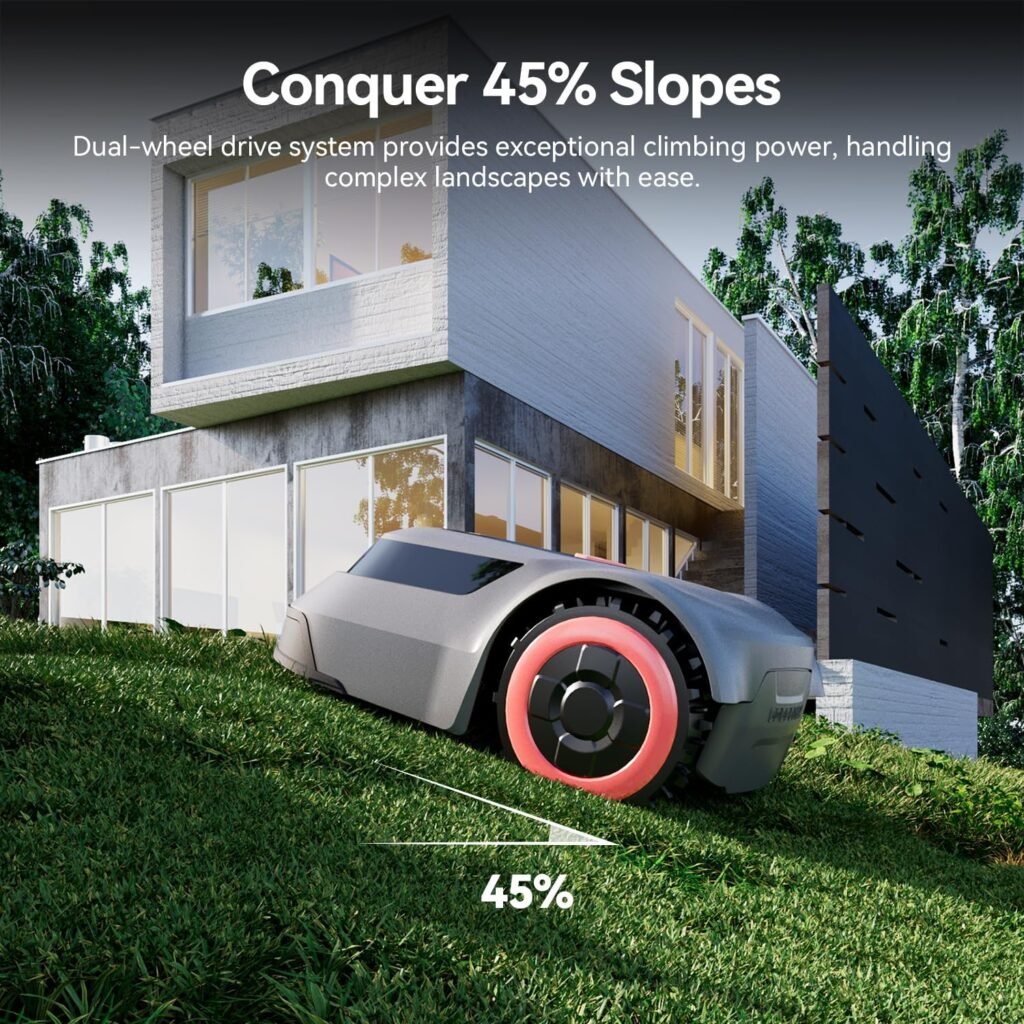
| Slope Handling | Up to 45% gradient | Can manage fairly steep sections, not just flat lawns |
| Runtime per Charge | Up to 70 minutes | Long enough for small lawns to be maintained regularly |
| Charging | Auto recharge at base station | Returns to dock when battery is low; no manual charging required |
| Navigation | Precise location + breakpoint detection | Better route planning and recovery if interrupted or blocked |
| Power Source | Rechargeable battery | No gasoline, fewer emissions, quieter operation |
| Lawn Area Management | Boundary wire + sensors | Stays within our defined lawn and avoids wandering off |
Design and Build Quality
We notice right away that this mower is built with a low-profile, compact body that is meant to glide under many shrubs and garden edges. Its look is modern and functional, with a robust plastic housing to handle outdoor conditions.
From a durability perspective, the enclosure feels designed to resist bumps, occasional rain, and everyday yard elements like dust and debris. This is not a huge, industrial robot; it’s a compact machine optimized for small suburban or urban lawns.
Size and Footprint
The compact size makes it easy for us to store the mower and dock in a corner of the yard or near a wall. Because the cutting area is limited to 0.12 acre, we don’t need a massive machine, and Redkey embraces that by keeping the footprint small.
This smaller form factor also means the mower is less likely to snag on tight passages between flower beds or around trees. We can see it as a “nimble” mower rather than a brute-force cutter.
Materials and Construction
We can expect a hard plastic shell paired with weather-resistant components so it can stay outdoors for extended periods. While we do still need to avoid extreme weather and standing water, the design suggests it can handle normal outdoor environments well.
The wheels appear rugged enough to grip grass and handle slopes up to 45%, which is a serious demand on traction. That tells us the wheel and motor setup is intentionally built to cope with uneven ground.

Coverage and Lawn Size Suitability
The stated capacity of 0.12 acre (1/8 acre) makes this mower most suitable for small suburban plots, townhouses with backyards, or front-and-back combinations that total around that area. If our property is larger, we might still use it, but we would need to accept that it can’t efficiently handle much more than its recommended area.
What matters with a robot mower is not just size but how we want the lawn to look. The Redkey MGC500 favors frequent, light trims to keep the grass consistently tidy, rather than doing a heavy, weekly cut like a regular push mower.
Boundary Wire Length and Layout
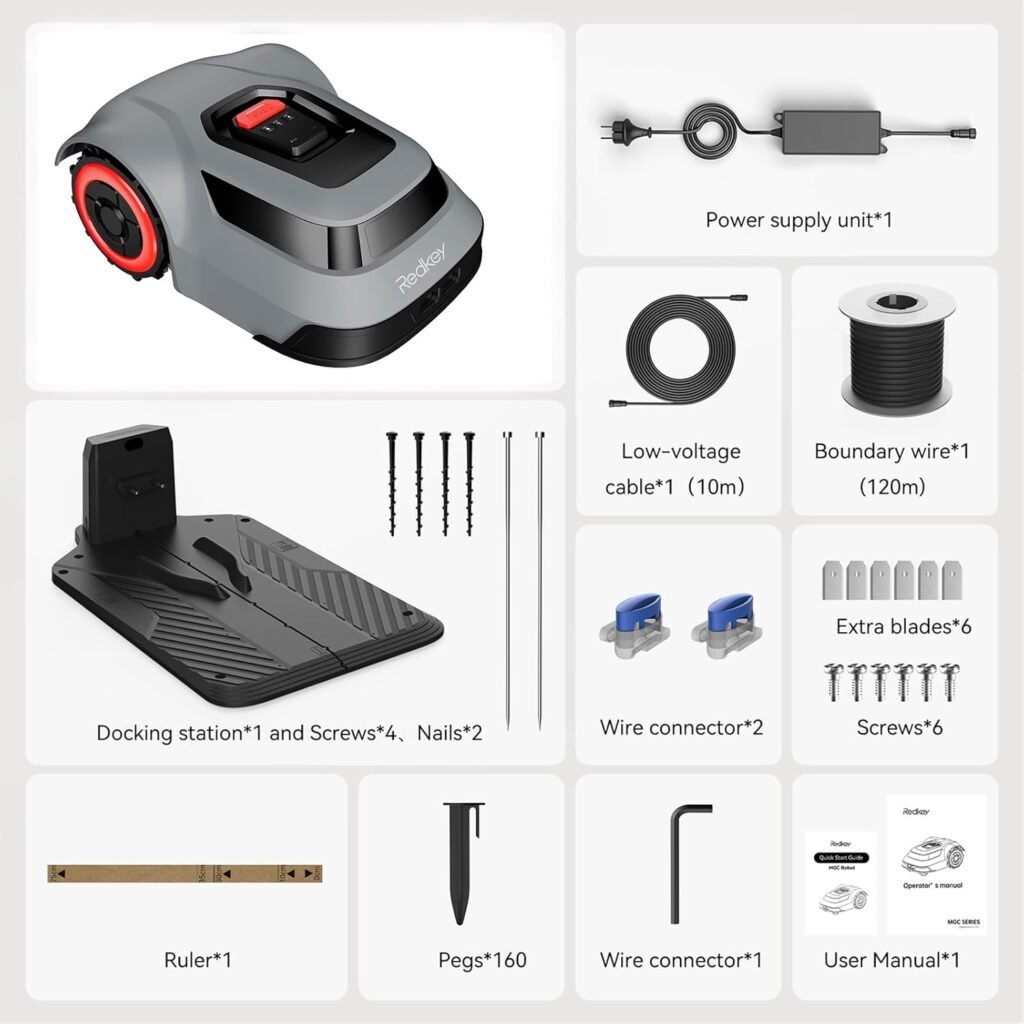
We get 393 ft of boundary wire, which is a generous amount for a 0.12 acre yard. That should be enough to outline the main perimeter and perhaps create some inner “no-go” zones around flower beds or obstacles.
Boundary wire installation is one of the most important steps. Once we lay it properly, we rarely need to touch it again unless we change our lawn layout. With clear boundaries, the mower stays where we want and avoids wandering into driveways, beds, or neighbors’ property.
Handling Irregular Yards
Many of our yards are not perfect rectangles. We might have odd corners, narrow corridors, or curves around patios and bushes. The Redkey MGC500 uses the boundary wire and sensors to manage irregular shapes reasonably well.
As long as we route the boundary wire thoughtfully—hugging the edges we want cut and navigating around non-grass areas—the mower will treat that whole shape as its workspace. We just need to remember that very small, isolated patches may be more cumbersome to wire in.
Slope Performance: Up to 45% Gradient
One of the standout points for us is the ability to handle slopes up to 45%. That translates to a fairly steep incline, more than what many basic robot mowers can tolerate.
If we have a hillside lawn, terraced yard, or sloped sections leading down to a driveway or patio, that slope capacity becomes a big selling point. It indicates that the drive system and wheel design are built to maintain traction and stability.
Realistic Slope Expectations
While “up to 45%” sounds impressive, we should remember that actual performance will depend on grass conditions, moisture, and soil firmness. Wet grass on a steep hill challenges any mower, robotic or manual.
We should think of 45% as the upper boundary in good conditions. For everyday reliability, gentler slopes will give the most consistent results, while the steeper areas may be handled with slightly more caution.
Stability and Safety on Inclines
Slope handling raises questions about tipping. The mower’s low center of gravity and wide wheelbase help keep it stable, even when climbing or descending. The automation logic also typically adjusts speed and behavior to prevent hazardous movements.
Combined with the boundary wire, steep drop-offs can be fenced out. We just need to place the wire so that it stays safely away from retaining walls, ponds, or steps, allowing the mower to tackle slopes without risking a fall.
Battery Life and Runtime
With a runtime of around 70 minutes per charge, this mower is optimized for gradual, ongoing maintenance rather than a single, long cutting session. That’s standard in the robot mower world: it works more often, for shorter stretches, rather than trying to mow the entire yard in one go.
Over the course of a day or two, with multiple charges, the mower can cover its recommended 0.12 acre area multiple times, keeping our grass consistently short and even.
Auto Recharge and Charge Cycles
When the battery drops below its threshold, the mower automatically stops cutting and moves back to its charging base. That auto recharge feature is critical because it turns the mower into a truly autonomous tool.
We don’t need to remember to plug anything in. As long as the docking station is powered and properly placed at the edge of the mowing area, the mower will find its way back and resume work once charged.
Battery Longevity Considerations
Like any rechargeable device, the battery will gradually lose capacity over time. Frequent, shallow charge cycles are generally easier on lithium batteries than deep, full drains, and robotic mowers are naturally good at this because they return to charge often.
We might eventually need to replace the battery years down the line, but with proper care—such as not storing the mower fully discharged over winter—its lifespan should be reasonable for a mower in this category.
Navigation, Precise Location, and Breakpoint Detection
The navigation system is one of the most interesting aspects for us. The Redkey MGC500 promises “precise location” and “breakpoint detection,” which points to smarter operation than basic random-pattern models.
Precise location suggests the mower knows approximately where it is within the boundary, enabling more efficient routing. Breakpoint detection implies it can handle interruptions intelligently and resume where it left off.
What “Precise Location” Means for Us
We can think of precise location as the mower’s internal sense of position. Rather than endlessly bumping around in a purely random way, it uses sensors and algorithms to recognize patterns, edges, and its own path.
For us, that means fewer missed patches, more consistent coverage, and less time watching it seemingly wander aimlessly. It may still use a semi-random pattern in places, but enhanced positioning helps it optimize over time.
Breakpoint Detection: Recovering from Interruptions
Breakpoint detection is particularly useful for real-world obstacles. If the mower is stopped by something (maybe we picked it up, or a branch obstructs its path, or the battery ran low mid-route), it can remember its “breakpoint” and resume from there or adjust its plan accordingly.
In practice, that means less rework and fewer areas left uncut. The mower won’t restart from scratch every time; instead, it can adapt to interruptions and carry on mowing efficiently.
Boundary Wires: Setup and Daily Performance
Boundary wires are both the main hurdle and the main strength of many robotic mowers. With the Redkey MGC500, the 393 ft of wire is our tool for teaching the mower exactly where it can and cannot go.
Once the wire is installed, buried slightly or pinned to the surface, the mower senses it and uses it as an invisible fence. That prevents it from rolling across paths, into beds, or off our property.
Installation Effort and Tips
We do need to be ready for some initial work. We will likely:
- Plan our mowing area and any no-go zones
- Lay the boundary wire around the perimeter
- Place the wire around obstacles we want to protect
- Connect the wire to the charging base
- Secure it with pegs or bury it slightly below the grass surface
It might feel like a weekend project, especially if our yard has a lot of curves or features. But the payoff is long-term: once the boundary is in place, the mower will reliably respect those limits.
Everyday Reliability of Boundary Control
Over time, grass will grow over the surface wire if we don’t bury it, making it nearly invisible and protecting it from snagging. If we already have underground cables or irrigation lines, we just need to be mindful when placing the wire.
In daily use, the boundary behaves like a virtual fence. The mower will slow or turn as it approaches, ensuring that it doesn’t cross into our flower beds, poolsides, or gravel paths.
Cutting Performance and Lawn Finish
A robot mower like the Redkey MGC500 focuses on frequent trimming instead of occasional heavy cuts. It usually uses small blades that slice off just a few millimeters of grass each pass.
This approach creates a well-groomed, carpet-like lawn over time. The fine clippings fall back into the grass, acting as natural mulch and helping our lawn stay greener and healthier without visible thatch or clumps.
Consistency of Cut
Because the mower can run several times per week, or even daily depending on our schedule settings, it prevents the lawn from becoming overgrown. Instead of visible steps in grass height, we end up with a smoother, more uniform look.
Edges near the boundary wire might need an occasional touch-up with a trimmer, especially where the mower can’t get right up against walls or hard borders. That’s common with all robotic mowers and not a specific flaw of this one.
Handling Different Grass Types
Most standard lawn grasses—such as fescue, bluegrass, or ryegrass—respond very well to the frequent, small cuts this mower provides. In tougher, thicker grass varieties, the mower may need more frequent passes, but it still operates in the same grooming style.
We should just adjust our expectations: this mower is best at maintaining a lawn that is already in decent condition, rather than rehabilitating a wild field of tall weeds.
Safety Features and User Confidence
With blades spinning on our lawn, safety matters a lot. While we don’t have a full list of every sensor and safety protocol, modern robotic mowers like the Redkey MGC500 typically include various protections to keep people, pets, and property safe.
We can assume the presence of bump sensors, tilt sensors, and lift sensors that stop the blades if the mower is tilted or picked up. These basic systems are now a standard expectation in this category.
Obstacle Detection and Bump Response
As the mower moves, it will occasionally encounter objects that aren’t fenced out with boundary wire: toys left on the grass, sticks, or even a garden chair we forgot to move. In those cases, bump sensors detect the obstacle and trigger a change of direction.
For us, that just means the mower will nudge against something, reverse, and steer around it. We still benefit from a quick visual check before each run, but the mower can handle common surprises reasonably well.
Family and Pet Safety
If we have kids or pets who might wander around while the mower is running, safety becomes even more important. Although the mower moves slowly and uses relatively small blades, it’s still a cutting machine.
The best practice is to schedule mowing times when the yard is less in use. If someone approaches the mower, we can stop it, or rely on the fact that lifting or tilting it will trigger an automatic blade stop.
Ease of Use and Everyday Operation
Once we get through the initial setup, day-to-day operation is designed to be very low-touch. The mower lives outside, parked in its charging dock, and follows the schedule and boundaries we have defined.
We don’t need to lug it around, fill it with fuel, or push it across the lawn. Instead, we interact with it mainly through controls or a panel, updating schedules or making occasional adjustments as needed.
Initial Setup Versus Long-Term Convenience
The first few days with a robot mower involve some learning and experimentation. We might tweak boundary wire placement, adjust cutting times, and observe how the mower moves around challenging parts of our yard.
Once things are dialed in, we enjoy the convenience of a largely autonomous mowing system. We check on it occasionally, clear debris from the deck, and confirm that boundaries still make sense if we change our landscaping.
Scheduling and Automation
While specific app or interface details are not provided in the product summary, a mower like the Redkey MGC500 typically lets us set mowing times on particular days. That makes it easy to fit into our routine:
- Morning runs before we get home from work
- Midday when the lawn is dry
- Alternating days to avoid constant movement
We can build a pattern that suits our lifestyle and our climate without manually starting and stopping the mower each time.
Maintenance and Care
As with any yard tool, a bit of maintenance keeps the Redkey MGC500 performing well for years. Compared with a gas mower, however, routine care is fairly simple and free of fuel system issues.
We mainly pay attention to blade sharpness, wheel cleanliness, and periodic checks around the deck and sensors to prevent buildup.
Blade Replacement and Cleaning
The small blades gradually dull with use. Over time, dull blades tear grass instead of cleanly cutting it, which can brown the tips and make the lawn look less healthy. Replacing blades periodically is an easy way to keep a fresh cut.
We should also expect to clean grass clippings from the underside occasionally. This prevents buildup that might affect performance or cause imbalances in the cutting mechanism.
Seasonal Storage and Weather Considerations
Robot mowers are designed to live outdoors, but very harsh weather still calls for caution. During heavy storms, deep snow, or extended freezing conditions, we might choose to store the mower and its charging base in a sheltered location.
Before long storage periods, such as winter, it’s wise to clean the mower thoroughly, ensure the battery has a moderate charge (not completely full or empty), and keep it in a dry place. When spring arrives, we can reinstall the dock, confirm boundary wire integrity, and resume normal operation.
Noise Level and Neighbor Friendliness
One of the immediate benefits we notice when switching from a gas mower to a robotic electric mower is the noise reduction. Electric motors and small blades make far less noise than large gas engines with wide decks.
Our neighbors will likely appreciate that we can run the mower at times when a traditional mower would be disruptive. It gently hums rather than roars, blending into the normal background sounds of the neighborhood.
Quiet Operation in Practice
Because the mower is relatively quiet, we may feel comfortable running it during early evening or weekend mornings when the sun isn’t too harsh. It’s still wise to be considerate, but the noise is more comparable to a loud fan than a chainsaw.
This also means less stress for pets and less disruption if we are spending time outside while it’s running. We can relax on the patio while the mower works in the background.
Environmental Impact and Energy Use
By choosing a robotic electric mower like the Redkey MGC500, we reduce our reliance on gasoline, which in turn eliminates local exhaust emissions during mowing. For many of us, that’s an important part of moving toward a more sustainable household.
Additionally, the mower’s frequent, light cuts help maintain a healthier lawn, which can support soil health and reduce the need for some chemical treatments.
Electricity Consumption Versus Gasoline
The mower’s charging needs are modest in the context of a household’s overall energy use. It draws power from the grid through its charging base, and we pay for that as a small increase in our electricity bill.
In exchange, we eliminate trips to buy gasoline, oil changes, and emissions. Over time, the combination of fuel savings and reduced maintenance costs can help offset the purchase price.
Grass Clippings as Natural Mulch
Because the mower trims small amounts frequently, the clippings are tiny and disperse evenly. They fall into the grass and break down quickly, returning nutrients to the soil.
That natural mulching effect helps the lawn retain moisture and reduces the need for additional fertilizers. Instead of bagging clippings and hauling them away, we let the mower recycle them directly back into the lawn ecosystem.
Pros and Cons of the Redkey MGC500
To get a clear picture of whether this mower fits our needs, we like to summarize strengths and limitations side by side. This helps us decide how well it matches our yard and expectations.
| Pros | Cons |
|---|---|
| Fully automatic mowing with auto recharge | Initial boundary wire installation can be time-consuming |
| Suitable for up to 0.12 acre (ideal for small lawns) | Not designed for large properties |
| Handles slopes up to 45% | Edge trimming may still be needed in tight corners |
| Precise location and breakpoint detection for efficiency | Dependent on a functioning boundary wire and base station |
| Quiet, electric operation with no exhaust emissions | Battery will eventually degrade and may need replacement |
| Frequent, light trimming keeps lawn consistently neat | Not ideal for very overgrown or neglected lawns at first |
| Works while we do other things | May struggle with extremely complex or cluttered yards |
Who This Mower Is Best For
We see the Redkey MGC500 as an excellent choice for a specific type of homeowner. It’s ideal for us if we have a small to modest-sized lawn and are eager to automate our mowing so we can spend more time enjoying the yard rather than working on it.
This mower shines when we want a tidy, consistent lawn and are willing to invest some time up front to install the boundary wires properly.
Ideal Yard and Owner Profile
This model suits us best if:
- Our lawn area is around 0.12 acre (or smaller)
- We have slopes or inclines but not extreme, dangerous drop-offs
- We appreciate smart devices and are comfortable with some setup
- We prefer a quiet, emission-free mowing solution
- We like the idea of a “set it and let it run” maintenance pattern
For that type of household, the Redkey MGC500 can quickly become one of our favorite outdoor tools, quietly doing its job while we spend time on other things.
When It Might Not Be the Right Fit
On the other hand, it might not be the best choice if:
- Our property is much larger than 0.12 acre
- Our yard is extremely cluttered or divided into many tiny sections
- We need a mower to tame very tall, rough grass or weeds regularly
- We are looking for a completely wireless boundary system (no boundary wire)
In those cases, we might want to look at larger-capacity mowers, models that use advanced mapping without wires, or even different tools for rough-cut areas.
Practical Tips for Getting the Most from the MGC500
Owning a robot mower is easier when we understand a few best practices. We can get better results and fewer frustrations by planning our use thoughtfully.
Some habits make everyday life with the Redkey MGC500 smoother and more rewarding.
Planning Our Boundary Layout Carefully
Before pounding in the first peg, we should walk the perimeter and think about:
- Areas we definitely want mowed
- Spaces we want to keep off-limits (beds, gravel, ponds)
- Narrow passages where the mower might get stuck
- Steep slopes where we might want extra safety margin
A little planning on paper or with flags can save us from redoing sections of wire later. We want a layout that gives the mower easy loops and gentle angles, not tight corners and tiny dead-ends.
Setting a Smart Mowing Schedule
We can consider:
- Local weather patterns (avoiding frequent rain times)
- Our family’s typical outdoor activity times
- Grass growth rates during different seasons
In spring and early summer, we might schedule more frequent runs. During slower growth in hotter or cooler months, we can reduce the schedule to conserve battery cycles and wear.
How It Compares with a Traditional Mower Experience
While the Redkey MGC500 doesn’t completely erase the need for manual yard work, it changes the nature of mowing. Instead of dedicating a chunk of our weekend to pushing or riding a mower, we mostly shift into a supervisory role.
We still edge occasionally, move objects out of the yard, and handle any tricky spots, but the bulk of mowing becomes something that happens quietly in the background.
Time and Effort Savings
If we normally spend an hour or more each week mowing, the time savings are significant. Even when we account for occasional maintenance and adjustments, our workload is far lower than with a manual mower.
We gain back time to:
- Relax with family
- Work on other garden projects
- Simply enjoy a neat lawn without planning around mowing sessions
Lifestyle and Comfort Improvements
Beyond time, there’s the comfort factor. We no longer push heavy equipment in hot weather or breathe in exhaust fumes. The mower handles that physical burden while we stay cooler and more comfortable.
We also benefit from the consistent aesthetics of a lawn that’s always more or less the same length, rather than swinging between freshly cut and shaggy from week to week.
Long-Term Value and Investment
A robot mower is a meaningful purchase, especially compared with a basic push mower. When we think about long-term value, we consider both financial and lifestyle returns.
Over several seasons, the reduced fuel costs, fewer maintenance tasks, and time saved can offset a good portion of the initial outlay, especially if we currently pay for lawn services.
Cost Versus Ongoing Benefits
We can think of it as trading a series of smaller costs—fuel, service, or lawn-care fees, plus our time—for one bigger upfront expense. The Redkey MGC500 then quietly pays us back over years of regular use.
On top of those practical savings, the daily convenience and satisfaction of a constantly neat lawn are hard to quantify, but very real.
Yard Resale Appeal and Aesthetics
If we ever sell our home, a well-maintained lawn can contribute positively to curb appeal. While buyers may not expect a robot mower to be included, the state of the yard often influences first impressions.
By helping keep our grass in consistently good shape, the MGC500 indirectly supports that visual impact, which can be a small but meaningful part of the overall value of our property.
Our Final Thoughts on the Redkey MGC500 Robot Lawn Mower
Putting everything together, we see the Redkey MGC500 Robot Lawn Mower as a capable, thoughtfully designed tool for modern homeowners with small lawns who value both convenience and a tidy yard. Its 393 ft boundary wire system, ability to handle up to 0.12 acre, 45% slope rating, and 70-minute runtime combine to make it practical for many typical residential setups.
We do need to accept the upfront work of boundary installation and the reality that edge trimming and occasional maintenance are still part of our routine. In return, we gain a quiet, electric helper that automatically recharges, navigates with precise location and breakpoint detection, and diligently keeps our lawn well-groomed while we focus on other things.
If our yard size and layout match its strengths, the Redkey MGC500 can transform mowing from a chore into something we barely have to think about, giving us more time to actually enjoy the lawn it keeps so neatly trimmed.
Disclosure: As an Amazon Associate, I earn from qualifying purchases.