Ad Blocker Detected
Our website is made possible by displaying online advertisements to our visitors. Please consider supporting us by disabling your ad blocker.
Have we ever dreamed of stepping outside on a weekend, seeing a perfectly trimmed lawn, and realizing we didn’t have to lift a finger to make it happen?
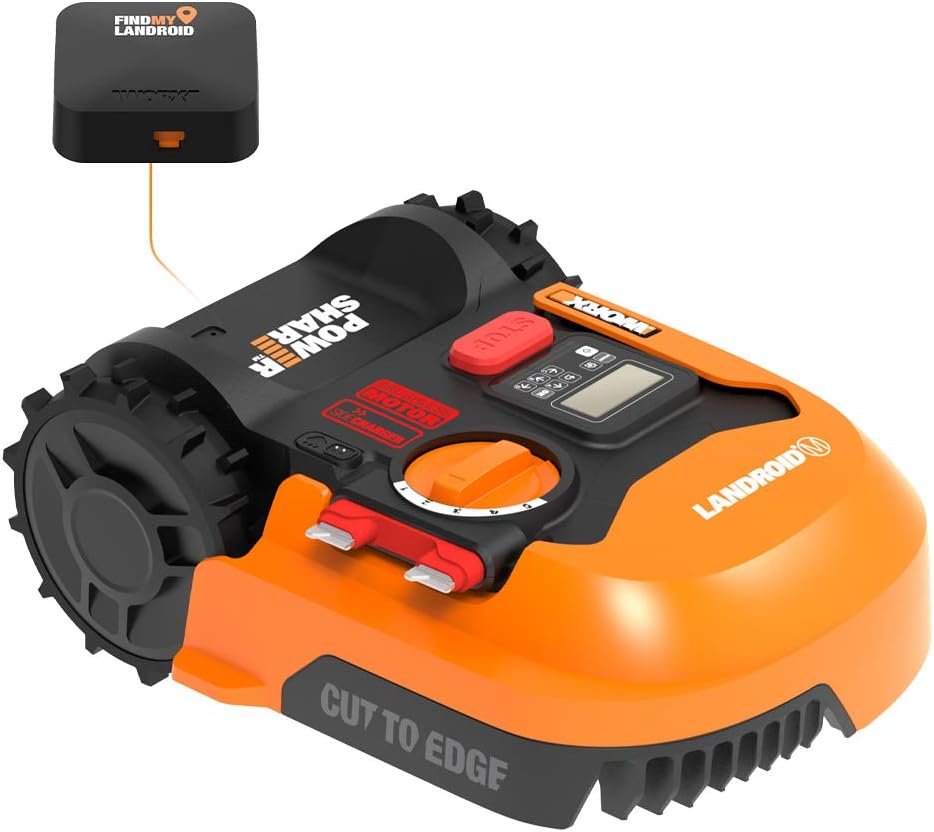

What Is the WORX Landroid M 20V Robotic Lawn Mower WR143?
When we talk about robotic mowers that feel truly “set it and forget it,” the WORX Landroid M 20V WR143 stands out. It’s designed for lawns up to 1/4 acre (10,890 sq. ft.) and comes with GPS, a 20V battery, and a charging base—everything we need in one box.
This model is fully automated once we install the boundary wire and set it up through the app. After that, it quietly works in the background to keep our lawn consistently trimmed instead of letting it overgrow between weekend mowings.
Key Features at a Glance
Sometimes it helps to see the main features in a quick snapshot before we get into the details. Here’s how the WORX Landroid M WR143 shapes up on paper.
| Feature | Details |
|---|---|
| Model | WORX Landroid M 20V WR143 |
| Coverage Area | Up to 1/4 acre (approx. 10,890 sq. ft.) |
| Power | 20V battery (Power Share compatible) |
| Battery & Charger Included | Yes |
| Navigation Tech | Patented AIA (narrow path navigation) |
| GPS Module | Included “Find My Landroid” ($299 value) |
| Control Method | Smartphone app (Wi-Fi + cellular GPS for security) |
| Cutting System | 3-blade, 7″ offset cutting disc |
| Edge Cutting | Cut-to-edge design to minimize trimming |
| Slope Capability | Up to 20° |
| Weather Handling | Rain sensor; returns to charger when it detects rain |
| Scheduling | Custom schedules + automatic recommendations via app |
| Obstacles | Bump-and-back behavior; areas can be excluded via boundary wire adjustments |
| Safety | Lift, tilt, and collision sensors; PIN and GPS for theft protection (via Find My Landroid) |
This overview already tells us we’re getting a fully featured robotic mower, but how does that translate into everyday use? That’s where the details matter.
Setting Up the Landroid M: What We Can Expect
We only need to install the boundary wire once, and that’s the main “work” we do. After that, the mower handles the routine.
Installing the Boundary Wire
The boundary wire is what defines the mowing area so the Landroid knows exactly where to cut and where to stop. We’ll be placing the wire around the perimeter of our lawn and around areas we want the mower to avoid.
We can either stake the wire on top of the ground (it eventually settles into the grass) or bury it shallowly. The process is a bit time-consuming the first day, but it only has to be done once. If we have garden beds, ponds, play areas, or decorative zones, we can outline them with the wire, and the mower will treat them as no-go zones.
Positioning the Charging Base
The charging base is the “home” for the Landroid. We should choose a relatively level spot, with a bit of open space in front so the mower can dock and leave easily.
We’ll connect the boundary wire to the base, plug it into power, and then let the mower learn this as its starting point. Once that’s in place, Landroid knows exactly where “home” is and will return there to charge whenever the battery runs low or when it senses rain.
Using the Smartphone App: Our Control Center
For a product like this, the app experience can make a big difference in how easy it feels to use. The Landroid app is where we customize schedules, check on status, and even let the mower decide the best routine.
Measuring Our Lawn and Setting the Area
We don’t have to guess our lawn size. In the app, we can use the mapping feature to approximate our lawn area, or manually enter the size if we already know it.
The app uses that information to recommend an automatic mowing schedule. For a 1/4-acre yard, it will factor in time needed, battery capacity, and grass growth patterns to suggest how often it should go out.
Remote Control and Status Updates
Through the app, we can:
- Start or stop the mower remotely
- Pause or send it back to the charger
- Check current status (mowing, charging, idle, or waiting for dry weather)
- Review notifications about obstacles, interruptions, or completed tasks
It’s reassuring to know we don’t have to physically go outside and fiddle with buttons on the mower just to make simple adjustments.
The “Find My Landroid” GPS Module: Security and Peace of Mind
Robotic mowers are valuable, and leaving something this useful unattended in the yard brings up a fair concern: what if someone tries to take it?
Built-In GPS Tracking
The WR143 model includes the Find My Landroid GPS cellular module, which on its own is a substantial add-on value. This module lets us track the mower’s location if it leaves the boundaries of our property.
If it gets moved outside the authorized zone, we’ll receive alerts in the app, and we’ll be able to see where the mower is through GPS tracking. That’s a strong deterrent to theft, and it makes the product feel a lot more secure.
Instant Notifications If It’s Removed
Paired with the app, the GPS module essentially watches for unusual movement. If the mower is removed without authorization, we get an immediate notification.
For something that operates outside, sometimes out of our direct view, it’s reassuring to know we’re not just blindly trusting that it will always be where we left it.
Power Share Battery System: One Battery, Many Tools
If we already use WORX tools, this feature could be a big advantage. Even if we don’t, it’s nice knowing our battery isn’t locked into a single purpose.
Compatible with 20V, 40V, and 80V Power Share Tools
The 20V battery that powers the Landroid M is part of the WORX Power Share platform. That means the same battery works with more than 75 tools across lifestyle, garden, and power categories.
We can take the battery out and use it in a trimmer, blower, drill, or other WORX tools (within the Power Share family). This helps us avoid accumulating a pile of different chargers and batteries in the garage.
Battery and Charger Included
We don’t have to buy anything extra to get started. The mower includes the 20V battery and the charger, so it’s ready to run out of the box once we finish installation.
Over time, if we want more runtime flexibility, we can add extra batteries, but for most 1/4-acre lawns, the included battery and automatic recharging routine are usually sufficient.
Navigation and Movement: How It Mows Our Yard
Robotic mowers succeed or fail based on how well they navigate real-world yards. Narrow passages, trees, slopes, and flower beds all add complexity.
Patented AIA Technology for Narrow Paths
Narrow sections of lawn—like side yards, between garden beds, or along fences—can confuse basic robotic mowers. The Landroid M uses WORX’s patented AIA (Artificial Intelligence Algorithm) technology to help it move through these tight spaces more intelligently.
Instead of just bouncing randomly, it calculates paths to maneuver down narrow passages and reach corners that might otherwise get missed. This creates a more uniform cut, especially when our yard isn’t just one big rectangle.
Handling Obstacles and Slopes
When the mower encounters an obstacle, it uses a bump sensor to detect the contact, then backs away and tries another direction. This allows it to work around trees, lawn furniture, and other objects without us having to constantly rearrange our yard.
It’s also capable of handling slopes up to 20°. This isn’t meant for a steep hillside lawn, but for typical residential yards that have moderate inclines, that 20° capability is enough for many situations.
Cut Quality and Edge Performance
For all the smart features, what matters most is how our lawn looks. The cutting system and design decisions around the blade placement play a huge role in this.
3-Blade Cutting Disc
The WORX Landroid M uses a 7″ cutting disc with three pivoting blades. This is a different approach from traditional gas mowers with a single fixed blade, but it works very well for frequent, small cuts.
Because robotic mowers go out more often, they usually trim just a small amount off the top, which is healthier for the grass. The rotating disc with small blades spins fast, making many light passes that gradually keep the entire lawn uniform.
Cut-to-Edge Design
One standout feature is the offset cutting disc, which is set closer to the edge of the mower on one side. This “cut-to-edge” design allows the Landroid to get closer to fences, borders, and edges than most robotic mowers.
In practice, this means we spend less time trimming manually around the edges with a string trimmer. It won’t entirely eliminate all edge work, especially around tight corners or complex borders, but it does noticeably reduce the amount of follow-up effort needed.
Scheduling and Automation: Letting It Run Itself
We want our mower to feel like a background service, not another chore that requires constant attention. The WR143 is built to run mostly on autopilot once we dial in our settings.
Custom Schedules to Match Our Routine
We can schedule mowing times in the app based on days and hours that work best for us. If we don’t want it running while we’re having a backyard barbecue or when the kids typically play outside, we can set it to operate in quieter windows.
For example, we might have it mow early in the morning or during weekday afternoons when the yard is usually empty. Once set, it just follows that routine, only adjusting for factors like battery charge or rain.
Auto Schedule Recommendations
We don’t even have to be mowing experts. Using the lawn size and conditions we provide, the app can recommend an automatic schedule, then adjust over time based on how quickly the grass grows.
This approach spreads mowing into frequent, shorter sessions rather than one long cut per week. The lawn often looks better this way, because it’s always in a neat, maintained state instead of swinging between overgrown and freshly cut.
Weather-Smart Mowing with the Rain Sensor
Mowing wet grass can lead to clumps, uneven cuts, and potential damage both to the lawn and the mower. The Landroid M is designed to avoid that.
Detecting Rain and Returning to Base
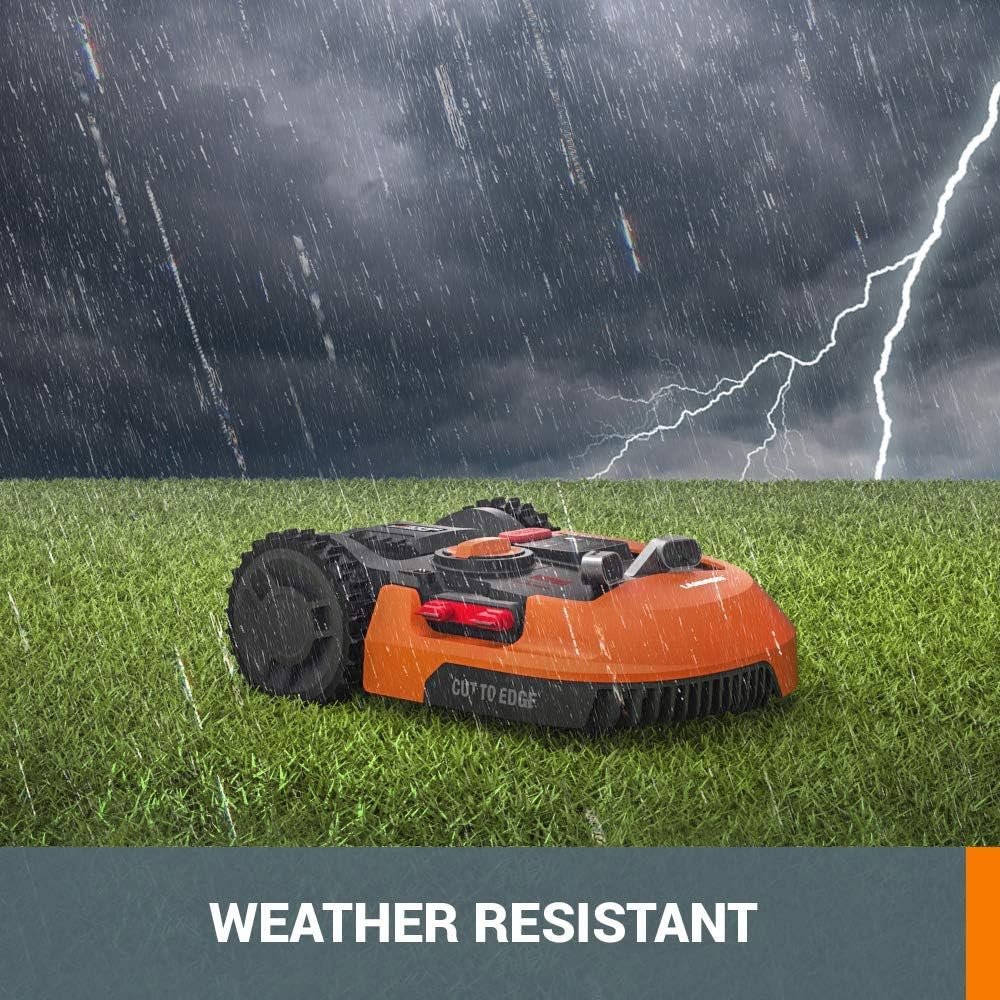
The mower is equipped with a rain sensor. If it detects rain while in operation, it will automatically stop mowing and head back to the charging base. Once the lawn has dried and conditions improve, it resumes according to schedule.
Even though its body is resistant to rain, it “knows” not to mow wet grass. That’s not only better for our lawn’s health but also reduces mess and potential maintenance on the mower.
Protecting the Lawn and the Mower
By avoiding cutting wet grass, the blades stay cleaner, and the cutting quality remains higher. It also prevents the turf from tearing or matting, which can happen if we force mowing in damp conditions.
All of this makes the mower feel more like a thoughtful assistant and less like a blind machine.
Safety Features for People, Pets, and Property
We’re letting something with blades move around unattended, so safety is understandably important. The Landroid has several layers of protection built in.
Lift and Tilt Sensors
If the mower is lifted or tips beyond a safe angle, the cutting blades automatically stop. This helps protect anyone who might try to pick it up while it’s running or if it gets into an awkward position.
This is especially relevant if we have children or curious pets in the yard. The mower is designed to shut down blade operation as soon as it’s disturbed in a way that suggests contact.
Obstacle and Collision Behavior
The bumper sensors help it detect collisions with solid objects. Instead of pushing against them, it stops, backs off, and chooses a different direction.
Combined with the boundary wire, this means it’s very unlikely to wander into spaces we’ve marked as off-limits, and if it does bump into something unexpected, it reacts calmly and safely.
Everyday Use: How It Fits into Our Routine
Once we’re past installation, the goal is to think about our lawn less, not more. In day-to-day life, the Landroid M is meant to quietly take lawn mowing off our to-do list.
Noise Levels and Neighborhood Friendliness
Robotic mowers are generally far quieter than gas push mowers. While the exact decibel level can vary, the sound is more like a low hum than a roar.
This allows us to schedule mowing during early mornings or evenings without rattling the entire neighborhood. It feels more like a background appliance than a machine that takes over the whole yard when in use.
Lawn Appearance Over Time
Instead of cutting a lot of grass once a week, the Landroid trims a small amount more often. This leads to:
- Finer clippings that mulch back into the grass
- Less visible thatch and fewer clumps
- A more consistent “always tidy” appearance
We might notice that the lawn looks more evenly green because it never gets the chance to overgrow in patches. It’s a more continuous maintenance style rather than a weekly reset.
Strengths of the WORX Landroid M 20V WR143
Looking at the full experience, several strengths stand out that make this model particularly compelling.
Fully Automated with Intelligent Features
Once we install it and set up the app, the mower largely runs itself. Automatic scheduling, rain sensors, GPS theft protection, and narrow-path navigation combine to create a robust, autonomous system.
Rather than just following a simple timer, it adapts to conditions, avoids wet mowing, and keeps us informed through notifications when something unexpected happens.
Excellent Value with GPS Included
Since the Find My Landroid GPS module is included and normally sold as a separate, premium accessory, the WR143 offers strong value for those of us who care about security.
Instead of worrying about leaving a valuable device outside, we get immediate alerts and tracking abilities built right into the standard package.
Potential Limitations and Considerations
No mower is perfect for every situation, and it’s useful for us to think about when this particular model makes sense and when it might not.
Yard Size and Complexity
The WR143 is rated for up to 1/4 acre (around 10,890 sq. ft.). If our lawn is significantly larger, this model may be undersized, and the mowing sessions could feel long or incomplete.
If our lawn is very complex—with many isolated islands of grass separated by driveways, large patios, or multiple separate fenced areas—it may require extra thought during boundary wire installation or even additional units to cover everything.
Slope Limits
The 20° slope capability is fine for moderate hills, but if parts of our yard are very steep, this mower might struggle or be unable to operate safely in those areas.
It’s worth walking our yard and roughly estimating the steepest slopes we have before committing. For typical suburban yards, the limit is often adequate, but for hillside properties it’s a more serious constraint.
Maintenance and Longevity
Even a robotic mower needs a bit of basic care to perform at its best. Fortunately, the regular maintenance tasks are simple.
Blade Replacement and Cleaning
Because the Landroid uses small pivoting blades, they’re relatively inexpensive and easy to replace. Over time, the blades will dull, especially if they hit sticks or small stones. Swapping them out periodically keeps the cut clean.
Now and then, we might also want to flip the mower over (with it powered off and battery removed for safety) to brush away built-up clippings and check for debris. This helps maintain performance and keeps the cutting mechanism working smoothly.
Battery Care
Lithium-ion batteries have a long useful life if we treat them reasonably well. The mower manages charging automatically, so we don’t need to micromanage this.
If the mower will sit unused for a long time—such as during a long off-season in a cold climate—we might want to store the battery in a cool, dry place and make sure it’s not left at a fully drained state for months on end.
Who This Mower Is Best For
The WORX Landroid M WR143 has a specific sweet spot where it really shines. Matching that sweet spot to our own yard and lifestyle is the key to deciding if it’s right for us.
Homeowners with 1/4-Acre or Smaller Lawns
If our lawn is at or under 1/4 acre and relatively continuous, this mower is sized very well. The battery and coverage are tuned for that yard size, which means it doesn’t feel underpowered or overstretched when used within its intended range.
Smaller or medium-sized suburban yards are ideal for this unit, especially where we want our lawn to look consistently maintained without regular manual mowing.
Busy Schedules or Limited Physical Ability
If we have limited time, mobility challenges, or just don’t enjoy pushing a mower in hot weather, the Landroid is a practical alternative.
Instead of budgeting a chunk of time each week to mow, we let this machine handle the routine. We still might do occasional edge trimming or seasonal tasks, but mowing shifts from a recurring chore to an automated service.
How It Compares to Traditional Lawn Mowing
It can help to think through the experience compared to old-fashioned gas or electric push mowers. The differences go beyond just effort.
Effort vs. Oversight
With a traditional mower, we’re investing our physical effort each session, guiding the mower and handling the entire task. With a robotic mower, we’re mostly shifting from doing the work to supervising the system.
We still put in effort on day one with installation. After that, the majority of our job is occasional checks, blade replacement, and adjusting settings in the app if our needs change.
Lawn Health Over Time
Frequent, light cuts can be better for grass health than occasional heavy cuts. Because the Landroid mows on a schedule, not based on our convenience, our lawn often ends up in a healthier, more balanced state.
That consistent cutting also helps with the visual appearance, making the yard look well-kept throughout the week without dramatic transitions.
Common Questions We Might Have
Before we commit to any robotic mower, a few practical questions usually come to mind. We can address some of the most common ones relating to this model.
What Happens If Someone Tries to Steal It?
The included Find My Landroid GPS module kicks in here. If the mower is removed from our property, we receive a notification, and we can track its location through the app. There are also security measures such as PIN protection and dissuading unauthorized use.
This combination of GPS and app alerts makes theft both more difficult and less attractive.
Can It Handle Separate Sections of Lawn?
If our yard has two areas separated by a hard barrier (like a long driveway or fence) with no direct grass path in between, the mower will not move itself between those areas. In that case, we would either:
- Manually carry it from one area to the other periodically, or
- Consider using it only for the main section that benefits most from automation
If the areas are connected by a narrow strip of grass, the AIA technology often allows the mower to navigate between them successfully.
Pros and Cons Summary
To keep our decision process simple, it helps to weigh the biggest advantages against the most relevant drawbacks.
Pros
- Fully automated mowing once installed and scheduled
- GPS “Find My Landroid” module included for security and tracking
- App control for schedules, status, and updates
- Patented AIA navigation for narrow passages
- Cut-to-edge offset design reduces trimming along borders
- Handles slopes up to 20° and moderately complex yards
- Rain sensor to avoid mowing in wet conditions
- Battery compatible with the WORX Power Share tool family
- Quiet operation compared to gas mowers
Cons
- Limited to about 1/4 acre; not suitable for larger properties
- Requires initial boundary wire installation, which takes time
- Slope capability may be insufficient for very steep areas
- Doesn’t inherently handle completely separate lawn sections without manual moving
- Still requires occasional maintenance like blade changes and cleaning
Final Thoughts: Is the WORX Landroid M WR143 Right for Us?
If we have a small to medium-sized lawn, value our time, and like the idea of our yard quietly maintaining itself, the WORX Landroid M 20V WR143 is a strong contender. Its combination of GPS security, smart app control, cut-to-edge design, and narrow-path navigation makes it more than just a basic robotic mower.
We do need to be ready for that initial setup—laying the boundary wire and installing the base—but once that’s done, our workload drops dramatically. Instead of planning weekends around the mower, we let this device quietly keep the grass wherever we’ve told it to stay neat and trimmed.
For those of us who want our lawn to look consistently good without regular manual mowing, and whose yard size fits the 1/4-acre range, this model offers a well-balanced mix of convenience, intelligence, and thoughtful design.

Disclosure: As an Amazon Associate, I earn from qualifying purchases.