Ad Blocker Detected
Our website is made possible by displaying online advertisements to our visitors. Please consider supporting us by disabling your ad blocker.
When considering robot lawn mowers, understanding their safety features is essential to guarantee both effective operation and user protection. These devices rely on sophisticated sensors, boundary management systems, and alert mechanisms that collectively minimize risks. However, the specifics of how these systems function and their reliability can vary. Examining the technical details behind obstacle detection, emergency shutdowns, and boundary enforcement reveals critical factors that influence safety performance—factors that deserve closer inspection.
Key Takeaways
- Equipped with obstacle detection systems using infrared, ultrasonic, bumper, and vision sensors to avoid collisions.
- Safety sensors automatically shut off blades and movement when lifted, tilted, or impacted.
- Boundary management via wires and geofencing ensures the mower stays within designated zones.
- Child and pet safety features include obstacle detection and automatic emergency stops.
- Real-time alerts notify users of safety issues, system errors, or maintenance needs via mobile or app notifications.
How Do Robot Lawn Mowers Detect Obstacles?
Robot lawn mowers employ a variety of sensors and detection technologies to identify obstacles within their operating environment. These devices rely heavily on advanced obstacle avoidance techniques integrated with sophisticated navigation algorithms. Infrared and ultrasonic sensors detect objects by measuring reflected signals, enabling real-time obstacle mapping. Bumper sensors physically detect contact with objects, triggering immediate maneuvering responses. Vision-based sensors, such as cameras, analyze the terrain and recognize potential hazards through image processing algorithms. Navigation algorithms process sensor data to optimize the mower’s path, adjusting routes dynamically to avoid collisions. By combining multiple sensor inputs with real-time data analysis, these systems guarantee precise obstacle detection and avoidance, maintaining efficient operation while preventing damage to both the mower and the landscape.
Safety Sensors: How They Prevent Accidents
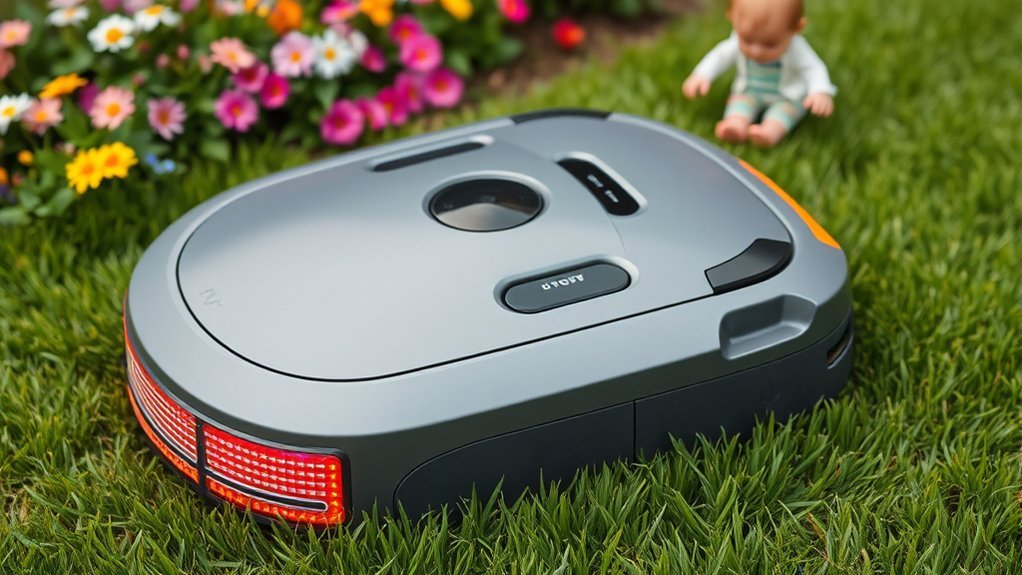
Safety sensors play an essential role in preventing accidents during the operation of robot lawn mowers. These sensors, such as bump sensors, infrared detectors, and boundary wire sensors, detect obstacles, humans, and pets, triggering immediate halts or evasive maneuvers. Proper safety training guarantees users understand sensor functionality, reducing misuse and enhancing safety. User manuals provide technical specifications and operational guidelines, detailing sensor placement and maintenance procedures. Advanced sensors can differentiate between objects, minimizing false triggers, while consistent calibration ensures peak performance. By integrating these sensors with real-time monitoring systems, manufacturers enhance overall safety, preventing injuries and equipment damage. Clear safety instructions and regular sensor inspections, outlined in user manuals, are vital for maintaining reliable obstacle detection and ensuring safe mower operation.
Automatic Shut-Off Features for Enhanced Security
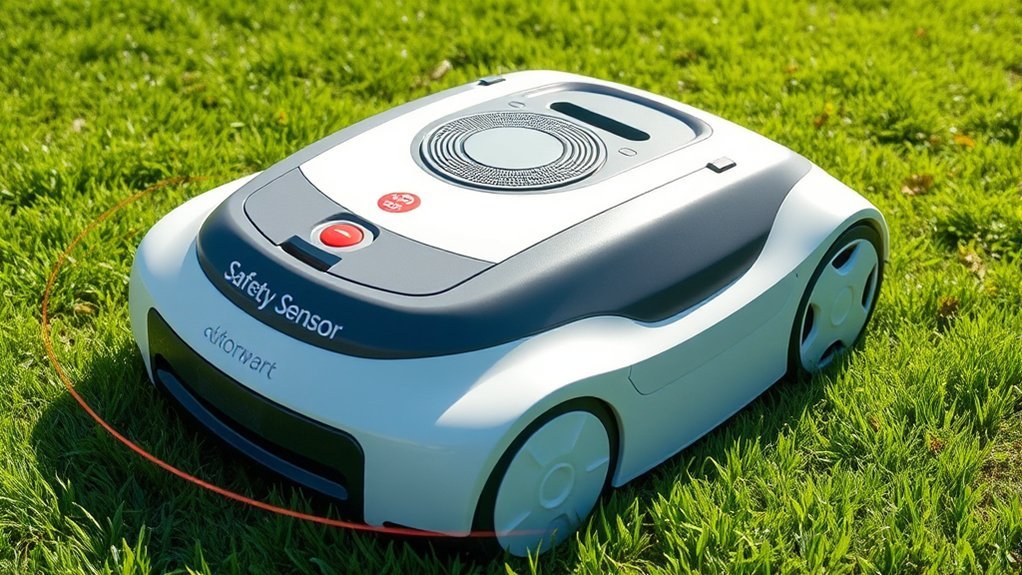
Automatic shut-off features are critical components that considerably enhance the security of lawn mower operation by promptly terminating power in response to specific triggers. In robot mowing and lawn trimming, these systems prevent accidents caused by unexpected obstructions or malfunctions. Key triggers include:
Automatic shut-off ensures safe, prompt response to obstructions and malfunctions during lawn mowing.
- Detection of lifting or tilting, which immediately halts blades and movement to prevent injury or damage.
- Obstacle collision sensors that trigger shutdown upon impact, protecting both the mower and surrounding objects.
- Battery or power faults that activate automatic shut-off to avoid electrical hazards or system failures.
These features guarantee the mower safely responds to unpredictable events, minimizing risks during operation. By integrating precise sensors and rapid response protocols, automatic shut-off systems improve overall safety and reliability in automated lawn care tasks.
Child and Pet Safety Mechanisms Explained
Obstacle detection systems utilize infrared or ultrasonic sensors to identify the presence of children or pets and prevent the mower from colliding with them. Emergency stop features can be activated manually or automatically when sensors detect an obstruction, immediately halting mower operation. Together, these mechanisms considerably enhance safety by minimizing the risk of injury during operation.
Obstacle Detection Systems
How do modern robot lawn mowers prevent accidents involving children and pets? They utilize advanced obstacle detection systems driven by artificial intelligence algorithms that process sensor data in real-time. These systems leverage multiple sensors, such as infrared, ultrasonic, and vision-based cameras, to accurately identify obstacles, including moving children or pets. The integration of AI enhances detection accuracy, reducing false positives and ensuring reliable operation. Additionally, obstacle detection systems are designed to conserve battery longevity by optimizing movement patterns, avoiding unnecessary scans. Key features include:
- Multi-sensor fusion for precise obstacle identification
- Real-time obstacle tracking with AI analytics
- Adaptive response mechanisms to prevent collisions
Emergency Stop Features
Modern robot lawn mowers incorporate sophisticated emergency stop mechanisms designed specifically to protect children and pets during operation. These features often include physical stop buttons, remote controls, or app-based commands that instantly halt the mower. Some models utilize sensors that detect sudden proximity or impact, triggering automatic shutdowns to prevent injury. The emergency stop functions are integrated with the mower’s aesthetics, ensuring that safety components do not compromise design or visibility. Additionally, rapid shutdowns help conserve battery life, preventing unnecessary power drain if accidental activation occurs. These safety mechanisms are essential for safeguarding vulnerable users without sacrificing the sleek, minimalistic appearance of the mower. Overall, emergency stop features enhance user confidence while maintaining efficient operation and respecting the mower’s aesthetic integrity.
Boundary Wires and Geofencing for Safe Operation
Boundary wires and geofencing systems are essential safety features that define the operational perimeter of robotic lawn mowers, preventing them from entering restricted areas. These systems use buried boundary wires that emit low-voltage signals, creating a virtual fence. When the mower detects these signals, it halts or changes direction. Geofencing integrates GPS or sensor data to establish virtual boundaries, enhancing flexibility. Key aspects include:
Boundary wires and geofencing ensure safe, flexible perimeter control for robotic lawn mowers.
- Precise boundary creation: Boundary wires ensure the mower stays within designated zones.
- Adaptive geofencing: Virtual fences can be adjusted via software for dynamic area management.
- Safety redundancies: Combining physical boundary wires with geofencing minimizes accidental boundary breaches, guaranteeing safe operation in complex landscapes.
Together, these features provide reliable, adaptable perimeter control, safeguarding users and property.
Emergency Stop Buttons: When and How to Use Them
Emergency stop buttons serve as a critical safety mechanism that allows operators to immediately halt the operation of a robotic lawn mower in urgent situations. Proper use of these buttons is essential during emergency protocols to prevent injury or equipment damage. We recommend incorporating detailed safety training for all operators, emphasizing the specific location and activation procedure for the emergency stop button. When an unsafe condition arises—such as a person entering the mowing area or a detected fault—pressing this button instantly cuts power, halting all movement. Regular drills should be conducted to ensure quick response. Clear signage and accessible placement enhance safety. Understanding when and how to utilize the emergency stop button reduces risks and reinforces a proactive safety culture.
How Low-Power and Noise Levels Contribute to Safety
Because low-power and noise levels directly impact operator awareness and environmental safety, they are critical considerations in robotic lawn mower design. Reduced power consumption enhances overall efficiency, minimizing thermal risks and prolonging battery life, which limits potential malfunctions. Noise reduction plays a crucial role in preventing disturbance and alerting users to operational status, especially in noise-sensitive environments. Key aspects include:
- Power efficiency: Ensures the mower operates effectively without excessive energy use, reducing overheating and mechanical failures.
- Noise mitigation: Low noise levels prevent startling pedestrians, pets, and wildlife, fostering safer integration into residential areas.
- Environmental safety: Less noise and power waste contribute to a lower ecological footprint, supporting sustainable lawn care practices.
Together, these features enhance safety by promoting better awareness and reducing risk factors associated with traditional mowers.
Software Alerts and Notifications for User Awareness
Our robot lawn mowers employ a real-time alert system that continuously monitors operational status and safety parameters, ensuring immediate user awareness of any issues. Users can customize notification settings to prioritize critical alerts, reducing unnecessary interruptions. Emergency stop notifications are automatically triggered and communicated promptly, enabling swift response to potential hazards.
Real-Time Alert System
How can we guarantee that users stay informed about their robot lawn mower’s status in real time? A robust real-time alert system integrates software notifications that promptly inform users of critical events, such as malfunctions or obstacles. It leverages remote control capabilities to allow immediate user intervention and incorporates weather monitoring to prevent mowing during adverse conditions, reducing damage or hazards. This system actively tracks mower diagnostics, operational status, and environmental data, making certain timely alerts.
- Instant push notifications for obstacle detection or system errors
- Weather alerts prompting suspension during rain or high wind
- Remote control alerts for manual override or scheduled maintenance
These features make certain users remain continuously aware of their mower’s condition, enhancing safety and operational efficiency.
Customizable Notification Settings
To guarantee users remain fully informed about their robot lawn mower’s operational status, customizable notification settings allow precise control over alert preferences. These settings enable users to tailor software alerts based on specific conditions, such as obstacle detection, blade engagement, or maintenance reminders. By adjusting user alert preferences, operators can choose the level and type of notifications they receive—ranging from audible alarms to mobile app alerts or email updates. This customization enhances situational awareness, reduces notification fatigue, and assure critical safety information is promptly communicated. Implementing these flexible notification options involves detailed configuration menus within the mower’s control interface, allowing for real-time adjustments that align with individual safety protocols and operational needs.
Emergency Stop Notifications
Emergency stop notifications serve as a vital component of a robot lawn mower’s safety alert system, ensuring users are immediately aware when the mower halts operation due to an emergency trigger. These notifications activate through integrated software alerts, providing real-time updates on the mower’s status. They are essential for enforcing emergency protocols effectively, allowing prompt user intervention. The system typically offers notification customization options, enabling users to select alert types—visual, auditory, or app-based—to suit their environment. This flexibility enhances safety by ensuring alerts are noticeable and actionable. Critical features include instant notification delivery, clear status indication, and the ability to override alerts if necessary. Overall, well-designed emergency stop notifications maximize user awareness and safety during mower operation.
Regular Maintenance Checks to Keep Safety Features Effective
Regular maintenance checks are essential to guarantee that the safety features of a robot lawn mower function reliably over time. We focus on verifying battery longevity, ensuring the power source maintains ideal charge cycles to prevent unexpected shutdowns or malfunctions. Regularly inspecting and cleaning the battery contacts also helps sustain safety protocols related to power management. Equally important is user training—educating operators on proper maintenance routines, such as checking sensors and safety switches, ensures safety features stay active and responsive. Routine calibration of obstacle detection systems and cleaning of boundary wires further enhance safety. By adhering to a detailed maintenance schedule, users can prevent safety feature degradation, reduce the risk of accidents, and extend the mower’s operational lifespan, maintaining effective safety performance consistently.
Choosing a Robot Mower With Top Safety Ratings
When selecting a robot mower, prioritizing models with top safety ratings guarantees that advanced safety features are integrated and reliably perform during operation. High-rated mowers often incorporate robust sensor systems, collision detection, and effective boundary recognition. These features are fundamental in ensuring safe operation, especially considering the robot mower design’s emphasis on reducing hazards. Additionally, a model with proven safety ratings helps facilitate thorough user safety training, minimizing operator error. Key considerations include evaluating the mower’s compliance with safety standards, reviewing independent safety assessments, and verifying manufacturer transparency regarding safety feature testing. By focusing on these aspects, users can confidently select a model that emphasizes safety, durability, and reliable performance in varied lawn conditions.
Frequently Asked Questions
Can Robot Lawn Mowers Operate Safely During Rain or Wet Conditions?
Robot lawn mowers generally don’t operate safely during rain or wet conditions, even with rain sensors; wet condition precautions advise against use, as moisture can damage electronics and reduce traction, risking malfunctions or accidents.
Are There Safety Features to Prevent Theft or Unauthorized Use?
Like a trusty lock on a vintage safe, our robot lawn mowers feature theft deterrence measures, including security alarms and PIN codes, actively preventing unauthorized use and safeguarding your investment with cutting-edge security technology.
How Do Safety Features Differ Between Robotic and Traditional Mowers?
We find robotic mowers prioritize obstacle detection and emergency stop functions, offering advanced, automated safety. Traditional mowers rely more on physical guards and manual controls, making robotic models more responsive to hazards and user safety concerns.
What Safety Considerations Are There for Uneven or Sloped Terrain?
We prioritize terrain adaptation by ensuring our robotic mowers feature advanced slope sensors, enabling safe navigation on uneven or sloped terrain. These sensors detect inclines, preventing tip-overs and maintaining stability during operation on challenging surfaces.
Do Safety Features Automatically Deactivate When Maintenance Is Needed?
We find that safety features like emergency shutdowns typically deactivate during maintenance for safety and accessibility, but child safety sensors remain active, ensuring the mower stops if a child is detected, maintaining safety during maintenance routines.
Conclusion
In sum, the safety features of robot lawn mowers act as an invisible shield, tirelessly working to protect users, children, and pets. By integrating advanced sensors, boundary systems, and real-time alerts, these machines minimize risks and operate with surgical precision. Regular maintenance ensures these safety mechanisms remain sharp, much like a well-tuned instrument. Choosing a model with top safety ratings guarantees peace of mind—because when safety is secured, accidents become a thing of the past.