Ad Blocker Detected
Our website is made possible by displaying online advertisements to our visitors. Please consider supporting us by disabling your ad blocker.
As first-time buyers, we understand the importance of making an informed decision when selecting a robot mower. With numerous models and features available, it’s vital to analyze key aspects like cutting technology, battery performance, and terrain adaptability to guarantee efficiency and durability. Properly evaluating your yard’s specific needs can greatly impact your investment’s success, but the process can be complex without a clear framework—so, let’s explore the essential considerations to guide your choice.
Key Takeaways
- Assess your lawn size, terrain, and obstacles to choose a compatible robot mower with suitable features and battery life.
- Consider key features like cutting width, adjustable height, obstacle detection, and weather resistance for optimal performance.
- Set a budget based on desired features, with entry-level, mid-tier, and premium options available across different price ranges.
- Properly install boundary wires and position the charging station on a flat, accessible surface for smooth operation.
- Regular maintenance of blades, sensors, and software updates ensures longevity and consistent mowing efficiency.
What Is a Robot Mower and How Does It Work?
A robot mower is an autonomous device designed to maintain lawns by mowing grass without human intervention. It operates using a combination of sensors, navigation algorithms, and cutting blades to systematically cover the yard. Modern models feature weather resistance, allowing them to operate in light rain or humid conditions, which enhances usability and reduces downtime. Noise levels are typically low, making them suitable for neighborhoods with noise restrictions. The mower follows a pre-programmed or adaptive pattern, returning to a charging station when battery levels are low. Sensors detect obstacles and boundary wires to prevent accidents and guarantee precise edging. Overall, these technical features enable efficient, quiet, and weather-resilient operation, making robot mowers a practical alternative to traditional lawn care methods.
Key Features to Consider Before Buying a Robot Mower
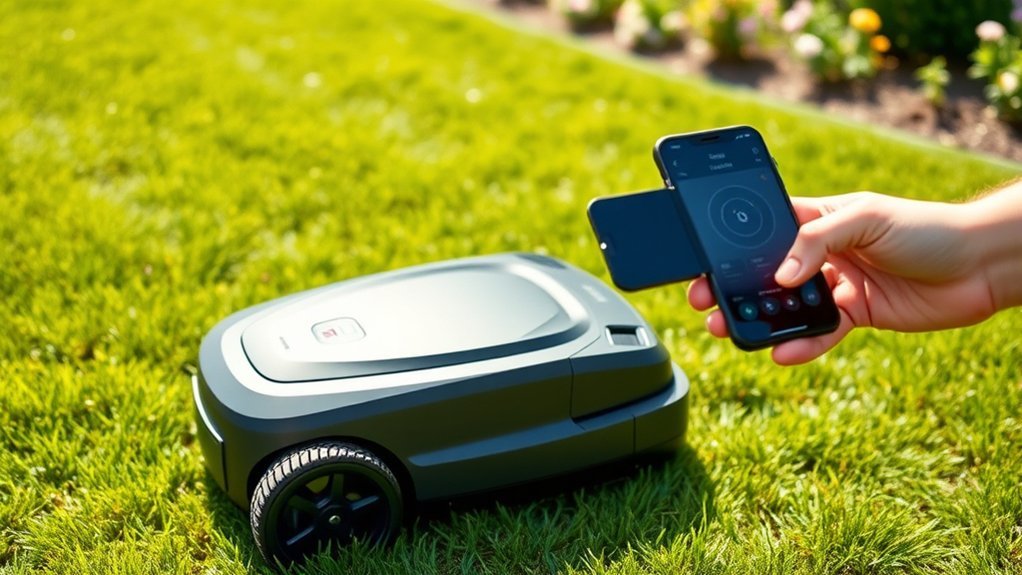
When selecting a robot mower, we focus on cutting width and height to guarantee efficient coverage and ideal grass length control. Battery life and charging capabilities are critical for sustained operation and minimal downtime. Evaluating these technical specifications helps us choose a model that balances performance with the specific needs of the lawn.
Cutting Width and Height
Understanding the cutting width and height of a robot mower is essential for selecting a model that efficiently manages your lawn’s size and terrain. The cutting width determines how much grass is cut in each pass, influencing mowing speed and the ability to handle narrow or intricate areas. The height adjustment controls the grass length, affecting grass health and appearance. Consider how the mower’s cutting width impacts the creation of uniform grass patterns and whether it can navigate around obstacles smoothly. Additionally, the mower’s color may aid visibility, especially in larger yards. Key factors include:
- Suitable cutting width for your lawn size
- Adjustability of cutting height for different grass types
- Compatibility with complex terrains
- Impact on grass health and visual patterns
Battery Life and Charging
Ever wondered how long your robot mower can operate before needing a recharge? Battery longevity is a crucial factor, as it determines how extensively your mower can cover your lawn in a single session. Most models feature lithium-ion batteries, offering a balance between capacity and durability. The mower’s charging stations play a key role; they automatically dock the mower when the battery level drops below a certain threshold. Efficient charging stations ensure minimal downtime, allowing the mower to resume mowing quickly after recharging. It’s important to consider the battery’s run time per charge, typically ranging from 45 to 120 minutes, and the charging time, which can vary from one to several hours. Selecting a model with ideal battery longevity and a reliable charging station ensures consistent, hassle-free lawn maintenance.
How Much Should You Expect to Spend on Your First Robot Mower?
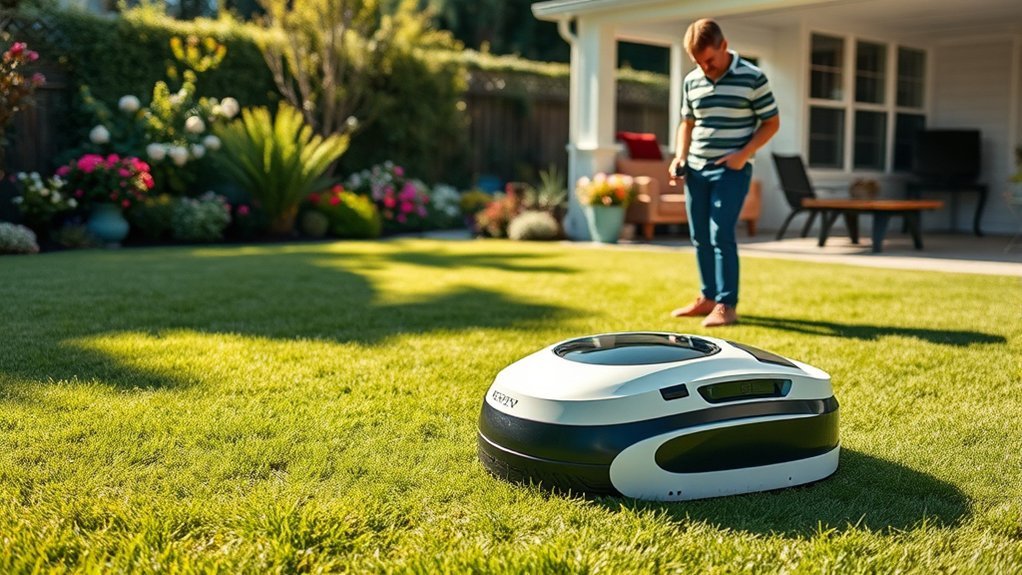
The cost of a first robot mower varies considerably based on features, brand reputation, and mower size, so it’s crucial to set realistic expectations. Entry-level models typically range from $500 to $1,200, offering basic smart lawn technology and minimal robot mower maintenance requirements. Mid-tier options between $1,200 and $2,500 provide enhanced navigation, larger cutting areas, and advanced features like app control. Premium models exceeding $2,500 often include sophisticated sensors, customizable schedules, and superior build quality. When budgeting, consider ongoing costs such as robot mower maintenance, replacement blades, and software updates. Understanding these price points helps guarantee you select a model aligned with your lawn’s size and complexity, while also evaluating the long-term value of features like smart lawn technology and durability.
Comparing Top Brands and Models for Beginners
When selecting a robot mower as a beginner, comparing top brands and models is essential to guarantee you choose a device that balances affordability, reliability, and features. Key differences often include safety features, battery life, and eco-friendly operation. Brands like Husqvarna and Worx are known for advanced robot mower safety mechanisms and efficient energy use. To help you evaluate, here’s a comparison:
| Brand | Key Features | Price Range |
|---|---|---|
| Husqvarna | Robust safety sensors, eco mode, customizable settings | $800–$1500 |
| Worx | Quiet operation, simple interface, eco-friendly design | $600–$1000 |
| Robomow | Strong safety features, durable build, moderate price | $700–$1300 |
| Gardena | Smart navigation, energy-efficient, safety stop | $900–$1400 |
| Bosch | Precise cutting, safety sensors, eco-friendly operation | $750–$1250 |
This comparison emphasizes safety and eco operation, essential for beginners.
Setting Up Your Robot Mower: Installation Tips and Tricks
Setting up your robot mower correctly from the start is crucial to guarantee peak performance and safety. Proper installation ensures the mower operates efficiently while maintaining your garden’s aesthetics and adhering to safety precautions. Begin by choosing a flat, unobstructed area for charging station placement, ideally near an outdoor power source. Install boundary wires meticulously to define mowing limits, minimizing the risk of damage or accidents. Confirm the wires are securely buried to prevent tripping hazards and protect the system. Carefully calibrate cutting height and check blade alignment to optimize mowing quality. Additionally, plan for obstacle removal and consider the mower’s navigation patterns for a clean, safe, and visually appealing lawn.
- Position charging station for easy access and minimal interference
- Secure boundary wires to prevent disconnection or hazards
- Adjust cutting height to suit your garden’s needs
- Remove obstacles that could impede navigation or safety
Maintaining and Troubleshooting Your Robot Mower for Longevity
Regular maintenance and prompt troubleshooting are vital to extend the lifespan and guarantee the reliable operation of your robot mower. Consistent blade inspections and cleaning prevent uneven cuts, preserving lawn aesthetics, while making certain the cutting system remains sharp minimizes unnecessary stress on components. Regularly checking and clearing the mower’s sensors and wheels prevents operational errors and maintains ideal navigation. Addressing issues like high noise levels promptly can indicate mechanical issues or motor strain, helping avoid further damage. Battery health monitoring is essential for longevity; replacing or maintaining batteries ensures consistent performance. Troubleshooting routines, including resetting the system and updating firmware, help resolve common malfunctions efficiently. Proper upkeep ensures your mower operates quietly and effectively, maintaining the desired appearance of your lawn over time.
Are Robot Mowers Suitable for All Lawn Types?
Robot mowers can be suitable for a variety of lawn types, but their effectiveness depends on specific terrain and grass conditions. Certain features influence performance across different lawn terrains, such as obstacle steering capabilities and cutting technology.
Robot mowers excel on various lawns, but terrain and obstacle features impact their optimal performance.
Key considerations include:
- Flat versus hilly terrain, affecting stability and maneuverability
- Varying grass density, influencing cutting efficiency
- Obstacle steering, essential for directing around trees, flower beds, and uneven surfaces
- Sloped areas, requiring robust motor power for inclines
While many models handle diverse environments, uneven or highly complex terrains may challenge some robot mowers. Proper assessment of lawn terrain and obstacle steering abilities guarantees ideal performance and prevents operational issues.
Next Steps: Choosing the Right Robot Mower for Your Yard
Selecting the appropriate robot mower requires gauging your yard’s size and the mower’s compatibility to guarantee efficient operation. We also evaluate cutting system features like blade type and mowing pattern to optimize performance for your specific terrain. By analyzing these technical aspects, you can identify the most suitable model that maximizes lawn health and maintenance efficiency.
Yard Size Compatibility
Understanding your yard’s size is crucial when choosing a robot mower, as it directly impacts the model’s efficiency and longevity. Smaller yards typically require compact models with shorter battery life, while larger areas demand higher-capacity units with extended runtime. Proper size compatibility guarantees consistent mowing, supporting landscaping aesthetics and reducing environmental impact by preventing overuse or underperformance. When evaluating yard size, consider these factors:
- Mower’s maximum coverage area
- Battery capacity and recharge time
- Navigation and boundary detection efficiency
- Potential need for multiple units or upgrades
Matching the mower’s specifications with your yard size optimizes operational efficiency, minimizes maintenance, and promotes sustainable lawn care practices. Accurate compatibility ensures a seamless mowing experience, aligning with both aesthetic goals and environmental considerations.
Cutting System Features
The cutting system is a fundamental component that directly influences the mower’s performance, precision, and overall lawn health. High-quality blade technology guarantees clean, efficient cuts and reduces grass tearing, which is essential for turf resilience. Modern robot mowers often feature oscillating or rotary blades, each with distinct performance benefits. Oscillating blades deliver precise, mulching cuts ideal for maintaining a healthy, lush lawn, while rotary blades excel in handling thicker or denser grass. The durability and sharpness of blades are critical; some models include self-sharpening mechanisms or easy-to-replace blades to maintain cutting efficiency over time. Ultimately, selecting a mower with an advanced cutting system and blade technology tailored to your yard’s grass type and terrain ensures ideal mowing results and lawn vitality.
Frequently Asked Questions
How Long Does a Typical Robot Mower Battery Last per Charge?
Typically, robot mower batteries last about 60-90 minutes per charge, depending on usage and terrain. Proper battery maintenance and understanding charging time optimize performance, ensuring efficient mowing cycles and prolonging battery lifespan for your robotic lawn mower.
Can Robot Mowers Handle Uneven or Hilly Terrains Effectively?
Research shows 70% of modern robot mowers excel in terrain adaptability, maneuvering slopes of up to 20 degrees. They use advanced sensors and algorithms, ensuring effective slope navigation on uneven or hilly terrains, enhancing mowing efficiency.
Are There Safety Features to Prevent Accidents or Injuries?
We guarantee safety with child safety features and emergency stop functions, which instantly halt operation if needed. These technical safety measures prevent accidents, making robot mowers secure choices for households with children or pets.
What Is the Typical Lifespan of a Robot Mower?
Typically, robot mowers last 5-8 years with proper battery maintenance and mower storage. Regularly charging, avoiding extreme temperatures, and storing in a cool, dry place considerably extend their lifespan, ensuring peak performance over time.
Can Robot Mowers Be Programmed for Specific Mowing Schedules?
We can program robot mowers for custom mowing schedules, allowing precise schedule adjustments to match your lawn’s needs. This flexibility guarantees efficient, tailored maintenance, optimizing performance while accommodating varying weather conditions and personal preferences.
Conclusion
Choosing the right robot mower is like tuning a fine instrument—you need the right parts and setup for ideal harmony. With careful consideration of your yard’s specifics and a bit of initial investment, you’ll enjoy a seamlessly manicured lawn without the daily hassle. Think of it as planting a seed today that will grow into a well-maintained landscape tomorrow, transforming your outdoor space into a masterpiece of efficiency and precision.